The soldier had fought in more than 120 battles, carried forty-five scars on the front of his body, and won eight one-on-one duels. His chest was so heavy with crowns, spears, and torques that he could barely wear them all. But to the corrupt magistrate Appius Claudius, the sixty-four-year-old veteran was not a hero. He was a threat.
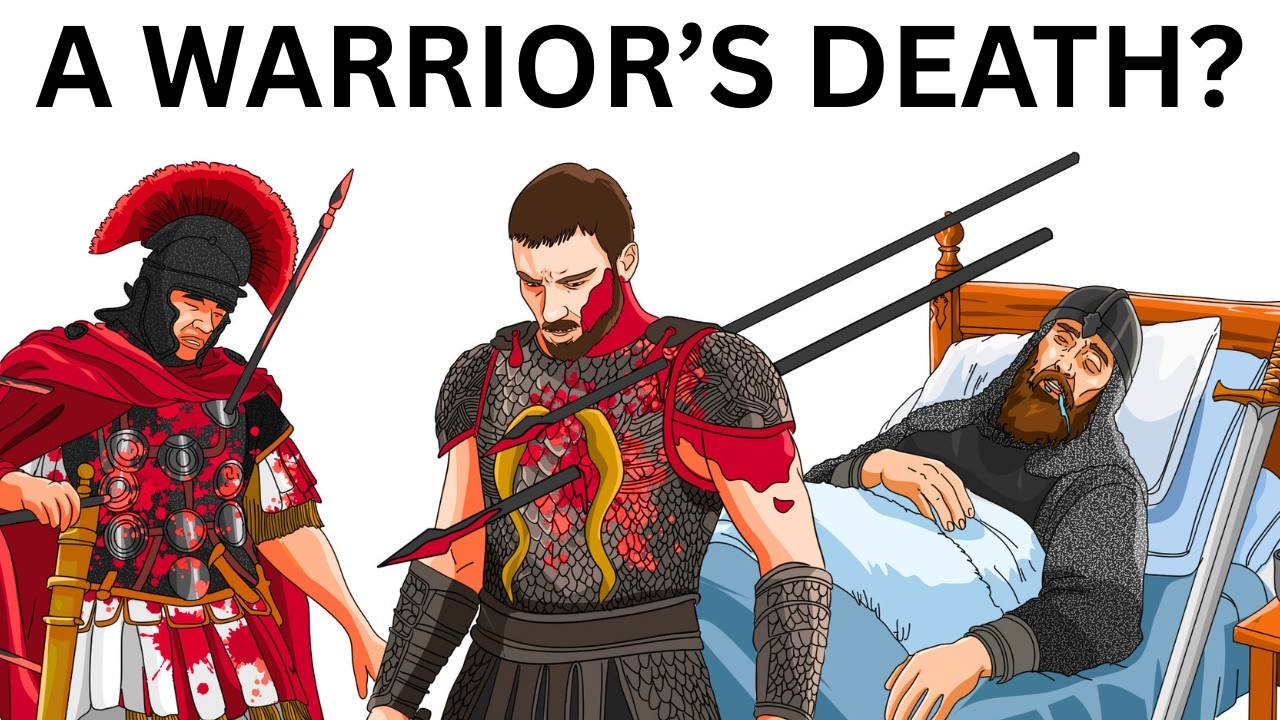
Around 450 BC, Appius sent him out on a fake scouting mission with a handful of handpicked men. They led the old soldier into a narrow ravine, where the trap closed around him. But Dentatus did not go quietly. He cut down eight of his attackers before they could pin him down, and when they couldn’t beat him hand-to-hand, they scrambled up the slopes above and crushed him under a rain of stones and javelins.
When his body was finally recovered, the corpses of his murderers lay beside his. Hundreds of years later, another man rose against Rome. Spartacus was a Thracian gladiator who broke out of a training school in Capua with only about seventy men and kitchen knives. Within two years, he had forged a rebel army of tens of thousands that smashed one Roman force after another.
His real weapon wasn’t muscle—it was command. He drilled escaped slaves into disciplined units and repeatedly outmaneuvered trained Roman generals, humiliating the Republic for two straight years. His end came when Marcus Licinius Crassus cornered the rebels in southern Italy in 71 BC. Crassus was so ruthless that he executed his own retreating soldiers to restore discipline.
Betrayed by pirates who were supposed to ferry them to safety, the slaves were trapped. In the final battle near the Silarus River, Spartacus tried to hack a path through the enemy lines to kill Crassus himself, dropping two centurions before he was swarmed and cut down. His body was never identified among the dead. Rome’s revenge was brutal.
Six thousand captured rebels were crucified along the Appian Way and left to rot as a warning. In a different part of the world, Lü Bu was the most feared fighter of the dying Han Dynasty, nicknamed the Flying General for his unmatched skill on horseback with halberd and bow. But he was also a serial traitor who had murdered two foster fathers for personal gain. That reputation finally killed him.
In 199 AD, besieged at Xia Pi by the warlord Cao Cao and starving, his own exhausted officers tied him up in his sleep and handed him over. Lü Bu begged for his life, offering to serve Cao Cao and conquer the empire for him. Cao Cao actually hesitated, tempted by the offer. Then the allied warlord Liu Bei leaned in and quietly reminded him exactly what had happened to the last two men Lü Bu had called master.
That settled it. The greatest warrior of the age was hanged, then beheaded for good measure. Guan Yu fought during the same chaotic Three Kingdoms period. He was a giant of his era, known for his strength, his heavy crescent blade, and his ice-cold courage.
His most famous feat came at the Battle of Boma, where he charged alone through an entire enemy army, rode straight up to the elite general Yan Liang, and cut his head off in one pass. For years he carved through countless battles for his sworn brother Liu Bei. His downfall was overreach. In 219 AD, he pushed deep into Cao Cao’s territory while his rival Sun Quan quietly sent a general to seize his bases behind him.
Cut off from supply, his army melted away, and he was captured along with his son and beheaded. Sun Quan, suddenly nervous about killing such a revered man, shipped the severed head to Cao Cao to spread the blame. It did him little good. Centuries later, Guan Yu was recognized as the Chinese god of war and is still worshipped today.
Khalid ibn al-Walid earned the title Sword of Allah by never losing a single battle across roughly a hundred engagements, shattering both the Byzantine and Persian empires. For a man who killed on that scale, his death was a bitter irony. Stripped of his command by the Caliph Umar, he died of illness in his bed in the city of Homs in 642. The undefeated general, his body a roadmap of old scars, is said to have wept at the end, saying he had thrown himself into battle after battle hoping to die a martyr.
When the news reached the Caliph, he mourned and forgave their old quarrel. Egill Skallagrimsson was an Icelandic Viking who was poet and berserker in equal measure. When he was just seven years old, he split a rival boy’s skull with an axe over a game. He spent the rest of his life raiding, dueling, and cutting down anyone who crossed him.
On one occasion he tore out an enemy’s throat with his teeth when a duel went badly. He survived numerous assassination attempts ordered by his lifelong enemies, King Eric Bloodaxe and Queen Gunnhildr, and even killed the king’s son. He lived into his eighties, went blind, deaf, and frail, and died of old age at around ninety. The strange part came centuries later, when his bones were exhumed and his skull was found to be so thick and unnaturally ridged that a man who swung an axe on it could barely leave a white scratch.
El Cid, born Rodrigo Díaz de Vivar, was the Castilian warlord who never lost a battle and carved out his own personal kingdom by capturing the city of Valencia from the Moors. On July 10, 1099, with the city under siege by a massive Almoravid army, he died inside its walls of natural causes, believed to be famine or illness, aged fifty-six. What happened next made him immortal. His wife Jimena, fearing the city would fall, had his body embalmed, dressed in his armor, his sword tied to his hand, and strapped upright onto his warhorse Babieca.
Then she sent him out at the head of his troops. The besieging Moors, seeing the dead El Cid apparently riding to fight them once more, panicked and fled. Prithviraj Chauhan, an Indian king, crushed the invading Persian Gurkhas at the first Battle of Tarain, sending Muhammad of Ghor fleeing wounded from the field. He is celebrated as one of the bravest warrior kings in Indian history.
But a year later Muhammad of Ghor returned with more men, and a dawn surprise attack shattered Chauhan’s army. He was captured and dragged back to the Gurkha capital. Legend says he was blinded with red-hot irons, then later paraded out to perform archery for the Sultan’s amusement. His loyal court poet Chand Bardai, allowed to stand beside him, recited a single coded verse that secretly described the exact distance and direction of the Sultan’s seat.
Guided only by that sound, the blind king drew and loosed one arrow that struck Muhammad of Ghor dead in February 1192. Knowing what would follow, Chauhan and his poet then stabbed each other to deny their captors any further revenge. Most historians believe he was simply executed in captivity. But the arrow version is the one India has never forgotten.
William Marshall was an Anglo-Norman knight often called the greatest who ever lived. He was undefeated across some five hundred brutal tournaments and a veteran of countless real battles, serving five English kings. In one skirmish he even unhorsed the future King Richard the Lionheart and deliberately killed Richard’s horse instead of striking the prince himself. After a lifetime spent in mounted combat, he achieved the rarest possible death for a man of his trade: a peaceful one.
He died in his bed at Caversham in 1219, surrounded by his family. On his deathbed he fulfilled a vow taken decades earlier on crusade and was formally received into the Knights Templar, dying in the white mantle. Richard the Lionheart was the crusader king of England, a fearless commander who always led from the front. That habit eventually killed him at a trivial little siege in 1199.
He had marched on the small castle of Châlus in his French territories over a petty dispute about a treasure a peasant was rumored to have dug up. One evening Richard was strolling the perimeter without his full armor, admiring the nerve of a lone defender who kept shooting at him. That same defender, said to be a boy, put a crossbow bolt into his shoulder. The wound itself shouldn’t have been fatal, but an unskilled surgeon butchered it while extracting the bolt, and his arm rotted with gangrene.
As he was dying, Richard had the boy brought before him and pardoned him. The king died days later in his mother’s arms. His grief-stricken mercenary captain ignored the king’s wish and had the boy flayed alive, then hanged. Gjergj Kastrioti Skanderbeg held the entire Ottoman Empire at bay for twenty-five years, winning battle after battle against vastly larger armies.
Some accounts claim he personally killed around three thousand men. No enemy ever managed to kill him. He died of malaria in the town of Lezhë in January 1468. His death achieved what the Ottoman sultans never could.
Albanian resistance crumbled within a decade. When the Ottomans finally captured the city, their soldiers dug open his grave, broke his bones into pieces, set the fragments in silver and gold, and wore them as amulets, convinced that carrying a sliver of Skanderbeg would pass his legendary courage into them. Lequical was a Tlaxcalan warrior of such towering reputation that when the Aztecs finally captured him in battle around 1518, Emperor Moctezuma did something almost unheard of for a prisoner. He freed him and handed him command of an entire Aztec army against the Purepecha.
Lequical led the campaign, fought well, and came back victorious. And still he refused to simply walk home to Tlaxcala, because a captured warrior who returned alive lived in disgrace. So he asked instead for a warrior’s death reserved for the bravest prisoners. He was tethered by the ankle to a massive circular stone so he couldn’t escape, and handed a war club edged with harmless feathers instead of razor obsidian.
Then he was set against a relentless succession of the empire’s most elite eagle and jaguar warriors, all carrying real weapons. Anchored to the stone, half crippled by old wounds, and hopelessly outmatched, he fought anyway. He killed eight outright and wounded more than twenty, exhausting wave after wave of the empire’s finest before he was finally overwhelmed. Only then was he hauled up onto the altar so the priests could cut the heart from his chest, a death he had chosen freely over the shame of survival.
Pier Gerlofsdonia was a Frisian farmer who became a rebel after Habsburg mercenaries burnt his farm to the ground and murdered his wife. Legend says he later hunted down five of the killers with a heavy plow. A reputed giant of a man, he fought with a Zweihänder sword nearly seven feet long, said to take the heads of several men in a single swing, and led a pirate fleet that terrorized the Dutch coastline. He and his forces captured the Habsburg-controlled town of Asperen, killing nearly the entire population in a brutal raid.
Yet worn down, ill, and disillusioned with a rebellion that was falling apart, he laid down his arms and died of natural causes in the town of Sneek in 1520. His enormous sword still hangs in a Frisian museum, far too heavy for almost any visitor to lift. Galvarino was a Mapuche warrior fighting the Spanish conquest of Chile during the long Arauco War. Captured after the Battle of Lagunillas in 1557, he was singled out by the Spanish governor Mendoza to be made a warning.
The governor had the hands and noses of many captives cut off before releasing them, and Galvarino lost both of his hands, hacked off at the wrists. Then he was set loose to spread fear and submission among his people. It had the exact opposite effect. Galvarino went straight before the Mapuche War Council, held up his mutilated arms as proof of what surrender bought, and demanded they keep fighting.
He had knives and blades lashed tightly to his stumps and returned to battle, leading charges and cutting down Spanish soldiers. He was captured a second time at the Battle of Millarapue, defiant to the very end. He told his captors that if they freed him, he would tear them apart with his teeth. Accounts differ on his exact death—some say he was hanged, others that he was thrown to the war dogs—but every version agrees he met it without flinching.
Miyamoto Musashi was Japan’s most famous swordsman, undefeated in more than sixty duels, many of which he won carrying only a carved wooden sword, including his legendary killing of the master Sasaki Kojiro with a blade he had shaped from a boat oar on the way to the fight. Having outlived every single opponent who ever faced him, he chose the manner of his own ending. In his final years he withdrew to a cave and wrote The Book of Five Rings, his treatise on swordsmanship and strategy still read today. He died in that cave in 1645, almost certainly of cancer, reportedly working on his writing nearly to the last, then passing away seated upright, his sword resting at his side.
Hongi Hika was a Ngapuhi chief who transformed Maori warfare by arming his people with European muskets on a scale no one had seen, then unleashing them in the brutal Musket Wars, killing thousands of rival warriors and civilians across New Zealand. In 1821, a suit of chainmail armor gifted to him during a visit to England saved his life by stopping a musket ball that should have killed him. His luck ran out in 1827 when a bullet fired during a skirmish passed clean through his chest, puncturing a lung. He lived another fourteen months with the open wound.
It was widely said that people could actually hear the wind whistling through the hole in his chest each time he breathed, right up until his death in March 1828. Shaka Zulu forged the Zulu people into the deadliest military machine in Southern Africa. He scrapped the long throwing spear, which left a warrior unarmed once it was hurled, in favor of the short stabbing iklwa, designed for brutal close-quarters combat, and drilled his regiments to encircle the enemy with his bull-horns formation. He personally fought and killed in battle, and made his soldiers stitch their sandals and harden their bare feet by dancing on thorns.
But after his beloved mother Nandi died in 1827, his grief curdled into something monstrous. He ordered a national mourning so deranged that thousands were executed for failing to cry convincingly. He banned crops from being planted and had milk poured out so the whole nation would starve alongside him. His inner circle decided he had to go.
In September 1828, at his royal homestead, while he was receiving a delegation, his half-brothers Dingane and Langana stabbed him to death. As he lay bleeding out, he’s said to have looked up at his killers and taunted them with a prophecy, telling them they would never rule the land themselves because white men were already crossing the sea and would soon swallow it and them whole. His body was dumped into an empty grain pit. The prophecy more or less came true.
Historians estimate that Shaka Zulu and his armies were responsible for the deaths of up to two million people. Alvin C. York was an American corporal serving in the 82nd Division during the Meuse-Argonne Offensive in France in World War I. With German machine guns cutting his unit apart, York worked to a flank and picked off gunner after gunner, a single shot at a time.
By the end he had killed around twenty-five men, silenced thirty-five guns, and walked 132 stunned prisoners back to American lines. He went home the most decorated soldier of the war and hated the fame that came with it, pouring his energy into building schools instead. A run of strokes wore him down in his last years, and he died in bed in 1964. Simo Häyhä was a quiet Finnish farmer who became the deadliest sniper in recorded history.
During the Winter War against the Soviet Union between 1939 and 1940, he killed over five hundred enemy soldiers in roughly a hundred days, all of it in deep snow and brutal cold. He worked with plain iron sights rather than a scope to keep his profile low, packed down the snow in front of him so his muzzle blast wouldn’t throw up a telltale cloud, and kept snow in his mouth so his breath would not steam in the freezing air and give away his position. The Soviets nicknamed him the White Death and threw entire counter-sniper teams at him. In March 1940, one of their explosive bullets finally caught him in the lower jaw and tore away much of the lower half of his face, but he survived.
He slipped into a coma and woke from it purely by chance on the very day the war ended. Disfigured for life and facing years of surgery, he simply went home, lived a long and quiet life as a hunter and dog breeder, and died in 2002 at the age of ninety-six. Jebe earned his name, which means arrow, in the most literal way possible. Before he served Genghis Khan, he fought against him, and in one battle shot the Khan’s horse out from under him.
Dragged before Genghis afterward, he confessed to the shot openly instead of lying, and the Khan, impressed by the sheer nerve, made him a general rather than a corpse. He became one of the deadliest commanders of the Mongol conquests, running the fleeing Shah of Khwarazm into the ground and tearing through the Caucasus and the Russian principalities, annihilating a combined army at the Kalka River. He eventually fell ill on the long ride home around 1225 and died somewhere on the open steppe. Some scholars suggest he may have been killed in 1223 by Russian-allied Kipchak forces near the Dnieper River.
Naresuan the Great was a Thai warrior king who shattered Burmese domination of Siam, repelling massive invasions and conquering neighboring regions like Cambodia. Raised as a political hostage in the Burmese court, he would later fight. His most legendary feat came in 1593 when, with both armies watching, he met the Burmese crown prince in single combat on war elephants and cut him down with one powerful strike of his glaive. He eventually fell ill while campaigning in the north in 1605 and died of disease, likely smallpox, at the height of his power.
Lyudmila Pavlichenko was a Soviet history student in Kiev who walked out of the lecture hall the moment Germany invaded and demanded a rifle. She became one of the deadliest snipers who ever lived, with 309 confirmed kills at Odessa and Sevastopol, dozens of them enemy snipers cut down in patient, nerve-shredding duels. Wounded by shell fire and judged too valuable to lose, she was pulled from the line and sent to tour the United States. She worked as a historian after the war before a stroke took her in 1974.
Lapu-Lapu was the chief of Mactan Island in the Philippines, the one ruler who refused to submit to the arriving Spanish. In April 1521 he led his warriors into the surf and personally fought Ferdinand Magellan’s armored landing party in brutal close combat, killing the famous explorer on the beach before he could complete the first voyage around the world. It’s the most celebrated victory in early Philippine history, and yet its hero then simply vanishes. No surviving account agrees on how, when, or even where Lapu-Lapu died.
Many historians say he lived into his seventies and died of old age.