# Pranks That Went Too Far in History
Today, we’re going over historical pranks that went a little too far. Some began as simple jokes between colleagues, others as acts of revenge against arrogance. But each of these pranks spiraled far beyond what their creators ever intended, leaving careers destroyed, reputations ruined, and in one case, helping to spark a revolution.
 ## Beringer’s Lying Stones
It’s 1725, and Johann Beringer is proudly showing off the latest additions to his collection of curiosities to his colleagues at the University of Würzburg. Beringer was considered by many around him to be a genius. He had become a professor of medicine at the school at the young age of 27, and in just 20 years, he had not only become the dean of the school of medicine but also the chief physician at the nearby Julius Hospital.
This fast track to academic greatness had given him somewhat of an ego and also a reputation of being an arrogant prick who thought he knew everything. Beringer’s study of medicine had led to a fascination with the natural world, and this was why he had begun collecting fossils. At the time, there were many theories of how fossils got into the rock.
Some believed the fertilized eggs of these animals somehow got into the rock and grew up there. Some believed they were imprinted by the sun like an X-ray.
But Beringer had his own theory, and he was not shy to confidently tell everyone around him that these fossils were actually carvings made by God as proof of his existence. Two colleagues at Würzburg, J. Ignaz Roderick, a professor of geography and algebra, and Johann Georg von Eckhart, the university librarian, were particularly sick of Beringer’s arrogance on something that was way outside of his area of expertise.
When they found out that Beringer had hired a trio of brothers to dig in a nearby mountain for fossils, they concocted a plan to put Beringer in his place.
But what started off as a small prank on their colleague would very quickly get way out of hand. Roderick and Eckhart began carving 𝒻𝒶𝓀𝑒 fossils into limestone. They carved frogs and lizards, then getting more creative, carved spiders in their webs.
They looked at their creations and laughed. “How ridiculous!” they thought, and they began to carve even more outrageous things like half frog, half fish fossils, frogs in the process of making baby frogs.
Then, they came up with the most hilarious idea for the prank. “Oh my heavens, Eckhart. That one is truly wonderful,” one of them said.
“Watch me as I carve quite the Dariel onto this specimen,” the other replied. They laughed at their own cleverness. “Ouch.
Oh, my. That does not look good. Maybe we call a doctor.”
“Call Beringer? No way. I hate that guy.”
Remembering Beringer’s theory that these fossils were created by God himself, they began carving the word God in Hebrew, Latin, and Arabic under some of their animals. They gave their 𝒻𝒶𝓀𝑒 fossils to someone who hid them in the mountains where Beringer’s helpers were looking, and then they waited.
It did not take long before Beringer was excitedly showing off his new discoveries at the school. He proudly held up one of the rocks and pointed to an engraving near the animal. “You may not be able to read this, but this is God written in ancient Latin,” he confidently told his colleagues.
Thinking he had discovered a true scientific breakthrough that would cement his legacy, Beringer began documenting his newly acquired fossils, and soon he began work to compile his discoveries into a book. He hired professional artists and engravers to capture images of his fossils for his opus, Lithographia Wirceburgensis.
Soon, word got back to Roderick and Eckhart that Beringer was not joking about that book he was going to write, and that the manuscript was nearly done. This freaked them out. Realizing their prank had now gone way too far, but also not wanting to confess outright, they began to spread rumors around the school saying that Beringer’s fossils were fraudulent.
When Beringer got word of the rumors, he scoffed at the idea that anyone would question his genius. Instead of taking time to check if these rumors had any truth to them, he wrote a specific section in his book calling out his doubters.
The pair, thinking the book would damage the credibility of their university, became desperate and tried to show Beringer how his 𝒻𝒶𝓀𝑒 fossils could be easily made, but he refused to hear any of it. This was going to be what history remembered him for, and nothing would stand in the way of his destiny. The book went to press.
But it did not take long for Beringer’s dream to become his nightmare. According to one source that documented this story, shortly after his book had been published, Beringer found his own name written in Hebrew on one of his fossils. He finally realized that he had been fooled, but it was too late.
 His book was everywhere. Frantically, he began trying to recall the book, and according to some versions of the story, he bankrupted himself trying to buy back all the copies to prevent his legacy from being tarnished.
Whether or not that part of the story really happened, we will never know. But he did bring Roderick and Eckhart to court and won his cases against them. Roderick lost his job at Würzburg, and Eckhart lost his access to the historical records he had depended on for his scholarship.
His life’s work was never finished. Beringer published two more books before he died, but his scientific legitimacy was forever damaged by the prank. In most of the historical records, Beringer’s lying stones make up most of what is written about him.
## The 𝒶𝒻𝒻𝒶𝒾𝓇 of the Diamond Necklace
Okay, so this one might straddle the line between a prank and a straight-out con job, but whatever you call it, it definitely spiraled away out of control and eventually led to the French Revolution. It’s 1784, and Cardinal de Rohan is not really loving life. A few years ago, while serving as an emissary in Vienna, he spent a lot of his time talking mad about Holy Roman Empire Empress Maria Theresa and her daughter Marie Antoinette.
Well, just as his luck would have it, fast-forward a few years later and surprise, surprise, Marie Antoinette married the Crown Prince of France, Louis the 16th, in 1770. When he became king in 1774, she became queen. And it turned out she never forgot about all the horrible things the cardinal had said about her and her mom, and she refused to have him in her presence.
This was bad for Rohan. Even though he was still rich and a noble, he had lost his connection to power, and now there was nothing he wanted more than to get back into that elite royal circle. It was during this very difficult time that the cardinal met a woman named Jeanne de Valois, someone whom he would one day wish he had never met because she would be the reason Cardinal de Rohan is considered one of the biggest suckers in history.
This lady Jeanne was, let us just say, a very interesting woman. She reportedly had some noble lineage, but her father was a drunk and she was raised in a very poor home. She had traveled to Versailles to try and get into the good graces of Queen Marie, but despite her best efforts found herself on the outside looking in.
While in Paris, she somehow met Rohan, and based on their shared goals of getting into the good graces of Marie Antoinette, they hit it off. Though she technically was still in a loveless marriage and also in a relationship with a pimp named Retaux, she quickly became Rohan’s confidant and eventually his not-so-undercover lover.
Rohan confided to Jeanne about how badly he had messed things up with Queen Marie and how he desperately wanted to get back into her good graces. Jeanne listened intently, and a small smile emerged on her face as she realized she may have just found her ticket to the life she had always wanted. She told Cardinal de Rohan that she in fact had made her way into the Queen’s court and that if he wanted, she could help deliver any letters he wanted to give her.
Upon hearing this, the Cardinal was overjoyed and began writing to the Queen and giving the letters to Jeanne to deliver.
When Rohan was out of sight, Jeanne read every letter and had her pimp boyfriend Retaux forge the Queen’s handwriting and write letters back to him. The correspondence continued, and the Cardinal sent more and more letters. The replies he got back started to get flirty, and eventually the “Queen” confessed her love for him.
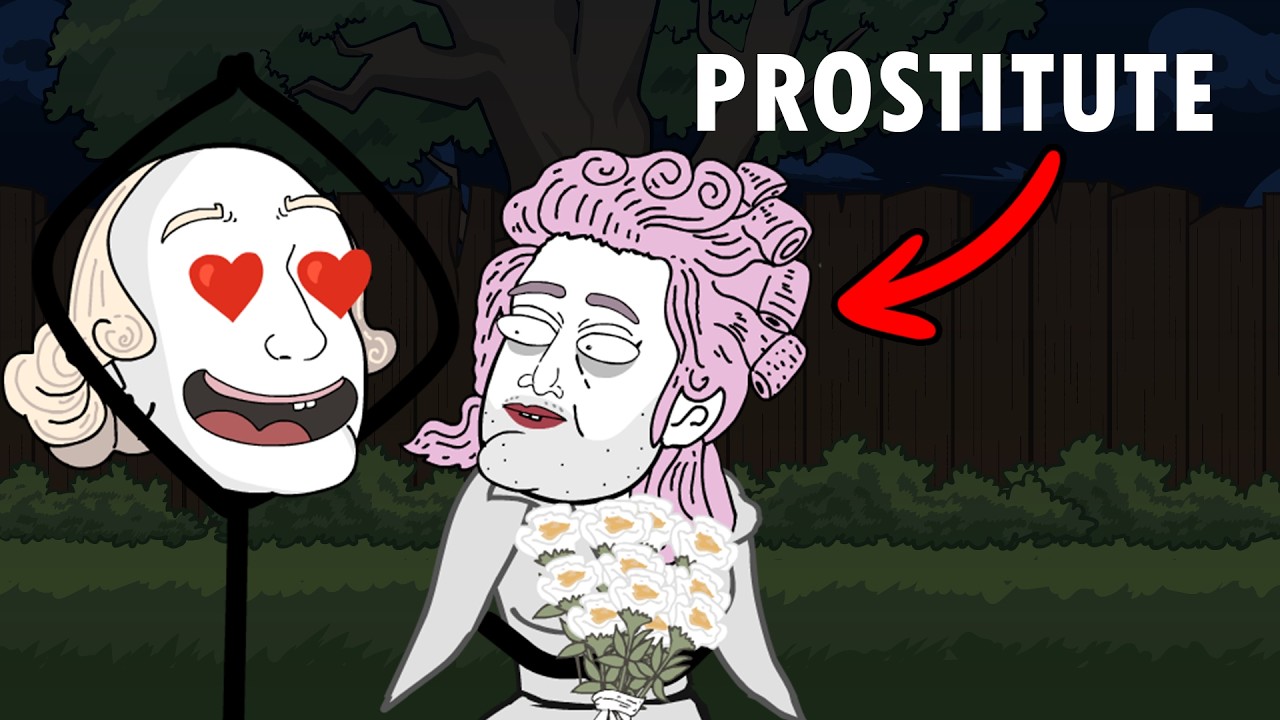
Rohan asked Jeanne to arrange a meeting with the Queen so he could talk to her in person and apologize. So, not making this up, she hired a prostitute who kind of looked like Marie Antoinette and told the Cardinal to meet her in the gardens of Versailles in the dark of night.
At this meeting, the Queen forgave Rohan for everything he had done. He could not believe it. This had all worked out way better than he could have ever hoped, and as a thank you, he began to give lots of money to Jeanne to show his gratitude.
This continued on for years with Jeanne’s life getting better and better until 1785, when she met a pair of desperate jewelers who asked her for help. As she listened to their request, her mind raced with the riches that were right there for her to take. All she would need was a little help from her old friend Cardinal de Rohan.
These jewelers had crafted an extremely expensive diamond necklace for the mistress of the previous King Louis the 15th. But before they could deliver the necklace, the king died. So they were stuck with this incredibly expensive piece of jewelry with no buyer.
They had tried to ask King Louis the 16th if he wanted to buy it for his queen, but when he asked Marie if she wanted it, she found the idea of wearing a necklace made for the former king’s mistress repulsive and refused it twice. The jewelers were now in dire straits. The necklace was valued at 2 million Livre, which is about 20 million dollars in today’s money.
Having that much capital tied up in an unsellable piece of jewelry, they were on the brink of bankruptcy.
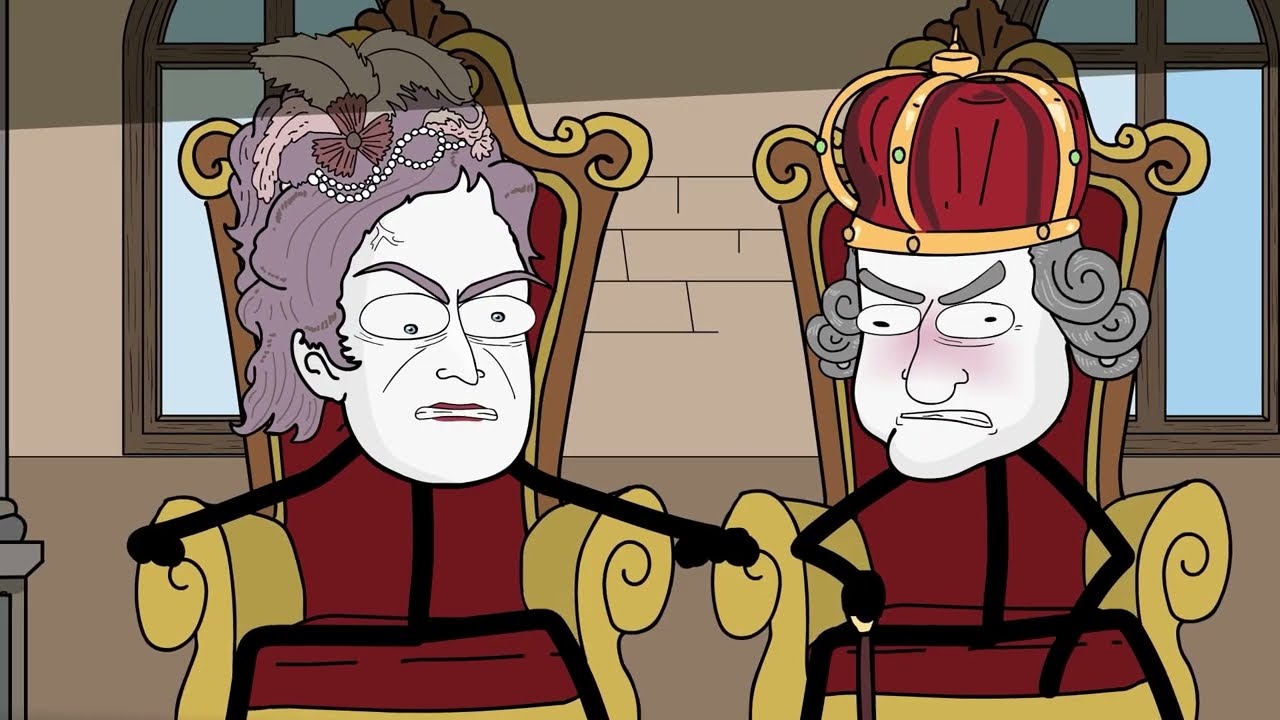 Smelling their desperation, Jeanne was reminded of how the cardinal’s desperation had worked out really well for her. So she came up with the ultimate plan to use both the jewelers and the cardinal to become richer than she could have ever imagined. She went to Rohan and told him that the queen really wanted this expensive necklace, but she was afraid to buy it because of how it would look to the people of France.
The economy was kind of in the toilet, and it would look super bad for the queen to be splurging on herself. So she asked Rohan to buy it in secret for her.
Rohan, wanting to remain in the good graces of the queen, agreed and negotiated with the jeweler to buy the necklace in installments. He delivered the necklace to a man Jeanne had told him was one of the queen’s men, who immediately delivered the necklace to her, and she began stripping the diamonds off the necklace and selling it on the black market in London and Paris. Meanwhile, Rohan eagerly looked forward to hearing from the queen, expecting her to thank him for the wonderful gift, but she never said anything to him about it.
In fact, he did not get any letters, and she did not even wear it in public at all.
Eventually, the jewelers came to Rohan for their second payment, and he hesitated in paying it, saying he did not know if the queen actually liked the necklace. Freaking out, the jewelers rushed to Versailles and somehow managed to get to the queen, and they asked why she had not worn the beautiful necklace yet. Queen Marie was at first very confused, but as the jewelers continued to speak she became livid hearing the full story.
Rohan was called to the palace at Versailles to stand before the king and queen, and confused by what they were saying, he showed them the letters he had received from Queen Marie as proof he had only done what she had asked. The king and queen were outraged by the forgery, and soon Jeanne, her pimp boyfriend, and the prostitute who had impersonated the queen were all also arrested along with Rohan.
They were given a public trial with the royals expecting this should be an open and shut case, but this is where the story gets even crazier. The citizens of France heard about everything and they surprisingly took the side of Cardinal de Rohan. The people of France had been suffering.
They had long made up their minds that they did not like Marie and that she was spending the kingdom into ruin. Rohan was eventually found innocent and acquitted, though he was eventually exiled by the king. The pimp was also exiled, and Jeanne was found guilty and sentenced to be branded and imprisoned in the Salpêtrière for her crimes, though she escaped just a year later by pretending to be a boy.
She ran away to London and wrote a memoir of the whole event blaming Queen Marie Antoinette for everything.
The only thing the people of France remembered following the trial was the obscenely expensive diamond necklace. This fueled the ideas that had been taking hold at the time that the royalty were removed from the lives of their citizens and that there needed to be drastic change. Though she was completely innocent in the crime involving the necklace, Marie Antoinette became even more hated by everyone in the country, and her reputation never recovered.
The animosity towards their queen and the entire Bourbon monarchy continued to build until the French Revolution began just 3 years later, and famously both King Louis the 16th and Marie Antoinette would both be beheaded by the guillotine.
## Isaac Bickerstaff, Esquire
It’s January 1708, and a man named Jonathan Swift is cracking open the latest edition of the Merlinus Liberatus Almanac written by John Partridge. Filled with confident predictions of the future, horoscopes, the latest in scientific findings, rumors, and social commentary, these almanacs were the era’s version of 𝓿𝒾𝓇𝒶𝓁 email newsletters or YouTube commentary videos. Partridge’s yearly publication was insanely popular.
Swift began scanning through the pamphlet, but after a few pages he could not believe people actually liked this trash. It was poorly written, and the predictions Partridge was making were all based on astrology and completely ridiculous.
Swift himself was a prolific writer who had published his own opinions through letters and pamphlets, and with every page he turned he felt personally attacked by the piss-poor writing and commentary. Having already bought the almanac, he continued through it and eventually found something that completely set him off. Throughout the booklet, Partridge made sarcastic comments about the infallibility of the Anglican Church, the same church that Swift happened to be working for.
The slop writing was one thing, but a jab at his church was a line too far.
So, with his favorite day of the year, April Fools’ Day, coming up, Swift came up with an idea to put this fraud Partridge in his place. And by put him in his place, he meant he set out to destroy this man’s life. He wrote and published a letter he titled Predictions for the Year 1708 using a 𝒻𝒶𝓀𝑒 persona named Isaac Bickerstaff, Esquire.
In the letter, Bickerstaff claimed to be an astrologist, just like Partridge, and in a very similar smug writing style to Partridge, he wrote his own set of bold predictions for the year. In a rather extensive list that included many would-be world-changing events, he predicted that the famous almanac writer John Partridge would infallibly die from a raging fever on March 29th at about 11:00 p. m.
 at night.
The letter was published and soon became the talk of the town. Partridge read a copy and was appalled that someone was out there saying he was going to die. Slightly disturbed, he brushed it off.
But this was only the first stage in Swift’s multi-part prank. And if John Partridge thought this was the end of it, he was dead wrong.
On March 30th, the day following the day Bickerstaff had predicted Partridge would die, Swift published another letter entitled The Accomplishment of the First of Mr. Bickerstaff’s Predictions. This time, he did not write as Isaac Bickerstaff, but instead wrote as an anonymous government employee.
In the letter, the official confirmed that Bickerstaff’s prediction of John Partridge’s death was in fact accurate, with the only mistake he had made being the time of death. Despite the minor error, the prediction was remarkably true, and Partridge had died exactly as Bickerstaff had said with the fever and everything. The government official also wrote in his letter that on his deathbed, Partridge confessed that his almanacs were full of crap and that he had made up everything he had ever written.
That same day, Swift published an elegy under his own name in honor of the deceased John Partridge. But it read more like a roast than a respectful farewell. He wrote that despite being able to read the stars, Partridge failed to predict his own death.
And he went on to throw in a dig at everyone who read and was stupid enough to believe any of Partridge’s almanacs.
Swift’s prank worked better than he could have ever imagined, and people throughout England quickly believed them to be true. John Partridge woke in the middle of the night to the sound of mourners crying outside his window, distraught by his passing. An undertaker arrived at his house the following day to hang the mourning drapes and pay his respects to Mrs.
Partridge for her husband’s untimely passing. Coffin makers showed up at his door and told John Partridge directly that Mr. Partridge’s coffin was ready.
Someone even commissioned his gravestone to be carved, and it was nearly installed at the local parish church.
As Mrs. Partridge walked around town the following day, everyone stopped her to tell her how sorry they were to hear about the passing of her husband. John Partridge could not believe what was happening, but he assumed it would die down eventually.
It did not. More and more ridiculous things kept happening. A quack doctor showed up at his home and began proclaiming that he was now practicing from the home of the late great John Partridge, and debt collectors came knocking on his door to settle the outstanding debts he owed at his time of passing.
It got so bad that later Partridge was forced to write and publish a letter stating that he was in fact still alive. In the letter he accused Jonathan Swift of being the person behind the lies as well as being a Vatican spy sent to destroy Protestant astrologists in England. Now, who knows what would have happened if Partridge had just left it alone.
Maybe Swift might have thought the prank had gone far enough, but accusing an Anglican clergyman of being Catholic was probably not the smartest idea, because the following year Isaac Bickerstaff returned.
In early 1709, Bickerstaff published another letter entitled A Vindication of Isaac Bickerstaff. In this letter he broke down all the reasons why Partridge was really dead, with the most convincing argument being that a man who is really alive does not need to tell people he is not dead. With that mic drop, Swift retired the Bickerstaff pseudonym, but by then the name had become so famous that future writers in England would later adopt it as their own pseudonyms.
Partridge’s credibility was forever damaged, and he lost many of his financial backers. The prank plagued him until his death in 1715. The writings of Isaac Bickerstaff even made it to the American colonies, and Benjamin Franklin, upon reading it, thought what Swift did was genius.
Inspired, he created his own pseudonymous character called Poor Richard based on Isaac Bickerstaff and began publishing his own almanac under that name, which became a huge financial success. As for Jonathan Swift, he later went on to write a satirical adventure novel called Gulliver’s Travels, which became a worldwide international bestseller.


