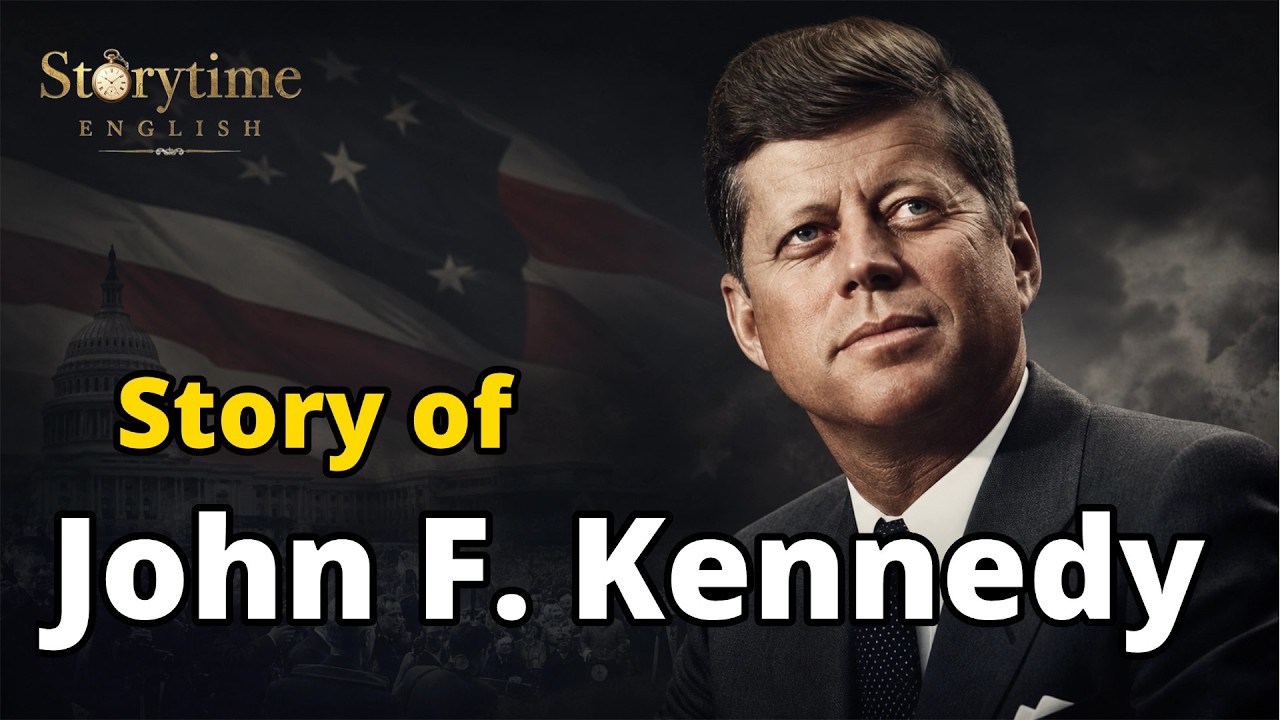
It is two o’clock in the morning. The date is August the 2nd, 1943. Somewhere in the black waters of the Solomon Islands in the South Pacific, a young American lieutenant, a junior officer in the Navy, is swimming for his life.
His boat, a small fast patrol torpedo boat called PT‑109, has just been cut in half by a Japanese destroyer. The destroyer came out of the darkness without warning, slicing through the wooden boat like a knife through paper.
 Two of his twelve crewmen are dead. The rest are scattered in the water, clinging to the wreckage, choking on fuel. The sea is on fire.
Burning gasoline spreads across the surface, orange flames dancing on the black waves. The lieutenant is twenty‑six years old. His back is already injured.
He has had back problems since he was a teenager. Every movement sends pain shooting through his spine.
But one of his men is badly hurt. The man’s face and hands are covered in terrible burns. He cannot swim.
He can barely stay conscious. The lieutenant grabs the strap of the burned man’s life vest, clamps it between his teeth, and begins to swim. He swims for four hours through the dark, shark‑filled ocean, dragging the injured man behind him.
He pulls with his arms, kicks with his legs. The leather strap cuts into his mouth. Four hours in the dark, with no idea if he is swimming toward safety or toward nothing.
When he finally reaches a tiny island, a strip of sand and palm trees barely visible above the water, he collapses on the beach. Then he gets up and goes back for the others. The lieutenant’s name is John Fitzgerald Kennedy.
In seventeen years, he will be the president of the United States.
Take a slow, deep breath, and let this story carry you from the cold waters of the Pacific to the most powerful office in the world. Because today we are telling the story of a man whose life burned so brightly and ended so suddenly that the world has never quite recovered from the shock.
John Fitzgerald Kennedy, Jack as his family called him, was born on the 29th of May, 1917, in a comfortable suburb of Boston. His family was wealthy, ambitious, and deeply connected to the Irish Catholic community of New England. His father, Joseph Kennedy Sr.
, was one of the richest men in America, a ruthless businessman who had made his fortune in banking, the stock market, and the film industry. His mother, Rose, was the elegant and deeply religious daughter of a former mayor of Boston.
Joseph Kennedy had a plan for his family, not just wealth but power. He wanted one of his sons to become president of the United States. And the son he had chosen was not Jack.
It was Jack’s older brother, Joe Jr. Joe was everything a father could want in a future president. He was tall, strong, confident, and charming.
He was the golden boy.
Jack, by contrast, was thin, sickly, and often ill. He spent much of his childhood in bed, suffering from one mysterious illness after another. Scarlet fever, stomach problems, infections that would not go away.
He read books endlessly, lying in bed while his older brother played sports outside. Jack grew up in the shadow of his brother. He was funny, intelligent, and curious about the world.
He loved history and politics, but he was never the one his father was grooming for greatness. He was the second son, the backup.
And then came the war. In 1941, the United States entered the Second World War after the Japanese attack on Pearl Harbor. Both Kennedy brothers enlisted.
Joe Jr. became a bomber pilot in Europe. Jack, despite his terrible back pain and a secret medical condition called Addison’s disease, a disorder that weakens the body and causes terrible, constant fatigue, talked his way into the Navy.
He was assigned to command PT‑109, a small patrol torpedo boat in the Solomon Islands in the South Pacific.
 You already know what happened next. The collision. The burning sea.
The four‑hour swim with a dying man’s life vest clenched between his teeth. After reaching the island, Kennedy carved a message into the shell of a coconut, a plea for rescue, and gave it to two local islanders who paddled their canoe through enemy waters to deliver it to an Allied base. The rescue came.
Kennedy and his surviving crew were saved.
He came home a hero. The Navy gave him a medal for courage. Newspapers told his story.
The thin, sickly boy who was never supposed to be the important one had proven himself in the most extreme way possible. But while Jack was recovering from his injuries, a telegram arrived that broke the family in two. On August the 12th, 1944, Joe Kennedy Jr.
, the golden boy, the chosen son, the one their father had planned for the presidency, was killed. He had volunteered for an extremely dangerous mission, flying a plane loaded with explosives toward a German target. The plane exploded in the air over the English countryside before Joe could parachute out.
He was twenty‑nine years old. His body was never found.
Joseph Kennedy Sr. was devastated. His dream of a Kennedy in the White House had died with his eldest son.
But then he turned to the next in line. He looked at Jack, the sickly son, the second choice, the boy reading books in bed, and said, “It will be you.”
Jack Kennedy entered politics in 1946. He ran for a seat in the United States Congress and won easily, helped by his father’s money, his family’s connections, and his own quiet charm, that natural ability to make people like and trust him. He was elected to the Senate in 1952.
In 1953, he married Jacqueline Bouvier, Jackie, a beautiful, intelligent young woman from a wealthy family. Together, they became the most glamorous, the most beautiful, and exciting couple in American politics.
But behind the smile, Kennedy was in constant pain. His back was so bad that he needed crutches, sometimes a wheelchair, when the cameras were not watching. He took powerful painkillers every day.
He wore a brace around his lower back just to stand upright. His Addison’s disease required daily injections of medication. He once told a friend that he had not had a single day without pain since he was a young man.
The public never knew. They saw a young, handsome, energetic leader, tanned skin, thick hair, a dazzling smile. The image was real, but it was not the whole truth.
In 1960, Kennedy ran for president. He was only forty‑three years old. His opponent was Richard Nixon, the current vice president, experienced, serious, and well‑known.
Many people doubted Kennedy. “He was too young,” they said, “too inexperienced.” And he was Catholic.
No Catholic had ever been elected president. In a country where many Protestants feared that a Catholic president would take orders from the Pope in Rome, his religion was a serious obstacle. Kennedy campaigned across the country, giving speeches in small towns and big cities, shaking hands, smiling, projecting an image of youth and energy that made older politicians look tired by comparison.
The turning point came during the first‑ever televised presidential debate. Seventy million Americans watched. Nixon, who had been ill, looked pale, thin, and sweaty under the studio lights.
Kennedy looked calm, confident, and young. People who listened to the debate on the radio thought Nixon had won. People who watched it on television thought Kennedy had won.
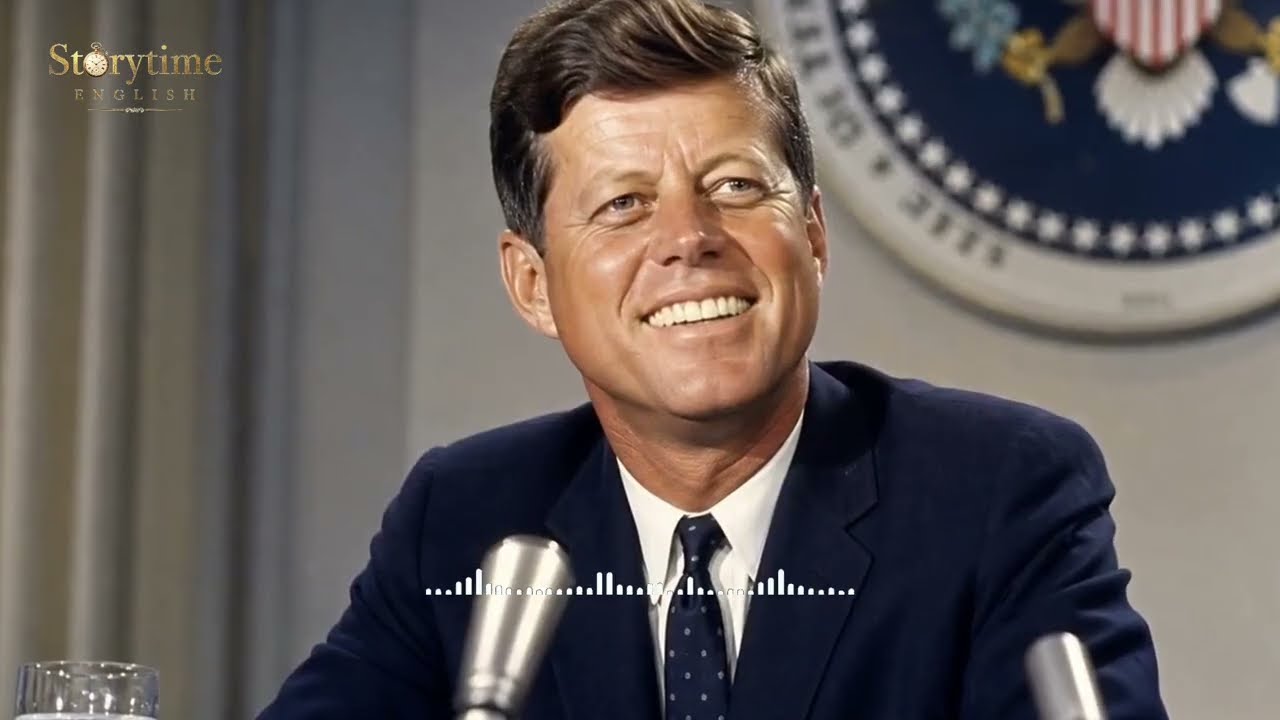 The power of the image, the way a leader looked and sounded, changed politics forever. That night, Kennedy won the election by the narrowest margin in modern American history.
On the 20th of January, 1961, he stood in the freezing cold on the steps of the Capitol Building in Washington and delivered one of the most famous speeches ever given. “Ask not what your country can do for you,” he said, his breath visible in the winter air. “Ask what you can do for your country.”
He was the youngest man ever elected president. He brought youth, energy, and a sense of possibility to the White House. He and Jackie had young children, Caroline and John Jr.
And for the first time, the sounds of small children playing filled the presidential residence. The press called it Camelot, after the legendary court of King Arthur, a golden age of beauty, culture, and idealism.
But the presidency tested Kennedy immediately. In April 1961, just three months after taking office, he approved a disastrous plan to send Cuban exiles to invade Cuba and overthrow the communist leader, Fidel Castro. The invasion, known as the Bay of Pigs, was a complete failure.
The invaders were captured or killed. Kennedy was humiliated. He had trusted the advice of his intelligence agencies, and that advice had been wrong.
He took full public responsibility. “Victory has a hundred fathers,” he said, “but defeat is an orphan.” He learned from the failure.
And eighteen months later, that lesson saved the world.
In October 1962, American spy planes discovered that the Soviet Union was secretly building nuclear missile bases on the island of Cuba, just ninety miles from the coast of Florida. The missiles, once operational, could reach every major city in the eastern United States in minutes. The world had never been closer to nuclear war.
For thirteen days, Kennedy and his advisers sat in a room in the White House deciding the fate of the planet. His military generals wanted to bomb the missile sites immediately and invade Cuba. They told Kennedy that the Soviets would not fight back.
Kennedy did not believe them. He remembered the Bay of Pigs. He remembered how confident the experts had been and how wrong.
Instead of bombing, Kennedy chose a naval blockade, a ring of American warships around Cuba, stopping any Soviet ships from delivering more weapons. He went on television and told the American people and the world what was happening. He demanded that the Soviet leader, Nikita Khrushchev, remove the missiles.
The message was clear. Remove them or there will be war. The world held its breath.
Soviet ships were sailing toward Cuba. American warships were waiting. If the Soviet ships did not stop, the American Navy would fire.
And then the missiles would fly from Cuba, from Russia, from the United States, and civilization, as humanity knew it, would end.
At the last moment, the Soviet ships turned around. Khrushchev agreed to remove the missiles. Kennedy, in a secret part of the deal, agreed to remove American missiles from Turkey.
Neither side announced the full truth, but the crisis was over. The world exhaled. Kennedy had chosen patience over aggression, diplomacy over force, restraint over pride.
His generals had wanted war. Kennedy chose to give his enemy a way out, a door through which Khrushchev could retreat without losing face. It was, many historians believe, the most important decision any president has ever made.
In the months that followed, Kennedy pushed forward on two fronts that would define his legacy. He committed the United States to putting a man on the moon before the end of the decade. “We choose to go to the moon,” he had declared at Rice University in September 1962, “not because it is easy, but because it is hard.”
 And he began, slowly and cautiously, to support the civil rights movement, sending federal troops to protect black students enrolling in segregated universities, schools that had been separated by race, with white students and black students forced to attend different institutions, and proposing new laws to end racial discrimination. He was not perfect. He was slow to act on civil rights.
He increased American involvement in Vietnam. His personal life, hidden from the public at the time, was far more complicated than the Camelot image suggested. But he was learning, growing, changing, becoming, many historians believe, a better president with each passing month.
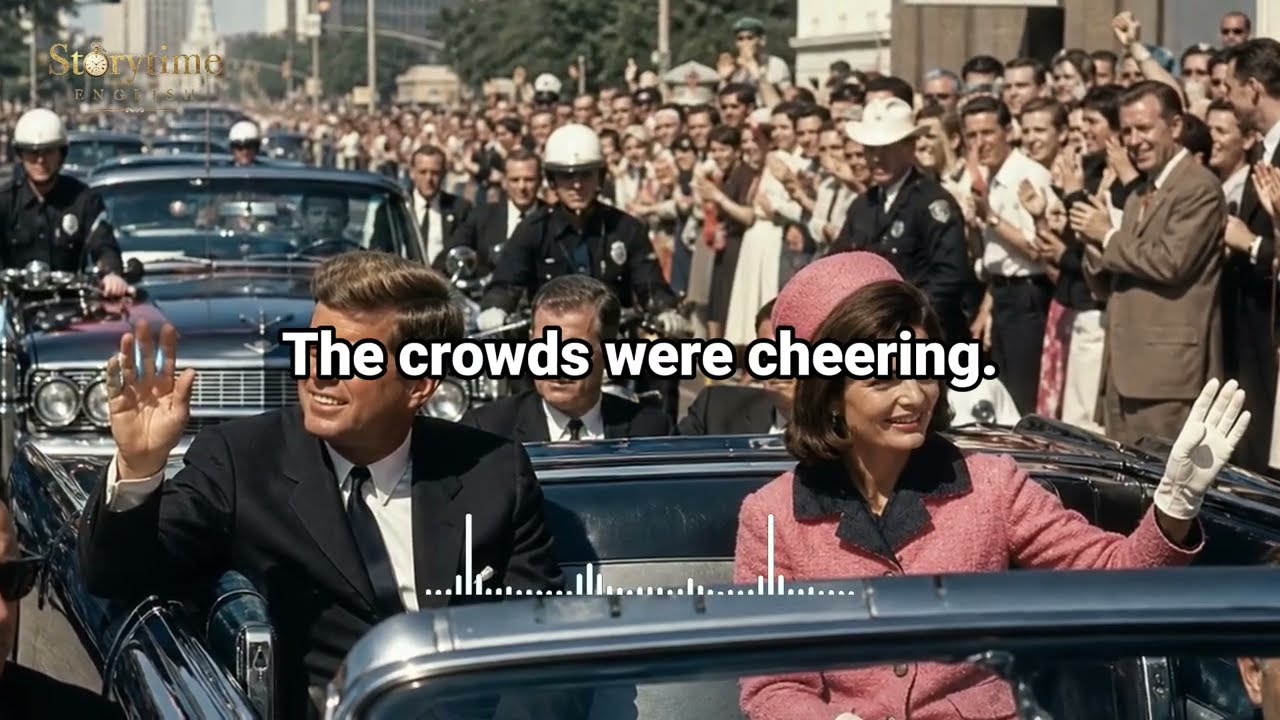
And then came Dallas. On the 22nd of November, 1963, President Kennedy and Jackie flew to Texas for a political trip. They rode in an open car, a long dark blue Lincoln convertible, through the streets of Dallas, Texas.
The sun was bright. The crowds were cheering. Jackie wore a pink suit and a pillbox hat.
Kennedy was smiling, waving to the people lining the road. At 12:30 in the afternoon, shots rang out. Kennedy was struck by two bullets, one in the back, one in the head.
Jackie crawled across the back of the car in horror. The line of presidential cars raced to the nearest hospital, but it was too late. John Fitzgerald Kennedy was pronounced dead at 1:00 in the afternoon.
He was forty‑six years old.
The news spread across the world in minutes. People stopped in the streets. They wept in offices, in classrooms, in living rooms.
Entire countries fell silent. The man arrested for the shooting, Lee Harvey Oswald, was himself shot and killed two days later, before he could ever stand trial. The questions surrounding Kennedy’s death, who was truly responsible, whether Oswald acted alone, have never been fully answered.
They remain, six decades later, one of the deepest wounds in American history.
And so, my friend, the story of John F. Kennedy comes gently to its close. Think about that swim in the dark Pacific.
A twenty‑six‑year‑old man with a broken back pulling an injured sailor through shark‑filled water for four hours, a leather strap clenched between his teeth. He did not know if anyone would find them. He did not know if the island he was swimming toward even existed.
He swam anyway. That is who he was. A man who moved forward into the dark, not because he was certain of the outcome, but because someone was counting on him.
If you visit Arlington National Cemetery today, just across the river from Washington, you will find his grave on a quiet hillside beneath the trees. There is no grand monument. There is only a simple stone, a few words, and a small flame, an eternal flame, lit by Jackie on the day of his funeral, that has burned without stopping for more than sixty years.
Rain, snow, wind, darkness, the flame has never gone out. Sixty years through every storm, still burning.
Your English, my friend, has its own flame. Some days it flickers. Some days the wind pushes hard against it.
Some days you wonder whether it will survive the night. But if you keep it sheltered, if you keep feeding it, word by word, story by story, it will not go out. It will keep burning, quiet, steady, patient, long after the storm has passed.
Tell me, my friend, what part of this story stayed with you the most? Was it the four‑hour swim in the dark Pacific with a dying man’s life vest between his teeth? The thirteen days when the world held its breath?
Or the small flame at Arlington that has never gone out? I would love to hear your answer. There are many more stories waiting right here.
And I will be here when you come back. Until next time, take care of yourself and never stop learning.