The morning started like any other in our house—chaotic, loud, and full of side-eyes across the breakfast table. Granny Cassie had actually gone all out, laying on a spread of eggs, toast, and what looked like actual effort. Darren, the golden child, got nothing but praise for his pleases and thank yous, while I couldn’t even get through a slice of toast without a snipe. “See, why can’t you be grateful like Darren?
”
“Maybe I would be if I was from Eastern Europe,” I muttered, which earned me a scolding and an eye roll. I didn’t care. Poland wasn’t Eastern Europe anyway—at least that’s what I told myself, all smug from having actually read a book about it. My mother called it arrogance.
I called it being the only one in that house who took school seriously. Right, I was going out. The tension in that kitchen was never worth sticking around for. My dad, Steve, was heading off to work, but he lingered near the door, looking at his phone with a frown.
. “What’s up? ” I asked. He looked up, pale.
“Tracy’s in hospital. ”
My stomach dropped. Tracy was Amy’s mum. She was a neighbor, a friend, a normal person who you’d never expect to end up lying in a ward.
“Codeine overdose,” Steve said. “The doctor said… it was a lot. ”
The whole day tilted off its axis. I just kept thinking—Tracy?
Overdosing? She wasn’t the type. She wasn’t anyone’s type for that. By afternoon, we heard she was okay, but groggy, confused, and terrified.
She swore she hadn’t taken anything stronger than wine. She’d made herself a smoothie yesterday—a fresh, healthy thing, full of fruit, nothing weird. She’d opened the bottle of wine herself. Nothing else had been different.
She kept repeating it: “The only thing I had different yesterday was that smoothie. ”
The doctor said it was dose. A proper dose of codeine, enough to fell her. But Tracy didn’t have codeine in her house.
She didn’t use that stuff. She swore it, insisted it, pale-faced in that hospital bed while her daughter Amy sat by her, looking small and scared. No one had an answer. Everyone shuffled around, uncomfortable, saying it must have been a mistake, a bad batch, some dodgy health drink.
But Tracy wasn’t having it. There was only one person she could think of who’d want to hurt her like that. Only one person with a motive sharp enough to slip something into her drink. Cassie.
My granny. Tracy didn’t say it outright at first, but the way her mouth tightened when my gran’s name came up said everything. “She was there that morning,” Tracy said, voice low. “And she looked… furtive.
”
My dad bristled. “Mine always looks furtive,” he said, trying to laugh it off. But his voice cracked around the edges. Tracy wasn’t budging.
She reminded him—again—that Cassie had history. That this wasn’t some wild accusation, that it had happened before. My dad went quiet at that, which said more than any shouting match could. I kept my head down most of that conversation, sitting on the arm of the sofa while they went round in circles.
But my mind was already spinning, looping back to her. My own gran. The woman who made me toast in the mornings, who called me ungrateful, who watched me like I was a puzzle she couldn’t quite solve. Could she really do something like that?
And if she could—why? Why Tracy? I couldn’t shake the image of Tracy’s face, pale against the hospital pillow, saying, “If I have been spiked, I know who I’m pointing my finger at. ”
Everyone kept telling her to calm down, but nobody could explain how that much codeine got into her system otherwise.
And the more she talked, the more I started believing her. Even if I didn’t want to. My dad kept insisting Cassie had nothing to do with it. He said he’d bet his life on it.
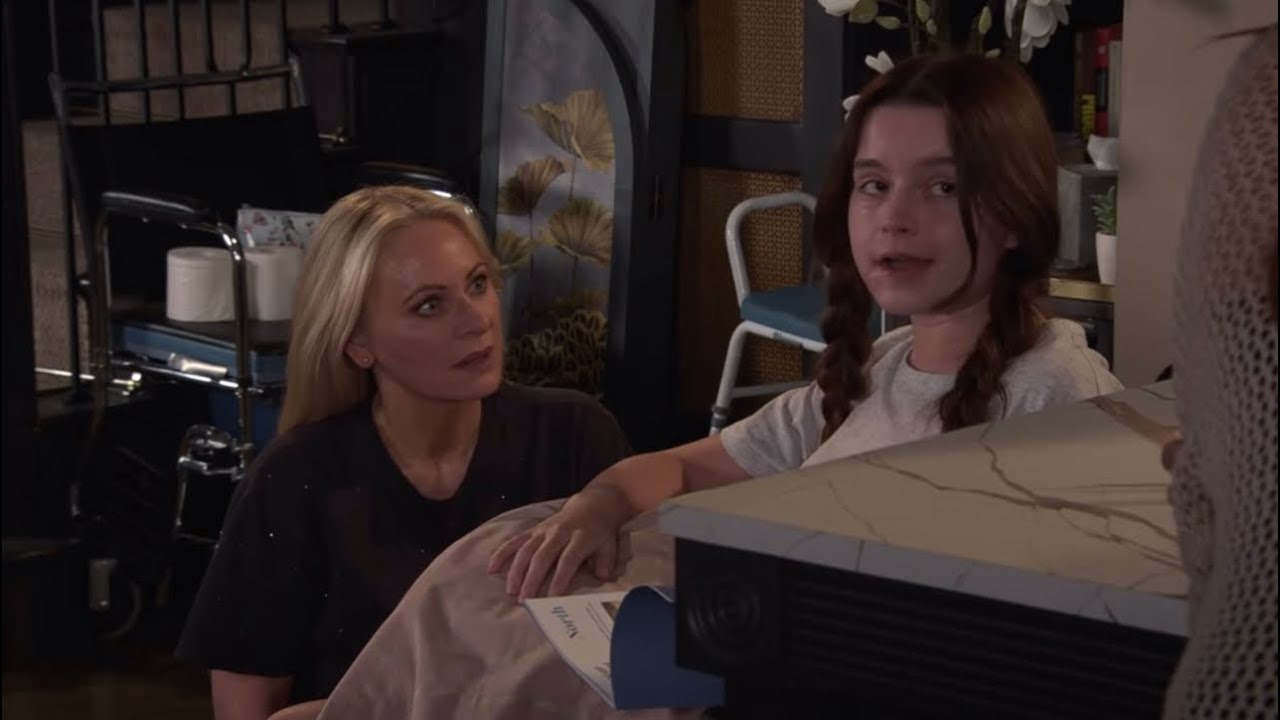
But I saw his hands shake when he said it. And then there was me, stuck in the middle, trying to work out whether my own family was protecting a poisoner or just a confused, frightened woman looking for someone to blame. By the evening, Betsy was back home from the hospital, resting in a makeshift bed downstairs because she couldn’t face climbing the stairs. We’d made it cozy—pillows, blankets, a little table with all her things.
She smiled a bit,tho it didn’t reach her eyes. Everyone tiptoed around her, spoke in hushed voices, brought her soft food and bendy straws like she was a child again. She hated it. I could see it in the way she pressed her lips together, in the way she said, “Don’t let the beggars grind you down.
”
I tried to keep normal. Garden party at Sally’s. Margaritas. A new pizza oven being unveiled like it was the crown jewels.
People splashing in the hot tub, laughing too loud, trying too hard to have a nice time. But everyone kept glancing over at Betsy, checking she was alright, checking she didn’t need anything, being so bloody careful with her. And every time someone mentioned what happened, the room went quiet, and everyone looked at their shoes. I slipped out for a bit, wandered over to Deb’s to fetch flowers, but ended up with cider instead—flowers felt pointless, somehow.
The look on everyone’s miserable faces told me I’d need something stronger than petals. And I was right. The second I got back, the mood had shifted. My dad was standing in the middle of the garden, white as a sheet, staring at Tracy.
And Tracy was standing there too, out of hospital, pale but fierce, pointing her finger at my gran. Cassie was sitting in a deckchair, face unreadable, saying nothing at all. “If you were in your cardigan, you could have killed her,” someone snapped. My gran finally spoke, quiet, measured:“It wasn’t like that, love.
”
Tracy’s voice cut through:“Or Amy. Or Ross. You do realize that, don’t you? ”
And then my gran said it.
Slowly, like she was confessing to something smaller than it was, but knowing the words would land anyway. “It wasn’t meant for Tracy. It was meant for Ross. And it was just a couple of tablets so he’d fail his pre-employment drug test—so he wouldn’t be hanging around here anymore.
”
The whole garden went silent. I couldn’t breathe. I just stood there, holding cider I no longer wanted, watching my gran confess to poisoning someone’s drink—just a couple of tablets, she kept saying, like that made it small, like that made it okay. But it wasn’t okay.
It was attempted murder, or as close as you could get without meaning to–and she hadn’t even meant the person she actually hurt. Tracy’s face crumpled. “Every time you convince me that you’ve changed… but this? This was nearly full.
”
My dad looked like someone had punched him in the gut. He kept shaking his head, saying, “No, no, no,” like he could unhear it. And I just stood there, watching my family fracture in real time, not knowing who to look at, not knowing what to say. Because the woman who made my breakfast, who snipped at me across the table, who was supposed to be family—she’d just admitted to poisoning someone.
And not even the right someone. That evening, everyone scattered. People made excuses, grabbed their things, slipped away without proper goodbyes. My dad tried to talk to me, but I couldn’t face him.
I couldn’t face any of them. I went up to my room, sat on the edge of my bed, staring at the wall, trying to work out how we got here. I thought about Ross, the man she’d been trying to get rid of. I’d never even met him properly.
And now he was tangled up in all of this just by existing. I thought about Tracy, who’d almost died because someone wanted to make someone else fail a drug test. I thought about Amy, her daughter, who’d nearly lost her mum over nothing, over some stupid scheme that had gone wrong in every possible way. And I thought about my gran, sitting in that deckchair, stone-faced, saying, “It was just a couple of tablets,” like she still believed that made it fine.
It didn’t. It never could. Later, I found a note shoved under my door. It was from my dad, in his shaky handwriting, saying he needed to talk to me, that there was more to it, that he was sorry.
I folded it up and tucked it in my pocket, but I didn’t go down. I wasn’t ready. I didn’t know if I’d ever be ready. Because the woman I’d grown up calling Gran had tried to poison someone.
And my dad—her son—was still trying to defend her, still saying she couldn’t have meant it, still making excuses. I lay awake that night, staring at the ceiling, listening to the house creak around me. Somewhere downstairs, Betsy was probably sleeping, recovering from a brush with death she didn’t even cause–and somewhere else, my gran was probably pretending this was all a terrible misunderstanding. But I knew what I’d heard.
I knew what she’d said. And I didn’t know how to live in the same house as someone who could do that–even if she was family. The next morning, I came downstairs early, before anyone else was up. I made myself a cup of tea, sat at the kitchen table, and listened to the silence.
The house felt different now—heavier, like it was holding its breath. My gran came down about an hour later, wearing her usual cardigan, face carefully neutral. She didn’t look at me at first. She just went to the kettle, filled it, stood there with her back to me.
“Morning,” she said, like nothing had happened. Like she hadn’t almost killed someone two days ago. I didn’t answer. I just sat there, holding my tea, watching her from across the kitchen, and wondering how someone could look so ordinary after doing something so monstrous.
She turned around, cup in hand, and finally met my eyes. “You look tired,” she said. I didn’t say anything. She came closer, set her cup down on the table, sat across from me.
We were alone in the house. No one to buffer. No one to change the subject. “I know what you heard,” she said quietly.
I still didn’t answer. “You think I’m a monster,” she said. I finally spoke. “Did you even stop to think about what could have happened?
Tracy could have died. ”
She looked down at her hands. “It wasn’t supposed to go that far. ”
“But it did.
”
She didn’t argue. She just sat there, silent, looking old in the morning light. “What happens now? ” I asked.
She shook her head slowly. “I don’t know. ”
And that was the worst part. She didn’t know.
None of us knew. And everyone was walking around pretending we could just carry on, go back to toast and mornings and garden parties—like she hadn’t just admitted to poisoning someone, like we weren’t all living under the same roof as someone capable of that. I pushed my chair back, stood up, grabbed my coat. “Where are you going?
” she asked. “Out,” I said. I didn’t look back. I walked out the front door, into the cold morning air, and kept walking.
I didn’t know where I was going. I just knew I couldn’t stay in that house another minute—not with her sitting there, ordinary as anything, with poison in her past and tea in her hands. The street was quiet. I shoved my hands in my pockets, walked faster, felt the cold bite my cheeks.
My phone buzzed in my pocket. I pulled it out. It was my dad, texting, asking where I was. I typed back:“I’m fine.
”
I wasn’t fine. I didn’t know if any of us would ever be fine again. But I couldn’t say that. I couldn’t explain it.
So I just kept walking, out of the estate, onto the main road, not looking back. Behind me, in the house I’d grown up in, my gran was probably washing up her teacup, pretending everything was normal. And I hated her for it. I hated her for sitting there, all calm, all ordinary, after what she’d done.
But I hated myself too, because part of me still wanted to believe her, still wanted to think it was all a mistake, that she couldn’t really be capable of that. Because she was my gran. She made my breakfast. She called me ungrateful.
She was supposed to be safe. And now I didn’t know what she was. I walked all the way to the park, sat on a bench, watched the morning go by. Eventually, my phone buzzed again.
It was Tracy, of all people. “Are you okay? I know yesterday was awful. If you want to talk, I’m here.
”
I stared at the screen for a long time. Then I typed back:“Thank you. ”
And I sat there a while longer, feeling the cold seep through my coat, wondering how we were supposed to go on from here—whether things could ever go back to how they were, or whether this was just the start of something worse. I didn’t have an answer.
I didn’t think anyone did.