Edmund Kemper was only fifteen when he shot his paternal grandparents. He had an IQ of 145, but that intelligence didn’t stop him from being sent to maximum security at Atascadero State Hospital. Instead, it taught him something far more dangerous: how to convince people he was sane. Inside the hospital, Kemper studied how psychiatric evaluations worked.
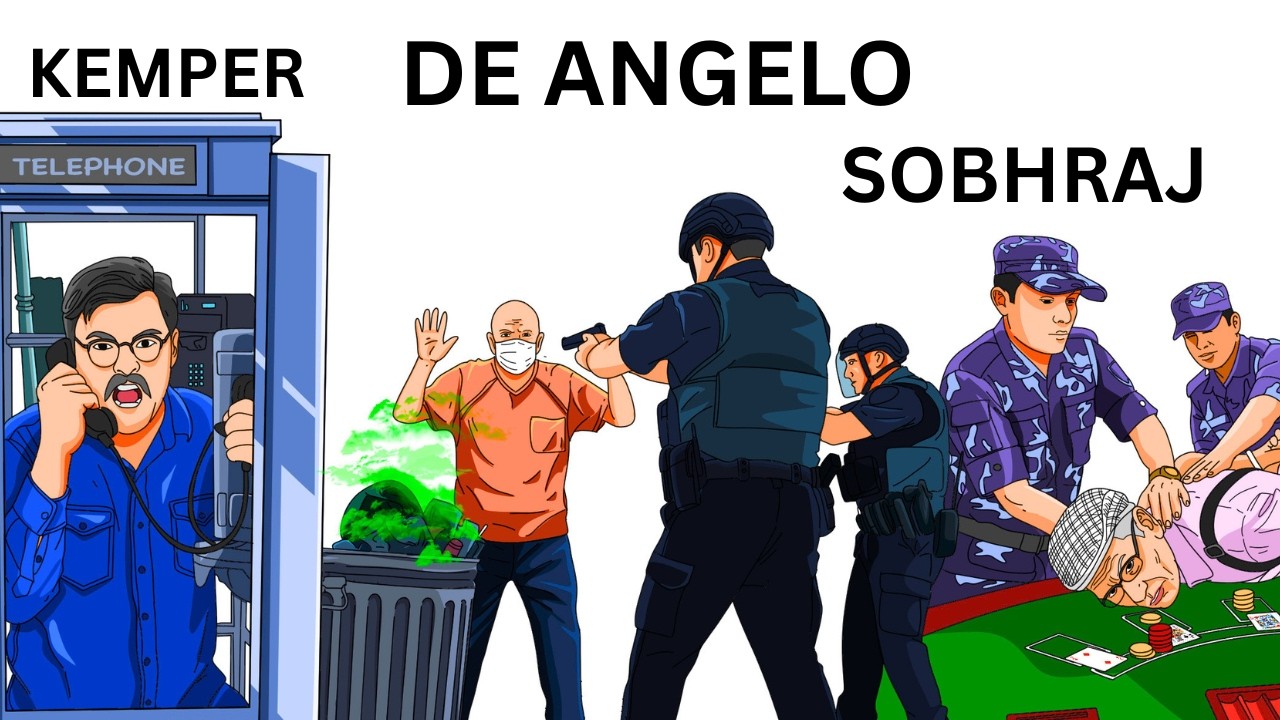
He scored tests for other patients, learning exactly what doctors wanted to see. When his own evaluations came, he gave them the perfect answers. He manipulated the system so effectively that he was released, and the doctors believed they had cured him. Once free, Kemper became known as the Co-ed Killer.
He targeted female college hitchhikers around Santa Cruz, California. He would pick them up, drive them to isolated areas, murder them, and then bring their bodies back to his home. He dismembered them and discarded the remains near Loma Prieta Mountain. What made Kemper truly dangerous was his self-control.
Unlike impulsive killers, he planned everything. He studied police methods, understood forensic evidence, and controlled his crime scenes to avoid leaving traces. He didn’t lay low, either. He spent time with off-duty officers at bars, bought them drinks, and listened to them discuss the investigation.
Some officers even asked for his thoughts on the Co-ed Killer, never realizing they were drinking with the man they were hunting. Eventually, Kemper killed his own mother and her friend Sara. He drove all the way to Colorado to give himself time to think. But when he got there, he was disappointed.
No one was hunting him. He had killed eight people, and the police hadn’t even connected him to the crimes. He called the police from a phone booth and confessed. They thought it was a prank.
He had to call back and confess a second time before they believed him. He later said he turned himself in because the original purpose was gone, and he couldn’t handle it anymore. Many believe he would never have been caught if he hadn’t confessed. Kemper was convicted of murdering seven women and one girl.
He asked for the death penalty, but received eight life sentences instead. He remains imprisoned at the California Medical Facility. Joseph James DeAngelo was a former police officer who became one of the most prolific serial killers in American history. Between 1974 and 1986, he committed 13 murders, dozens of sexual assaults, and over 50 burglaries across California.
He avoided capture for more than forty years. DeAngelo used his law enforcement training to stay ahead of investigators. He monitored police radio scanners during his crimes, tracking officers’ movements in real time. He studied homes before attacking, disabled exterior lights, and left doors and windows unlocked for later escape.
He even moved weapons out of reach so victims couldn’t defend themselves. What made DeAngelo especially dangerous was his patience. He avoided clear patterns and took extreme steps to prevent leaving fingerprints or DNA. But the biggest reason he stayed free was timing.
Once DNA technology became more advanced, he recognized the danger and simply stopped killing. His older crimes left DNA, but there was no match in FBI databases for decades. Then investigators tried a new method: genetic genealogy. They compared crime scene DNA to public ancestry databases, building a family tree that eventually led to DeAngelo in Citrus Heights.
Detectives secretly collected discarded items from his trash. The DNA matched. In April 2018, he was arrested outside his home. Many believe he never would have been caught without modern genetic tracing.
In 2020, DeAngelo pleaded guilty and was sentenced to life in prison without parole. John Leonard Orr was a fire captain and arson investigator in Glendale, California. He became one of America’s most prolific arsonists, setting more than 2,000 fires while using his insider knowledge to avoid suspicion for decades. Orr targeted crowded retail stores during busy Saturday hours.
He used a simple but effective delayed ignition device: a cigarette rubber-banded to matches inside a paper bag filled with accelerant. It gave him eleven minutes before the fire started. This method became his signature. His deadliest fire was the 1984 Ole’s Home Center fire in South Pasadena, which killed four people, including a two-year-old.
Years later, Orr returned to the scene as a consultant, effectively helping investigate his own crime. Investigators eventually noticed suspicious fires along routes tied to arson investigator conferences near Highway 99. When they mapped the fires against conference attendance, Orr’s name appeared on every single one. But his real downfall was ego.
He wrote a novel called Points of Origin featuring a firefighter who set fires for fun using the same cigarette delay device. A store fire in the book exactly mirrored the Ole’s Home Center fire. He even submitted the manuscript to publishers while investigators were already watching him. The partial fingerprint that ended it came from one of his devices recovered at a 1987 fire in a Bakersfield craft store.
The fingerprint sat in evidence for years until investigators compared it directly to Orr’s fire department records and got a match. Orr was questioned in 1989, but he stayed calm and cooperative and gave them nothing. He continued setting fires for two more years. He was finally arrested in 1991 for being present at another suspicious fire.
He was sentenced to life in prison plus 30 years. Rodney Alcala claimed to have an IQ of 170. Known as the Dating Game Killer, he posed as a photographer, offering fake modeling opportunities to lure and isolate victims. He moved constantly between states like California, New York, and South Carolina, frequently changing names, disguises, and aliases.
Alcala repeatedly manipulated the justice system. After assaulting an eight-year-old girl in 1968 and fleeing, he was arrested in 1971 but pleaded guilty to lesser charges. He avoided harsher punishment and was released after only 34 months. His calm, charming personality helped him blend into society.
He even appeared on the TV show The Dating Game and won as a contestant, passing background checks while actively killing. But eventually he got careless. In 1979, twelve-year-old Robin Christine Samsoe disappeared in Huntington Beach. Witnesses said a man had approached girls on the beach, offering to photograph them.
After police released a sketch, Alcala’s parole officer recognized him. Alcala was arrested in July 1979 after police found a receipt for a secret storage locker in Seattle. Cops found it full of trophy photos of victims and jewelry. DNA later tied more cold cases to him.
He was convicted of Samsoe’s murder and sentenced to death. He was ultimately linked to nine murders, though investigators believe the true number could be over 100. While on death row, Alcala filed lawsuits over a slip-and-fall accident and being denied a low-fat diet. He died of a heart attack in 2021 at age 77, still awaiting execution.
Dorothea Puente was known as the Death House Landlady. She murdered at least nine tenants at her boarding house in Sacramento between 1982 and 1988. Puente posed as a harmless elderly landlady. She specifically targeted elderly and mentally disabled tenants, people who could easily be dismissed as having wandered off or died from natural causes.
She built trust by acting like a sweet grandmother figure, wearing vintage clothes and baking cookies for neighbors and even the police. Once tenants moved in, she drugged and poisoned them, then buried their bodies around the property, often covering them with concrete. This delayed discovery, since investigators needed strong evidence before getting permission to dig. At the same time, she kept cashing their social security and government checks, forging signatures and intercepting their mail.
She forged letters to victims’ families to make it seem like they were still alive or traveling. When police began investigating in 1988 after missing persons reports, a former tenant revealed key information that led detectives back to the boarding house. They found the first buried body. Puente fled, but was later recognized and arrested at a motel in Los Angeles.
She was sentenced to life without parole and died in a California prison in 2011 from natural causes. Charles Sobhraj was a French-Vietnamese serial killer and con artist who targeted Western tourists along the South Asian hippie trail during the 1970s. He is believed to have killed at least twenty people. Known as the Bikini Killer and the Serpent, he was described as charming and attractive.
He posed as a gem dealer or drug trafficker, befriending travelers before drugging, drowning, poisoning, or strangling them. He stole victims’ passports, creating a rotating set of false identities that allowed him to move across borders. In 1976 in New Delhi, he and his accomplices tricked a group of French students by posing as tour guides and giving them poison pills disguised as medicine. The plan failed when some victims realized what was happening, overpowered him, and alerted police.
In custody, Sobhraj faked illnesses like appendicitis to be transferred to hospitals, where he would attempt escapes or drug guards. He also bribed officials while held in India’s Tihar jail. He famously organized a birthday party in 1986 where he took out guards with drug-laced sweets, walked out of the front gate, but was later recaptured. After years in jail, he eventually retired to France.
But yearning for attention and overconfident, he returned to Nepal in 2003. A journalist recognized him in a casino, and police arrested him while he was gambling. He was convicted of two murders and sentenced to life imprisonment. In 2022, he was released due to age and health reasons after serving 19 years, and was deported to France.
Scott William Kimble was an American serial killer active between 2003 and 2004. He is confirmed to have murdered at least four people, though investigators believe he could be linked to at least twenty-one. What made him especially dangerous was his ability to manipulate law enforcement. While in jail for fraud and forgery, he conned the FBI into recruiting him as a paid informant in murder-for-hire cases.
This deal got him released early. Once free, he used his new status to commit murders while supposedly helping the FBI. Kimble targeted people he knew: acquaintances, friends, and even an ex-girlfriend. After ending them, he stole their identities, used their credit cards, and forged documents to make it appear they were still alive and traveling.
He dumped most bodies in extremely remote wilderness areas such as Colorado’s Routt National Forest. He fed the FBI mostly useless or false information and even inserted misleading clues into case files. His downfall began when he stole over $55,000 from an optometrist’s account in Colorado by forging checks to his beef company. When police investigated the fraud, they linked him to several missing women.
In March 2006, the FBI tracked him to California and attempted to arrest him. Kimble fled in a dramatic car chase before running out of gas near the Salton Sea, where he finally surrendered. During plea negotiations, he failed a polygraph test and refused to reveal the location of one victim’s body, causing the deal to collapse. He was convicted of multiple murders and sentenced to 70 years in prison in 2009.
He remains jailed in Colorado. Terry Peter Rasmussen, known as the Chameleon Killer, was an American serial killer active from the late 1970s to 2002. He is confirmed to have killed at least five people across multiple states using dozens of different identities. Rasmussen was a master of identity theft.
He stole and memorized other people’s documents, constantly changed names, appearances, and occupations, and moved frequently between RV parks while working as an electrician. When pulled over by police, he could recall every detail of his new identities. This allowed him to evade capture for over thirty years. He is most notorious for the Bear Brook murders in New Hampshire, where four bodies, a woman and three young girls, were found in barrels.
He lived with Denise Beaudin and her daughter in 1981, killed Denise, and then took the child with him. In 1986, he abandoned the girl in California and was imprisoned for child abandonment. After parole in 1990, he vanished again. He resurfaced in 1999 under another false identity, beginning a relationship with Eunsoon Jun in California.
Jun disappeared in 2002. Family and friends grew suspicious because it was completely out of character. Police investigated and discovered Rasmussen was on parole from his earlier child abandonment case. They arrested him for a parole violation.
Investigators then searched the home and found Jun’s mummified, dismembered body buried under hundreds of pounds of cat litter. Rasmussen was convicted for her murder and sentenced to life. He died in prison in 2010 from lung cancer and pneumonia. His real identity was only confirmed in 2017 through DNA testing.
Lawrence Bittaker had an IQ of 138. Alongside Roy Norris, he formed the Toolbox Killers. Bittaker reportedly had a photographic memory and could read entire books in hours while retaining the information. Together, the pair kidnapped, tortured, and murdered five teenage girls in Southern California in 1979.
Bittaker avoided capture through careful planning and logistics. He bought a cargo van with no rear or side windows and a sliding side door that allowed victims to be pulled inside quickly without drawing attention. Bittaker and Norris scouted isolated fire roads in the San Gabriel Mountains. They even cut locks on private gates and replaced them with their own so they could access the areas without interruption.
Instead of immediately preying on victims, they spent months doing practice runs, abducting and photographing hitchhikers to refine their routine and test if they could stay undetected. Their downfall came from Norris himself. He bragged about the murders to another ex-convict he met, who quickly informed police. Norris later cooperated and led them to the victims’ remains.
An FBI profiler later described Bittaker as the most disturbing person he had ever profiled. Bittaker was sentenced to death in 1981 and died of natural causes in 2019 while on death row. Norris died in jail in 2020. Mike DeBardeleben was an American counterfeiter and serial killer known as the Mall Passer for distributing counterfeit bills in shopping malls.
He is confirmed to have killed three people but is suspected in many more murders, though he was never convicted of any homicide. Investigators considered him one of the most versatile and dangerous criminals in American history. He spent nearly two decades traveling the country, committing crimes while using fake $20 bills across 44 states. He constantly moved from mall to mall to avoid patterns, plus used disguises and fake teeth.
To get to his victims, he often impersonated police officers to pull over women on highways. Using at least 26 aliases and no permanent address, he moved through society almost like a ghost. FBI profilers described him as one of the best-documented sexual sadists since the Marquis de Sade. After his arrest, investigators discovered hundreds of photographs, audio recordings, and trophies connected to his crimes.
His capture was almost accidental. In 1982, after repeatedly passing fake bills at the same mall one too many times, police distributed sketches to store clerks and instructed them to report anyone using suspicious $20 bills. This eventually led to his arrest in Milledgeville, Tennessee. Only after his arrest did the Secret Service uncover evidence tying him to kidnappings and sexual assaults.
In court, he represented himself and even forced a victim to listen to recordings of her own abuse while questioning her, accidentally revealing details only the attacker would know. He was convicted on multiple federal charges and sentenced to 375 years in prison. He remained the main suspect in several killings until his death from pneumonia in 2011 at the Federal Medical Center in Butner. Harold Shipman was an English doctor believed to be responsible for 250 murders over three decades, making him one of the deadliest serial killers in history.
With a reported IQ of 140, he used his medical authority and deep understanding of the healthcare system to hide his crimes in plain sight. Shipman mainly targeted elderly women, administering lethal doses of diamorphine before certifying the deaths himself as natural causes. As a trusted general practitioner, he rarely triggered suspicion from families or coroners. He also routinely encouraged relatives to cremate victims, destroying forensic evidence.
Using his office computer, Shipman changed patient histories after their demise, creating fake records that made victims appear seriously ill beforehand. He also manipulated death certificates and cremation paperwork to keep everything looking legitimate. But in the end, he got sloppy and arrogant. His downfall came after the death of Kathleen Grundy, whose will suspiciously left around $400,000 to Shipman while cutting out her own family.
Grundy’s daughter, a lawyer, realized the signature was forged and contacted the police. After exhuming the body, investigators found traces of diamorphine. Shipman’s fingerprint was discovered on the forged will. He was sentenced to life in prison.
He never admitted guilt and said the accusations made no sense. In 2004, he hanged himself in his cell. Edward H. Rulloff, later nicknamed the Genius Killer, was a nineteenth-century polymath connected to up to five murders.
A self-taught expert in languages, law, medicine, and invention, he was a true criminal mastermind of his era. In 1845, Rulloff bludgeoned his wife Harriet to death with a pestle and is believed to have poisoned their infant daughter before dumping their bodies in Cayuga Lake. With no bodies recovered, he was only charged with kidnapping and largely beat the case. He spent the next decades living under aliases, committing thefts and robberies while continuing his scholarly work.
He escaped custody multiple times. His final downfall came in 1870 during a botched jewelry store burglary in Binghamton, New York. Rulloff and two accomplices shot and killed a store clerk. While escaping the scene, Rulloff was the only one who made it across the river, but was captured the next day.
A local judge recognized him from the old murder suspicions. Rulloff was convicted of first-degree murder and publicly hanged in 1871. His last words were, “Hurry it up. I want to be in hell in time for dinner.
”
After his death, his brain was removed and preserved. It weighed over 1,700 grams, the second largest on record, and remains on display at Cornell University.


