The interview was supposed to be about leadership, but the real message came through loud and clear: the old guard is done. A swing-state Democrat named Elissa Slotkin didn’t even try to hide it when the reporter asked her directly whether Hakeem Jeffries should keep his job as House Democratic Leader. “We have literally found ourselves in a situation where we just don’t have people who understand the moment and understand what leadership means,” she said. When pressed on whether that meant Jeffries and Senate Leader Chuck Schumer should be replaced, she doubled down.
“If people can’t understand that the game has fundamentally changed, and they can’t adapt, then they need to let others lead. ”
Jeffries was asked about her comments. He shrugged it off. “I have no idea what Elissa Slotkin was talking about.
”
But the cracks were already showing. The Democratic Socialists had just racked up a string of primary victories, and everyone wanted to know which side Jeffries was actually on. Longtime Democratic official Rahm Emanuel had already drawn a line in the sand, calling out the DSA after their convention in Chicago. “You’re not Democrats.
You’re a separate party. I’ll see you in November. ”
The reporter put it to Jeffries directly: Do Democratic Socialists belong in the Democratic Party? Jeffries dodged.
He listed what he doesn’t support—defunding the police, open borders, abolishing the Senate—but he wouldn’t kick the DSA out of the tent. “I don’t support the DSA agenda as has been articulated by the DSA itself,” he said. But that’s the problem. He won’t actually stand on business.
He won’t take a hard stance. He just keeps equivocating, trying to please everyone and ending up pleasing no one. Then came the question about Medicare for All. Jeffries co-sponsored that legislation for years, from 2013 to 2021.
The moment he became Democratic Leader, he dropped it. The reporter pushed: Would he put it up for a vote if he became Speaker? “These are all conversations that the House Democratic Caucus is going to have to have,” he said. “Right now, we’re focused on November 3rd, not January 3rd.
”
Finally, she cornered him with a yes-or-no question. “Just be very clear though, as a Democratic leader in the House, would you vote for or against Medicare for all? ”
His answer was slow, reluctant. “It’s not legislation that I currently am co-sponsoring or that I support.
”
So there it is. He spent years championing the cause, and now he won’t even back it. He can’t go against the old guard, and he can’t bring in the new one. And while all that political drama plays out in Washington, the consequences are already hitting home in places like Florida.
District 20 was redrawn this year, turning a historically Black district into a battleground that didn’t even get a Black Democrat on the ballot. Twelve different Black candidates ran. None of them could beat Debbie Wasserman Schultz. She just walked in and snatched the district for herself.
Her defenders say she has experience. Her critics say that’s not the same as actually serving the community. “I hope they fight for this district and actually represent this district and not their personal needs,” one of the defeated candidates said. But the fight isn’t over.
There’s a whole new wave of politicians coming up, and they don’t play by the old rules. They’re pushing for Medicare for All, for defunding the police, for a completely different way of doing business. And they’re already calling for new leadership. The question is whether the establishment will welcome them with open arms or try to push them back.
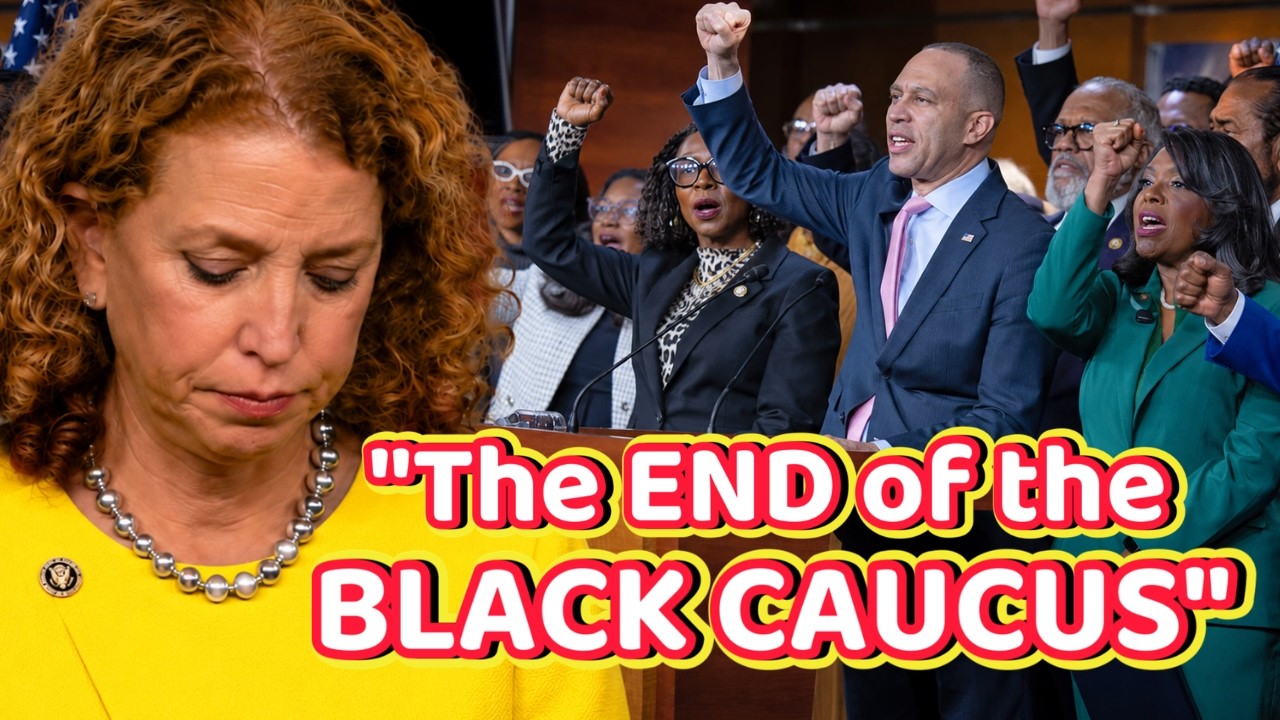
One thing’s for sure: the Congressional Black Caucus as we know it is on its way out. It’s not going to be a smooth transition. It’s going to be messy, loud, and unpredictable. And whether that’s good or bad for the country, only time will tell.
But the old leadership? Their days are numbered.


