A woman walked into a police station in Sunderland one summer evening in 2018 and confessed to a murder that had haunted the northeast of England for nearly 15 years. Karen Tunmore, then 36, told officers she could no longer live with what she had done. Her admission finally solved the brutal killing of 19-year-old Scott Pritchard, a case that had seen an innocent man charged and a community torn apart by silence and suspicion.
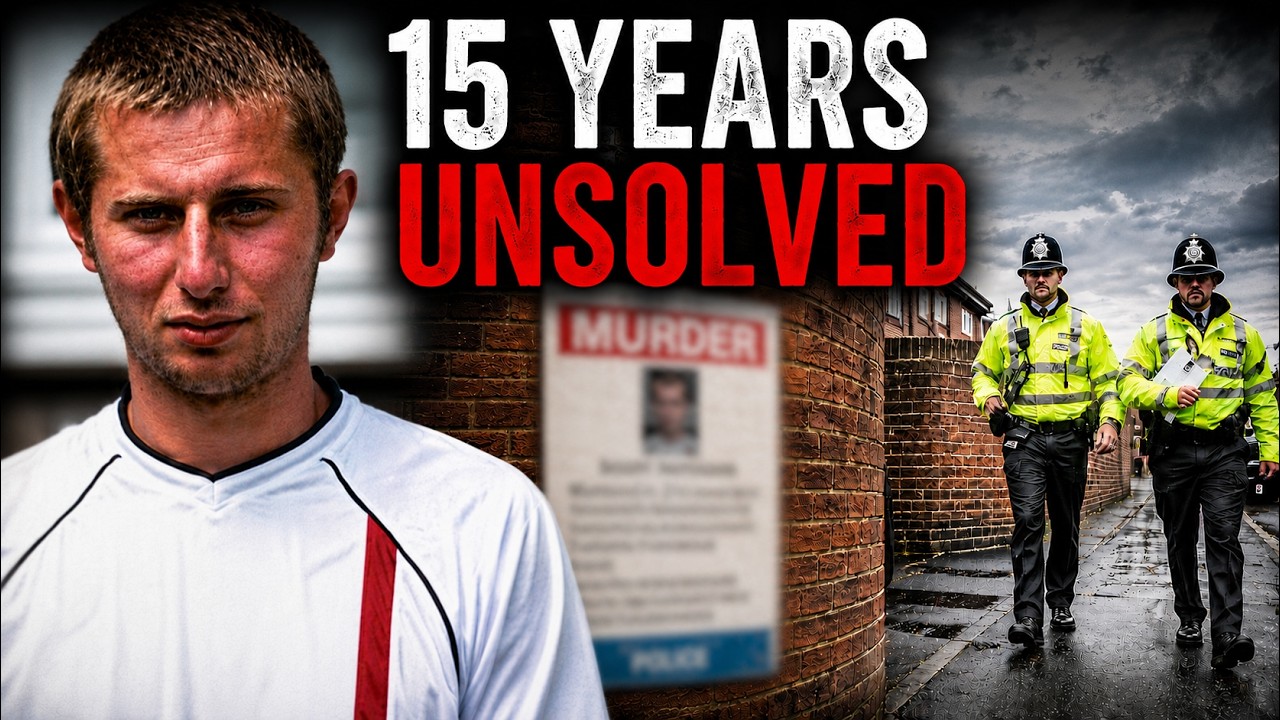 Scott Pritchard was just 19 years old when he was attacked on the evening of January 7, 2004. He was making his way home in the Henden area of Sunderland after a normal day spent signing on at the job center and meeting friends. Scott was on crutches, having broken his right foot, and was virtually defenseless. As he reached the rear of his home in Lindsay Close, someone struck him repeatedly over the head with a blunt object.
A neighbor found Scott lying outside just after 7 p.m., his crutches still beneath his arms. Paramedics rushed him to the hospital, but his injuries were too severe. He died before reaching medical care. The postmortem revealed catastrophic head injuries and multiple skull fractures caused by repeated blows from a blunt weapon. Detectives quickly launched a major murder investigation, but the case soon stalled.
From the outset, police believed someone in the community knew what had happened. Forensic officers examined the scene, and detectives conducted hundreds of house-to-house inquiries. Scott’s movements throughout the day were reconstructed, and friends and relatives were interviewed. Posters bearing his photograph were distributed across Sunderland, appealing for information. Yet, despite the intense activity, no one was prepared to speak.
Just 24 hours after the murder, police received an anonymous phone call. The caller left an interesting message before hanging up. A short time later, another anonymous caller contacted police with more information but again ended the conversation abruptly. Detectives strongly suspected that someone in the locality knew exactly what had happened to Scott, but the wall of silence was already forming.
The investigation soon focused on CCTV footage from a nearby shop. The images showed several people close to the scene around the time of the attack. They were potential witnesses, not suspects, but none had come forward. Police took the unusual step of releasing the images publicly, hoping to identify the four men and one woman captured on camera. Each person was eventually ruled out, leaving detectives back at square one.
Police divers searched a local lake for the murder weapon but recovered nothing. Detectives also released CCTV showing Scott making his way home on crutches shortly before he died, underlining his vulnerability. Walking was clearly difficult for him, and there was no doubt he had been in little position to defend himself. Months passed, then more than a year, with hundreds of statements taken and enormous evidence gathered.
 By January 2005, the case took a dramatic and deeply controversial turn. Police arrested Scott’s father, Robert Stacy, on suspicion of murder. The decision stunned those who knew the family. Robert had been devastated by Scott’s death and had publicly appealed for information. He had fully cooperated with detectives throughout the investigation, but officers believed there was sufficient circumstantial evidence to charge him.
Robert spent 16 weeks in custody awaiting trial. When the case reached Newcastle Crown Court in October 2005, it ended almost as quickly as it began. Prosecutors announced there was no realistic prospect of securing a conviction and formally offered no evidence. The judge directed a verdict of not guilty, bringing the prosecution to an abrupt end. Legally, Robert was cleared, but publicly, his life was destroyed.
Rumors spread quickly, and despite the not-guilty verdict, Robert found himself subjected to 𝓪𝓫𝓾𝓼𝓮 and threats. He was unable to return to his home. The years passed, and the investigation gradually lost momentum. Detectives continued to review information whenever new intelligence came in, but there were no significant breakthroughs. One year became five, five became 10, and many accepted the murder might never be solved.
Then, on the night of July 31, 2018, everything changed. Karen Tunmore walked into a police station in Wen, near Sunderland, and asked to speak to a detective. She introduced herself and said she wanted to confess to the murder of Scott Pritchard. DCI John Bence was one of the officers who spoke to her that evening. He knew false confessions were not uncommon, but this one was different.
Within a short time, detectives realized they were speaking to the person they had been searching for for 14 years. Tunmore was arrested and charged with Scott’s murder. When asked why she had finally come forward, she said she could no longer live with what she had done. Before being taken away, she asked officers to tell Scott’s family that she was sorry.
There would be no trial. At her first appearance at the Crown Court, Tunmore admitted murder. Her guilty plea meant the prosecution did not have to prove the case, but the sentencing hearing finally revealed what had happened on that cold January evening in 2004. Tunmore was just 21 at the time and had been drinking that day.

She told police she had gone to Sunderland with a man she knew only as Steve. According to her account, Scott owed Steve money, while Steve himself owed money to Tunmore. She agreed to accompany him to collect the debt, even though Scott was not known to her personally. When they found him, he was sitting down because walking on his crutches had become tiring.
Tunmore said they demanded money, but Scott told them he did not have any. She then threatened to break his other leg if he failed to pay. Scott laughed, and that single moment caused her to lose control. She picked up a short baseball bat and began striking him repeatedly over the head. Even as Scott slid down against the wall, she continued the attack.
The man she was with told her to stop, but she carried on. She later told detectives she had simply seen red. It was a 𝓈𝒽𝓸𝒸𝓀𝒾𝓃𝑔 account made all the more disturbing by the fact that Scott, due to his injury, was barely able to stand, let alone defend himself. Tunmore admitted that after leaving the scene, she disposed of the baseball bat by throwing it into the River Tyne.
She later sold the car they had used because there was blood inside it. When she heard on the news that Scott had died, she said her first reaction had been to laugh. It was only afterward, as the reality of what she had done sank in, that the guilt began to consume her. For the next 14 years, she tried to carry on with her life.
She became a youth football coach and outwardly appeared to have left the night behind her. But privately, she later claimed she thought about Scott every day until eventually she reached a point where she could no longer live with herself. One question remained unanswered: who is Steve? Police never identified the man Tunmore claimed was with her that evening.
 Detectives believe she knows his identity but has deliberately refused to reveal it. Whether she was protecting someone, scared of someone, genuinely could not identify him, or whether he even existed at all, remains one of the unanswered questions in this case. When Karen Tunmore appeared for sentencing, Scott’s family were finally able to watch justice being done.
The judge sentenced her to life in prison with a minimum term of 17 and a half years before she could be considered for parole. For Robert Stacy, the conviction was deeply emotional. In a victim impact statement, he described the agony of not only losing his son but then being accused of murdering him. Being falsely imprisoned, he said, had broken him.
Even after he was cleared, the rumors never disappeared. He had been threatened, abused, and forced from his home by people who assumed that because he had been arrested, he must somehow have been guilty. Scott’s mother, Kathleen, also spoke movingly about the son she had lost. She described Scott as a kind, confident, and well-liked young man whose best years had been taken from him.
Nothing the court could do, she said, would ever bring him back. But after 14 years, the family finally had the answers they had spent so long searching for. Sadly, there was one final tragedy still to come. Just three days after Karen Tunmore was sentenced, Robert Stacy suffered a heart attack and died at the age of just 66.
No one can say whether the years of grief, public suspicion, and false accusation contributed to his death. What we do know is that after spending almost 15 years fighting to clear his name and see justice for his son, he died only days after finally witnessing the conclusion of the case. The murder of Scott Pritchard remains one of the northeast’s most extraordinary criminal cases.
Behind all the headlines, this story was always about a young man whose life ended far too soon. He was just 19 years old when he died. His family eventually got the answers they had fought so long to find, but no confession, no sentence, and no amount of passing time could ever give them back the son, the brother, and the friend they had lost.


