The arrow had already done its work when the ice gave him back. Ötzi, the 5,300-year-old man found frozen in the Ötztal Alps in 1991, was shot in the back, and his body was so well preserved by the cold that he looked like old beef jerky. Two German hikers stumbled upon him at the Austria-Italy border, and the world was fascinated. But then people started dying.
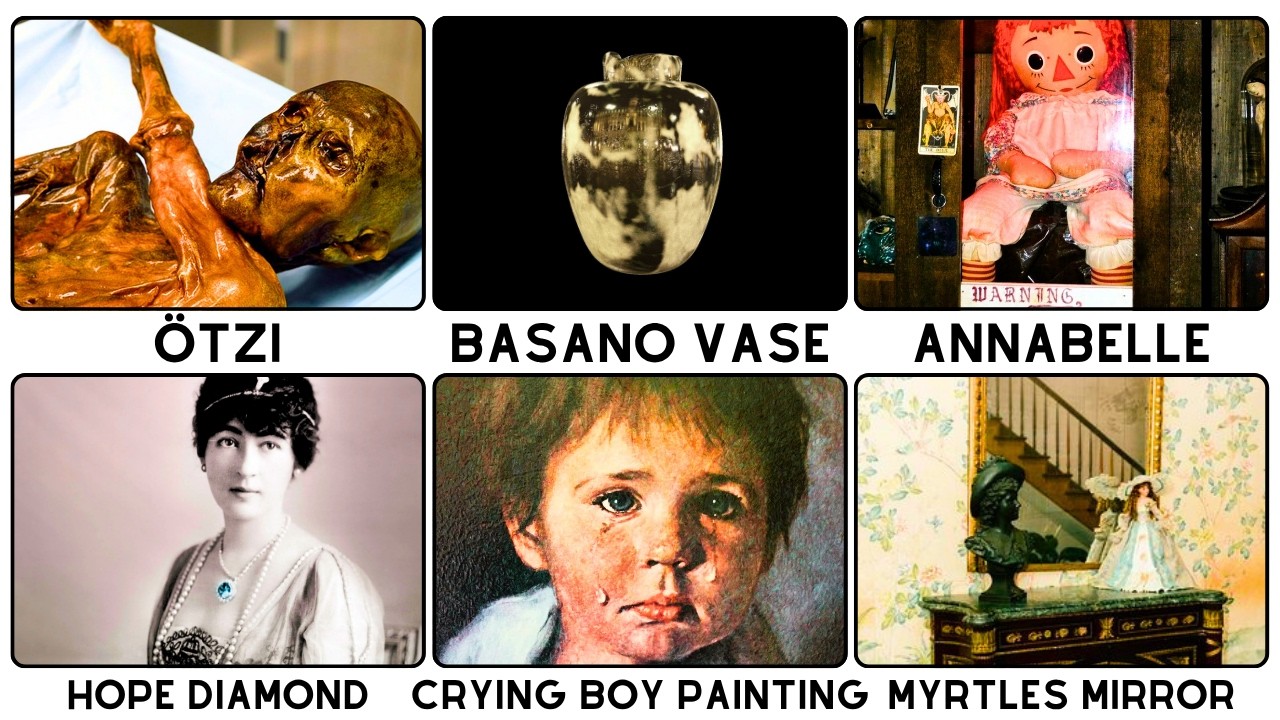
Rainer Henn, the forensic expert who handled the body, died in a car crash in 1992 while on his way to speak about Ötzi. The next year, Kurt Fritz, the mountaineer who guided the team to the corpse, was the only one in his group hit by an avalanche. Journalist Rainer Hölzl, who filmed the removal, died at 47 from a brain tumor shortly after releasing his documentary. Discoverer Helmut Simon was found dead and frozen in 2004 after falling during a blizzard near the same area.
Within an hour of Simon’s funeral, Dieter Warnecke, who led the rescue team, died of a heart attack. Even archaeologist Konrad Spindler, who called the curse media hype, died in 2005 from multiple sclerosis, and scientist Tom Loy, who found blood on Ötzi’s clothes, died the same year from a blood disease. Many others who studied him lived normal lives, yet the legend stuck. Today, Ötzi rests in a refrigerated room at the South Tyrol Archaeological Museum, where 300,000 visitors a year are warned not to touch him.
In 1702, Thomas Busby argued with his father-in-law over their counterfeiting business, then killed him with a hammer and hid the body in the woods. Convicted and sentenced to death, Busby asked for a final meal at his favorite pub, The Busby Stoop Inn. After eating, he stood and declared, “May sudden death come to anyone who dare sit in my chair. ” Around 63 deaths were linked to that chair over the years.
A chimney sweeper died in 1894, several World War airmen never returned from missions, and others in the ’60s and ’70s died shortly after sitting in it. In 1978, the landlord donated the chair to the Thirsk Museum, where it was hung about 1. 5 meters off the ground to prevent anyone from using it. It’s still there.
The Bassano Vase, a silver artifact made in 15th-century Italy, was given as a wedding gift to a young woman. On her wedding night, she was found dead while clutching it, possibly murdered. Every owner after her reportedly died from accidents, heart attacks, or suicide. The family hid it, but it resurfaced in 1988 when a man dug it up in his backyard and found a note saying, “Beware, this vase brings death.
” He ignored it and sold the vase without the note. A pharmacist who bought it died quickly, so did a doctor and several others. No museum wanted it, and after more families refused it, a police officer reportedly buried it. Some claim it’s in a sealed lead coffin; others say the Vatican has it.
Its location is unknown. The Conjure Chest, a mahogany dresser at the Kentucky Historical Society, was donated in 1976 by Virginia Carry Horton, whose family claimed it brought death for generations. The story says it was made in the early 1800s by an enslaved master carpenter named Remus for plantation owner Jeremiah Graham’s firstborn. After weeks of perfecting it, Graham hated the chest and beat Remus to death.
Other enslaved workers then cursed the chest using dried owl’s blood and a chant. Over 100 years, 18 deaths were linked to it, including Remus, the maid who tried to break the curse, Graham’s child, and a couple who inherited it. Causes ranged from illness and accidents to stabbing and suicide. Virginia asked her maid, Sally, to break the curse.
Sally performed a ritual with a dead owl, boiled willow leaves, and a jug buried under a bush with its handle facing east. She died shortly after, but the curse was said to be lifted. Today, owl feathers are kept in the top drawer. Annabelle, a Raggedy Ann doll, was found in an antique shop in 1970 and given to a college student named Donna.
Soon, the doll appeared in rooms where she hadn’t left it. Notes saying “Help us” showed up, and fresh drops of blood appeared on its dress. Paranormal investigators Ed and Lorraine Warren claimed the doll was possessed by a demon. They said it caused injuries, made a priest crash his car after he insulted it, and stabbed a homicide detective, forcing him into early retirement.
The Warrens placed the doll in a glass case in their occult museum in Connecticut, where it remains. Skeptics call it a modern legend. The Hope Diamond, worth around $300 million, began as a rough blue diamond of over 112 carats found in 17th-century India. Brought to Europe by merchant Jean-Baptiste Tavernier, it was bought by King Louis XIV in 1668.
It later belonged to Louis XVI and Marie Antoinette, both guillotined, and was stolen during the French Revolution. Many owners and people linked to it suffered ruin, disgrace, or imprisonment. One was said to have been ripped apart by dogs, another by a French mob. The stone took its name from Henry Philip Hope after being cut.
Jeweler Pierre Cartier sold it to heiress Evelyn Walsh McLean. Despite warnings, she kept it, and Cartier refused to buy it back. She wore it to a party in 1911, and years later her son died in a car accident, her daughter took her own life, and her husband lost his sanity. In 1958, jeweler Harry Winston donated it to the Smithsonian Institution, sending it via mail.
It’s now displayed at the National Museum of Natural History in Washington, D. C. Skeptics say the curse was a ploy to make the diamond more mysterious and valuable. The Crying Boy paintings, created by Italian painter Bruno Amadio in the 1950s, were mass-produced and wildly popular in Britain.
They became linked to a wave of mysterious house fires. Many owners said their homes burned down while the prints were found untouched in the ruins, some even claiming crying or screaming from the paintings. In September 1985, reports claimed over 50 homes burned to the ground, and firefighters said the paintings always survived intact. A newspaper editor told people to send in the pictures to be destroyed, and more than 2,500 prints were burned, supposedly ending the curse.
Skeptics said the prints survived because they were coated with fire-retardant varnish or printed on fire-resistant hardboard. But many preferred a supernatural explanation. The Black Orlov, or Eye of Brahma, is a 67-carat black diamond. Legend says it began as a 195-carat uncut stone that was one of the eyes of a statue of the god Brahma in India, stolen in 1747 by a Jesuit cleric.
This theft supposedly cursed it. It was brought to Russia by Princess Nadia Vijin Orlov, who was rumored to have jumped to her death, though later records suggest she lived to old age. Two other Russian princesses were also said to have owned it and died the same way. In 1932, New York gem dealer J.
W. Paris bought it and soon jumped from a skyscraper. Jeweler Charles F. Winston bought it and had it cut into three pieces to break the curse.
The largest piece, 67. 5 carats, is the Black Orlov known today. The other two pieces disappeared. In 2004, diamond trader Dennis Petdemazes bought it, believed the curse was broken, and sold it to an unknown buyer.
It’s sometimes shown at gemstone exhibitions. The Myrtles Plantation Mirror in St. Francisville, Louisiana, is said to hold the spirits of Sara Woodruff and her children. Legend claims that in the early 1800s, a young enslaved girl named Chloe, owned by Clark and Sara Woodruff, was caught listening at doors and had one of her ears cut off.
Seeking revenge, she baked a cake with poisonous oleander leaves, hoping to make Sara and the children sick so she could care for them. But the poison was too strong. Sara and her two children died. Because mirrors were usually covered after death, but this one wasn’t, the spirits were said to have become trapped inside.
Chloe was blamed and hanged by other enslaved people, her body thrown into the Mississippi River. Today, the mirror hangs in the hallway, where visitors report handprints, eerie reflections, faces, cold spots, and marks that return after cleaning. Skeptics say the marks come from oxidation of the silver backing and the humid climate. Historical records contradict the story: there’s no proof the Woodruffs owned a slave named Chloe, their daughter Mary Octavia survived into adulthood, and Sarah and her daughter Cornelia actually died of yellow fever.
The Delhi Purple Sapphire, actually an amethyst, was said to be stolen during the Indian Mutiny of 1857 by British cavalryman Colonel W. Ferris from a temple dedicated to the god Indra. After bringing it back to England, Ferris suffered financial ruin and serious illness, and his family also became sick. When he lent it to a friend, the man took his own life.
After Ferris died, the gem went to his eldest son, who also lost his business, became ill, and died poor. In 1890, scientist Edward Heron-Allen bought it, dismissed the curse, but soon reported strange problems in his home, including anxiety and sleep issues. People he tried to give the stone to later had accidents or money trouble. He threw it into the Regent’s Canal, but three months later, a dealer returned it.
Convinced it was dangerous, he sealed it in a container, put it into a bank vault, and ordered it not to be opened until three years after his death. He left a note saying the stone was stained with blood and should be thrown into the sea. After he died in 1943, his daughter donated it to the Natural History Museum in London. The box contained his warning note, and the museum kept it in storage for years before displaying it in 1972.
Scholars suggest the curse story was likely created by Heron-Allen himself. The Hands Resist Him, created by California artist Bill Stoneham in 1972, is often called one of the most haunted artworks. Stoneham said the doorway in the image represents a border between this world and another. Owners claimed the figures move or disappear at night, and some viewers felt sick or weak after looking at it.
The first gallery owner who showed it and the art critic who reviewed it both died within a year. The painting later belonged to the Godfather actor John Marley, who sold it before his death in 1984. In 2000, it appeared on eBay, where the seller said they found it abandoned behind a former brewery and claimed their daughter saw the figures move and step out of the frame at night. It sold for around $1,000 to Kim Smith of the Perception Gallery in Michigan.
Uluru, or Ayers Rock, is a massive sandstone formation in Australia and a sacred site to the Anangu people. Taking rocks from the area is seen as deep disrespect, but some still took fragments home, ignoring the warnings of local custodians. Many later claimed to suffer bad luck, car crashes, serious illness, financial collapse, job loss, and even deaths in the family. In the 1980s, park authorities began receiving packages of returned rocks with letters from tourists saying their lives had fallen apart and begging for forgiveness.
Hundreds of such letters have arrived, and the rocks still keep coming back today, one per day, often sent anonymously from overseas. The largest weighed 32 kg. The Koh-i-Noor diamond, one of the largest cut diamonds in the world, comes with a legend: he who owns it will own the world but will also know all its misfortunes, with the curse said to affect only men. It came from India’s mines near present-day Andhra Pradesh.
First clear records come from 1628, when Mughal ruler Shah Jahan placed it on his peacock throne. In 1739, Nader Shah invaded Delhi and took it. For about 70 years, it passed between male rulers in violent power struggles, including a king who blinded his own son and a deposed ruler whose shaved head was coronated with molten gold, until it was given to Queen Victoria after the British annexation of Punjab in 1849. Since then, it has only been worn by women in the British royal family because Queen Victoria herself mentioned a curse associated with male owners.
India, Iran, Pakistan, and Afghanistan have all claimed ownership since 1947. The British government says it was obtained legally. Robert the Doll’s story begins in the 1900s in Key West, Florida, when 4-year-old Eugene Robert Otto received a life-sized cloth doll, most say made and given by a maid angry at being mistreated by his parents, possibly cursed. Eugene became inseparable from it, and his parents heard him talking to it and a strange voice answering back.
He said Robert would stare at him at night. One day, his mother found him terrified in bed with the room’s furniture overturned, and he blamed the doll. As an adult, Eugene moved back into his childhood home, but his wife disliked the doll, so he kept it in the attic. Neighbors said the doll changed positions and watched them from the window.
Visitors reported footsteps and laughter upstairs. After Eugene died in 1974, Myrtle Reuter took the house and doll, saying Robert moved around on his own and his expression changed when people spoke badly about Eugene. She later gave the doll to the Fort East Martello Museum, where visitors who mock or disrespect him often claim bad luck and send letters asking for forgiveness. The Destiny Ring, a silver ring with a tiger’s eye stone, was bought by silent film star Rudolph Valentino in 1920, even after being warned it was a jinx.
He wore it in The Young Rajah, which became the biggest flop of his career. He fell ill with appendicitis and died at 31. His lover, actress Pola Negri, chose the ring as a keepsake and soon suffered a long period of serious illness. While recovering, she met actor Russ Colombo, who looked like Valentino, and gave him the ring.
Within days, Colombo was killed in a freak shooting accident. The ring went to his cousin, then to entertainer Joe Casino, who kept it in a glass case but later wore it. A week after putting it on, he was flattened by a truck. Joe’s brother Del took the ring and wore it without problems.
Newspapers claimed the curse was over, but then Del’s house was robbed. The burglar, James Willis, was shot dead by police while fleeing, and the ring was found on him. Later, an actor wore it while testing for a role in a movie about Valentino and died 10 days later from a rare blood disease. After that, the ring was locked away.
Following a fire at a studio where it was kept, the artifact allegedly vanished into a Los Angeles bank vault.