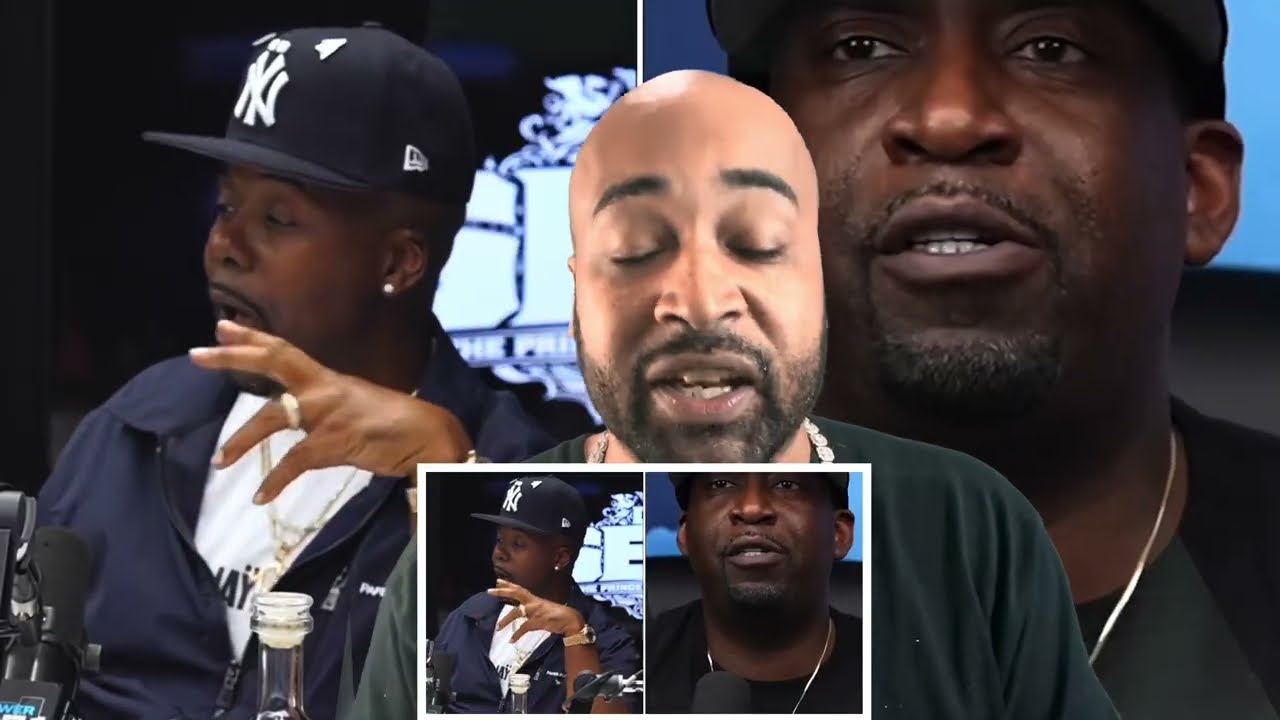
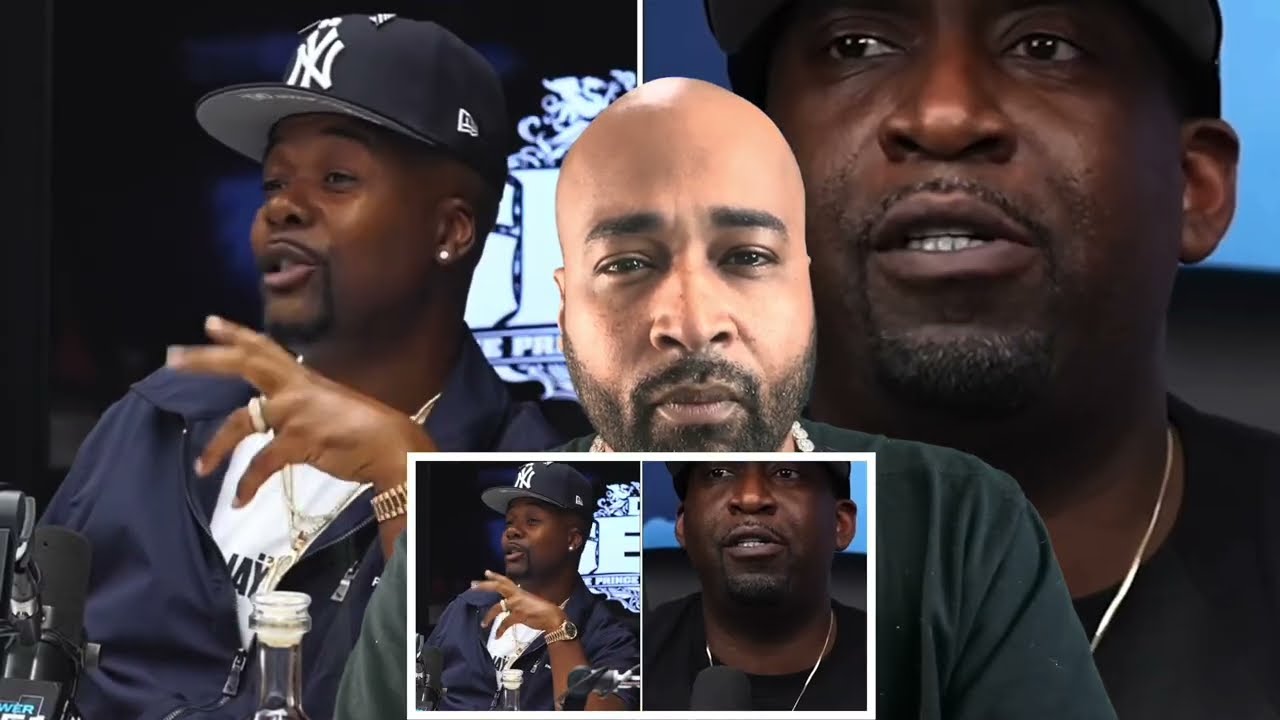
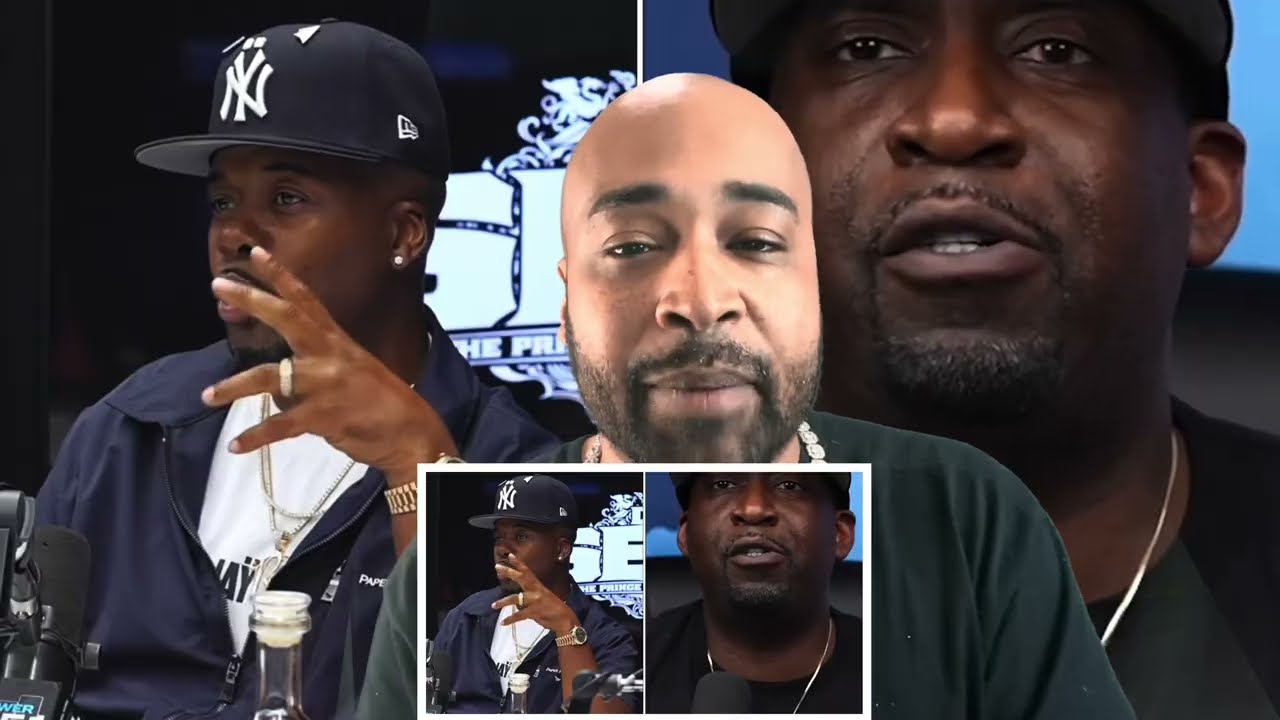
The simmering feud between the two most famous “right-hand men” in hip-hop has reached a boiling point. Memphis Bleek has launched a scathing verbal assault on Tony Yayo, directly challenging the G-Unit rapper’s financial independence and personal agency. In a fiery new interview, Bleek dismissed Yayo as a “dependent” of 50 Cent, claiming that the Queens native cannot even wear his own jewelry without the supervision of his boss.
The comments have reignited the debate over who holds the true power in the dynamic duos of Jay-Z and 50 Cent, respectively.
 The conflict erupted during a recent podcast appearance where Bleek responded to Yayo’s prior claims that he could defeat him in a Verzuz battle. Rather than entertain the musical comparison, Bleek pivoted to a personal attack, questioning Yayo’s autonomy and wealth. “Show me a picture of Yayo walking around with his chain, the passport chain, without 50 Cent there,” Bleek challenged, casting doubt on whether Yayo actually owns the lavish jewelry he flaunts on social media.
The implication was clear: without 50 Cent’s shadow, Yayo’s perceived status evaporates.
Bleek did not stop at the jewelry. He went on to characterize the entire relationship between Yayo and 50 Cent as purely transactional, contrasting it with his own bond with Jay-Z. “He’s a dependent,” Bleek stated emphatically.
“If 50 said one year, these will be in a shelter. They shouldn’t be allowed to talk about us or anybody when you literally are a dependent.” This line of attack suggests that Yayo’s career and lifestyle are entirely propped up by 50 Cent’s financial backing, leaving him vulnerable and without a foundation of his own.
The root of this latest exchange stems from Yayo’s assertion that Jay-Z does not look out for Memphis Bleek the way 50 Cent looks out for him. Yayo had previously argued that his friendship with 50 Cent was more genuine than the business partnership between Jay-Z and Bleek. He pointed to the career of rapper Beanie Sigel, who struggled financially after his association with Roc-A-Fella, only to find success after aligning with 50 Cent.
Yayo used this as evidence that Jay-Z’s loyalty is limited to the boardroom, not the streets.
Memphis Bleek fired back with a dismissive rebuttal, clarifying that he does not require Jay-Z’s financial assistance because he has his own income. “Hov don’t have to,” Bleek said, responding to the claim that he is being neglected. “I have a job.
I get paid well. If Hov look out, I’m telling you, I’ll be up there.” He further explained that his appearances and lifestyle are funded by his own “Blizzel budget,” a direct reference to his independent ventures, implying that he is a self-made man rather than a ward of the state.
 The contrast in their relationships could not be starker according to Bleek. He framed Jay-Z’s mentorship as a launchpad for his own career, while characterizing 50 Cent’s involvement with Yayo as a leash. “Well, him and 50 friendship is just financial,” Bleek argued, dismissing any notion of genuine camaraderie.
He suggested that Jay-Z’s approach allowed him to grow and earn his own way, whereas Yayo remains tethered to 50 Cent’s purse strings, unable to function as a solo entity in the industry.
This war of words has drawn in other figures from the hip-hop community, most notably Dipset’s Jim Jones. Jones, who has previously inserted himself into the conversation, claimed he could defeat both Bleek and Yayo in a lyrical showdown. While Jones’s bravado adds another layer to the 𝒹𝓇𝒶𝓂𝒶, the central focus remains on the perceived disparity in wealth and autonomy between the two camps.
The public is now left to dissect who is truly winning the “sidekick” championship belt.
The debate over who has the better “underboss” has been a staple of hip-hop discourse for decades. Jay-Z and Memphis Bleek represent the classic New York dynasty, built on lyrical prowess and business acumen. Conversely, 50 Cent and Tony Yayo represent the gritty, street-corner loyalty that defined the early 2000s G-Unit movement.
However, Bleek’s latest comments suggest that the era of street loyalty is over, replaced by a need for individual financial security.
Tony Yayo has not yet issued a formal response to Bleek’s latest tirade, but given his history of outspokenness, a counterattack is likely imminent. Yayo has long prided himself on his street credibility and his unwavering loyalty to 50 Cent, often wearing his affiliation as a badge of honor. Bleek’s assertion that Yayo is merely a “dependent” strikes at the very core of Yayo’s identity, potentially setting the stage for an explosive retort that could escalate this feud to new heights.
 The timing of this dispute is particularly notable as the Verzuz platform has revived interest in classic rap catalogues. Fans have been clamoring for a matchup between the Roc-A-Fella and G-Unit rosters, and this feud is serving as the perfect promotional vehicle. While a full-scale label versus label battle seems unlikely, a one-on-one Verzuz between Bleek and Yayo is becoming a distinct possibility.
The animosity is real, and the stakes are high for both men to prove their relevance in a rapidly changing industry.
Memphis Bleek’s discography, while not as commercially massive as Jay-Z’s, boasts several platinum-selling albums and a string of hit singles. Tony Yayo, on the other hand, is best known for his contributions to G-Unit group efforts and his solo debut “Thoughts of a Predicate Felon.” In a head-to-head battle, Bleek argues that his mainstream appeal and chart success would easily eclipse Yayo’s underground leanings.
“When we talking about mainstream stuff, I think Bleek might edge out Tony Yayo,” noted the podcast host, echoing the sentiments of many fans.
However, the argument extends beyond music. It is about legacy and financial security. Bleek’s insistence that he is paid “well” and operates on his own “budget” is a direct challenge to Yayo’s claims of prosperity.
In an era where rappers are scrutinized for their net worth and ownership stakes, Bleek is positioning himself as the more successful businessman. He is painting Yayo as a figurehead, a frontman for 50 Cent’s empire, rather than an independent mogul in his own right.
The notion of ownership is central to this feud. Bleek’s pointed question about Yayo’s jewelry—asking to see it worn without 50 Cent present—is a metaphor for a larger issue of control. It suggests that Yayo’s assets are not truly his own, but rather loaned or gifted props used to maintain an illusion of wealth.
 This is a devastating critique in a culture that prizes authenticity and self-made success above all else.
As the back-and-forth continues, the hip-hop community is taking sides. Some argue that Yayo’s loyalty to 50 Cent is admirable and that Bleek is simply jealous of the close bond they share. Others side with Bleek, praising him for carving out his own path and refusing to be seen as a charity case.
The discourse is fierce, with social media platforms ablaze with clips and commentary dissecting every word spoken by both parties.
The podcast host, O’Shea, provided his own analysis, suggesting that Jim Jones might actually be the most formidable of the three in a Verzuz setting. “Jim’s kind of created his own niche,” he noted, adding a third dimension to the debate. However, the primary battle remains between Bleek and Yayo, with the former delivering what many are calling a knockout blow in the court of public opinion.
The question now is whether Yayo can recover from the allegation that he is nothing without his boss.
This feud is a reminder of the fragile nature of hip-hop alliances. Friendships in the industry are often scrutinized for their financial motivations, and the line between mentorship and exploitation can be blurred. Memphis Bleek’s comments force a reckoning with this reality, asking whether it is better to be a king or a kingmaker’s pawn.
For Bleek, the answer is clear: he is his own man, and he wants the world to know it.
The pressure is now on Tony Yayo to respond with something more substantial than a diss track. He must prove that he is not merely a “dependent” but a viable artist and businessman in his own right. The coming days will reveal whether he can mount a successful defense or if Memphis Bleek’s verbal demolition will stand as the final word in this escalating war of words.
The streets are watching, and the verdict is still out.