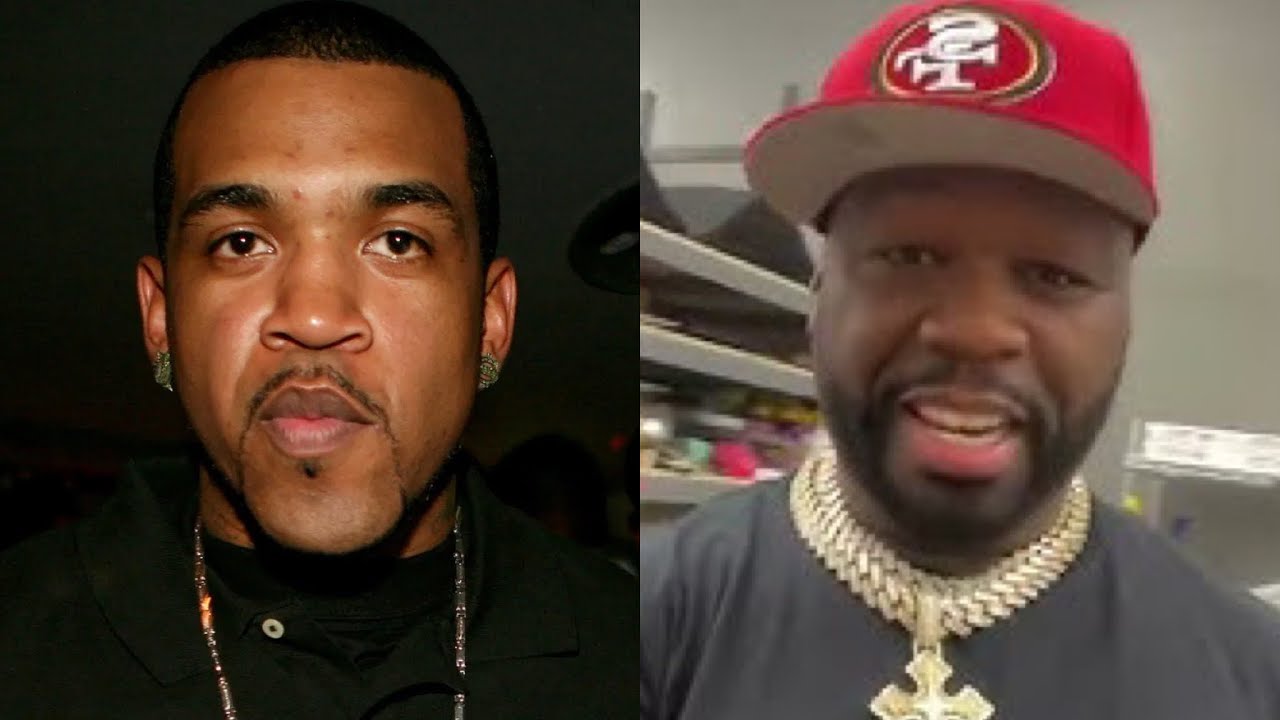
A week after JAY-Z packed Yankee Stadium for a historic hometown takeover, the afterglow of that celebration has been violently interrupted by a moment of 𝓿𝒾𝓇𝒶𝓁 intimacy that has forced Diplomats rapper Jim Jones into damage control mode. The 50-year-old Harlem veteran, a man who has dodged industry beefs and survived the grittier eras of New York hip-hop, found himself in an entirely unexpected kind of crossfire this weekend, one that came not from a rival rapper, but from the relentlessly unforgiving algorithm of social media.
The incident that has triggered this firestorm began innocently enough. Jones attended the much-hyped JAY-Z concert in the Bronx, a show that drew a who’s-who of New York legends, all congregating to watch the city’s prodigal son deliver a career-spanning set against the backdrop of the House That Ruth Built. Among the luminaries floating through the crowd was Busta Rhymes, the animated Brooklyn-born veteran known for his frenetic energy and larger-than-life presence.
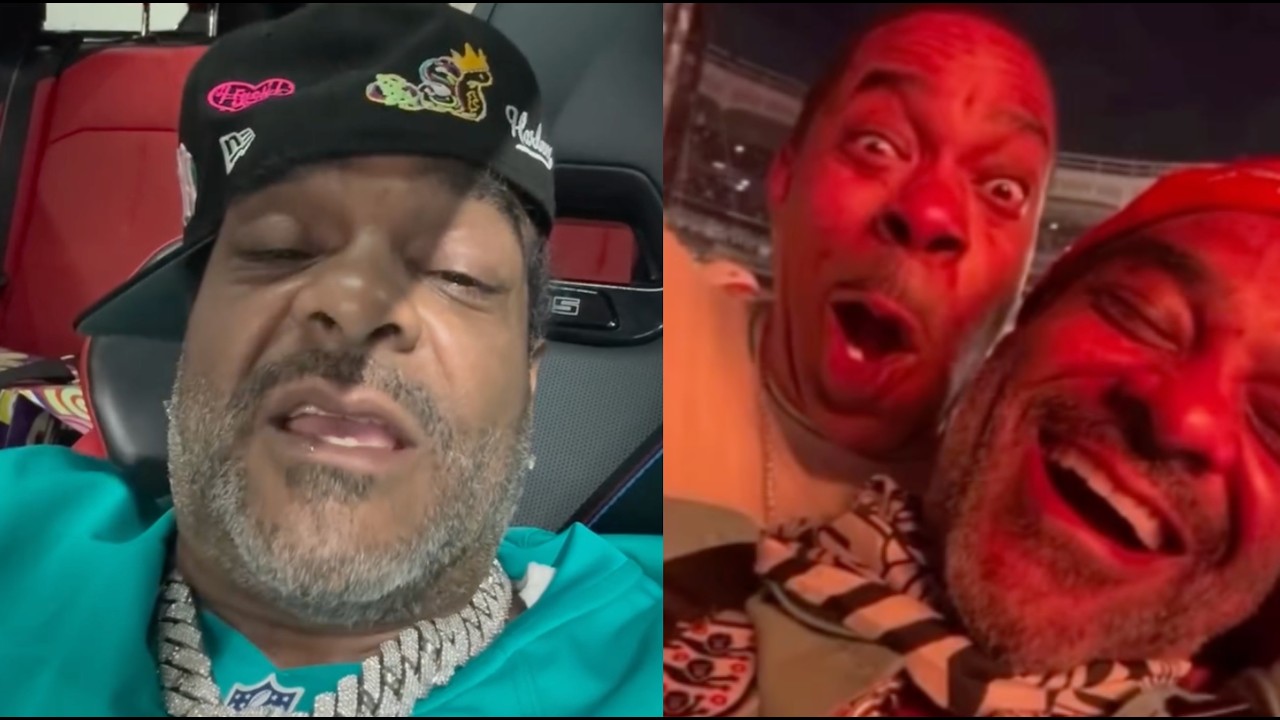 When Jones realized his fellow OG was in the building, the two linked up in the stands, immersed in a moment of shared cultural resonance that felt, at first, completely organic.
Video captured the two men standing close together in the crowd, locked in what Jones later described as their own little world. As Sinatra’s classic “New York, New York” blared through the stadium speakers, Jones began singing along, his arms intertwined in close proximity with Busta Rhymes. The visual was intended to be a bonding moment—two titans of New York hip-hop celebrating their shared heritage.
But the internet, as it so often does, had other interpretations entirely.
Within minutes of the clip surfacing on Jones’ personal Instagram page, the comment section transformed into a full-blown court of public opinion. It wasn’t the lyrics or the music that had fans buzzing; it was the physical proximity between the two icons. The comments flooded in with the singular word that has come to dominate hip-hop’s digital culture: “Pause.”
The joke, rooted in the crude comedy of suggesting any moment between two men could be misconstrued as homoerotic, took center stage, and Jones was squarely in the defendant’s chair.
The irony of the situation was not lost on close observers of the culture. This is, after all, the same Jim Jones who has built a significant portion of his podcasting brand on his own podcast, “Let’s Rap,” by dishing out the very same brand of joke. For months, Jones and his rotating cast of co-hosts have engaged in what they call “pause culture” comedy, flagging moments when their own conversations veer too close to an innuendo-laden edge.
Now, the joke was on the jokester.
What happened next elevated this from a simple online roast to a legitimate news story that has the hip-hop blogosphere in a frenzy. Jones did not laugh it off with a quick retort or double down on the clip. Instead, he quietly deleted the post from his Instagram page, removing the visual evidence entirely.
But then, in a move that underscores his understanding of the dynamics at play, he had to address the inevitable deluge of questions from his followers.
Jones took to his platform to respond to the deletion with a candor that was both humorous and revealing, offering a play-by-play of his mindset when he saw the clip blowing up online. “I took it down. Nah, I took it down,” he admitted, a sheepish grin evident in his tone.
He immediately pivoted to address the issue directly with his friend. “Yo, boss, I love you, but they crushed us just now,” Jones quipped, acknowledging that the public reaction had effectively overwhelmed the innocent moment they had shared.
The rapper admitted his own fault in the situation, conceding that he should have caught the visual implications of the angle before posting it. “I just want to pause myself,” he said, leaning into the very joke that was being weaponized against him. “I just would have paused myself…
my bad.” The admission was a masterclass in defusing a 𝓿𝒾𝓇𝒶𝓁 bomb. Instead of getting defensive or angry, Jones laughed it off, checked himself, and used the cultural language of the internet to show that he was not above the ribbing, even when it came from his own fan base.
This conversational response, wedged between fits of laughter, showcases a veteran who understands the unwritten rule of the digital age: if you are going to play the game, you must be willing to have the game played on you. By blatantly calling a “pause” on himself, Jones effectively stripped the ammunition from the internet’s barrel. He wasn’t the angry celebrity lashing out at faceless commenters; he was the comedian recognizing the punchline in his own story.
 But to understand the full weight of this “pause” epidemic that has seemingly captured Jones, one must look at the context surrounding his own podcasting empire. “Let’s Rap” has become a breeding ground for these moments, a show where the boundaries of comfort are constantly being tested. The dynamic between Jones, co-host Mayo, rapper Fabolous, and Dave East has often devolved into chaotic sessions of “pause” accusations that leave the panel in stitches.
The video transcript reveals a stunning admission from the podcast set: at one point, the “pause” game became so intensely overwhelming that Mayo had to physically walk off the set to remove himself from the situation. The departure was no staged bit for the cameras; it was a genuine, mid-recording walk-out fueled by the sheer absurdity of the accusations being thrown around the room. “It’s affecting grown men’s ability to sit in a room together,” the transcript notes dryly.
The recurring motif of “pause” culture on the show has created a paradox. While the hosts dish it out relentlessly, they are equally vulnerable to being victims of the joke. The show has become a textbook example of the chaos that ensues when four battle-tested rap veterans sit on a couch with no filter and an overactive sense of humor.
If Jim Jones can be caught slipping in public, the audience realizes that the show is merely a microcosm of a larger cultural obsession.
The Busta Rhymes association adds another layer of complexity to the story. Observers of hip-hop have noted that this is not the first time Busta Rhymes has found himself at the center of “zesty” discourse online. A recent 𝓿𝒾𝓇𝒶𝓁 clip from a Flo Rida performance overseas reignited chatter regarding Busta’s enthusiastic energy on stage.
The showmanship that made him a legend in his prime is sometimes interpreted through a modern, more cynical lens, contributing to a narrative that Jones inadvertently stepped into by linking up with him in the crowd.
The entire saga is a reflection of the relentless nature of “pause culture” in the late 2020s. It doesn’t discriminate based on tenure or status. Jones is 50 years old; he has experienced the golden era of hip-hop, survived the infamous “Dipset vs.
The Lox” era, faced the realities of street credibility and mainstream crossover, and emerged as a respected elder statesman in the culture. Yet, none of that history protects him from a fresh camera angle and a comment section full of emoji.
What makes this story particularly fascinating is the generational tightrope that Jones is walking. By publicly mocking the situation and aligning himself with the internet’s interpretation, he positions himself as “in on the joke.” The alternative—getting angry and lecturing fans about toxic masculinity or the sanctity of brotherhood—would have been a public relations disaster.
Jones knew this instinctually, so he opted for self-deprecating humor.
However, this incident opens up a broader dialogue about the nature of internet humor and its limits. The “pause” trope carries with it a complicated history, rooted in insecure expressions of hyper-masculinity. While often sold as lighthearted ribbing, it frequently crosses the line into homophobia.
The constant policing of men’s physical proximity in the public eye forces artists into an awkward dance where they must constantly monitor their interactions to avoid an online pile-on.
Jones’ response, while funny, also highlights the pressure artists feel to capitulate to the crowd. He didn’t necessarily take the video down because he thought there was anything wrong with it; he took it down because the algorithm and the comments created a narrative he didn’t want associated with his personal brand. It was a strategic retreat, not an admission of guilt.
 “I know you might give me something,” he says in the transcript, acknowledging that he anticipated the backlash but perhaps not the velocity of it.
The podcast “Let’s Rap” itself was born out of that pandemic-era surge in casual celebrity talk shows, but it has carved its niche by leaning into unfiltered banter. The host chemistry is volatile, and the “pause” jokes have become a recurring currency of the show. The transcript reveals a specific segment where Fabolous attempts to discuss his favorite rappers, leading to a catastrophic stumble where he states that Tupac “touched him” emotionally, only to be hilariously interrupted by a chorus of “Pause, pause, pause.”
“Pac touched me, but I felt like he… wait, no… pause,” Fabolous tries to clarify, as the room erupts in laughter.
The co-hosts, smelling blood in the water, immediately demand to know exactly “where” Pac touched Fabolous. It is a moment of comedy that perfectly summarizes the show’s appeal and its dedication to the lowest common denominator of humor. “This is not…
Let’s rap about it. I need you to focus,” one of them jokes, unable to contain their laughter.
Even Dave East, the generally more serious and street-oriented member of the panel, cannot escape the reach of the “pause” allegations. In one segment, Dave East describes whispering to a producer he pays, telling him he wants to “see you use that gun tonight,” which, out of context, sets off another chain of “pause” reactions. The show’s senior producer even jokes that the quote is the craziest thing ever uttered during a commercial break, highlighting how the unscripted moments have become a 𝓿𝒾𝓇𝒶𝓁 goldmine.
The Jim Jones situation presents a fascinating paradox: the “pause” culture is demonstrably toxic, yet it provides immense entertainment value and engagement. The podcast thrives on it, and now Jones has been forced to accept its consequences in his personal life. By deleting the video, he validated the internet’s response, reinforcing that those 𝓿𝒾𝓇𝒶𝓁 moments are not just jokes but have the power to affect a grown man’s public presence.
This is the crux of the matter in 2026’s cultural landscape. The line between the public persona and the private person has become so blurred that a moment of celebration at a concert is immediately subject to a trial by TikTok and Instagram. There is no nuance, only the verdict rendered by the comment section.
Jones understood this and accepted the verdict, taking the “L” with grace rather than fighting a battle he knew he could not win.
“Is the internet wrong for coming at Jim Jones?” The video transcript posits this exact question to the audience. And the answer is as layered as the “pause” meme itself.
The angle of the video undeniably looked odd, and the internet’s obsession with catching celebrities off-guard is a known quantity. But Jones’ composure in the aftermath turned a potential 𝒔𝒄𝒂𝓃𝒹𝒶𝓁 into a moment of relatability. He treated it not as a career-altering event, but as a Tuesday.
The broader issue is the fatigue of “pause culture” itself. It has become a cheap punchline, a way for fans to inject chaos into every interaction. While it often comes from a place of playful banter, it also perpetuates a stifling environment where male friendships are constantly viewed through a lens of suspicion.
This cultural shift has practical consequences—celebrities are now editing their own content out of fear of being “paused,” a task that Jones himself completed over the weekend.
 For the other members of the “Let’s Rap” show, this is an endless source of material. Jim Jones will no doubt be roasted mercilessly in the next recording session, brought back to the couch to explain why he deleted a post that was, by all accounts, just two OG’s vibing to Sinatra. But Mayo, who had to walk off the set to escape the “pause” allegations, will likely have a front-row seat to the mockery.
The incident also shines a light on Busta Rhymes’ specific internet reputation. For years, comments on his 𝓿𝒾𝓇𝒶𝓁 clips have been filled with “pause” and “zesty” allegations, largely due to his intense physical interactions with other artists during performances and appearances. Jones walking into that specific target zone was arguably predictable.
The dynamic between the two, with Jones singing “New York, New York” while Busta was draped around him, was undeniable fodder for the algorithm.
Yet, it is worth noting that neither Jones nor Busta Rhymes seemed disturbed by the physical proximity in the moment. They were absorbed in the music, the vibe, and the city’s pride. It was only when they saw it through the lens of their phones, filtered through the internet’s gaze, that it became a problem.
This is a startling realization about modern celebrity: the experience of living is often secondary to the perception of living.
Jim Jones’ decision to “pause” himself is emblematic of how artists have adapted to survive the social media gauntlet. The acceptance, the laughter, and the move to delete the evidence is a survival tactic. It prevents further extraction of content from the controversy.
By controlling the narrative—admitting fault, jokingly apologizing to Busta, and moving on—he effectively ended the story’s lifespan within 24 hours, denying the blogs the prolonged 𝒹𝓇𝒶𝓂𝒶 they crave.
As the dust settles, Jones returns to his role as the host of one of hip-hop’s most chaotic podcasts, but he carries a new scar from this public interaction. The podcast, which has seen Fabolous get “paused” for his emotional connection to Tupac and Dave East “paused” for his creative directions with producers, now has a leader who fell victim to the same 𝓿𝒾𝓇𝒶𝓁 disease. It humanizes the show in a way scripted content never could.
The audience is left to wonder: if a 50-year-old veteran who has survived everything the music industry has thrown at him cannot survive a weekend in Yankee Stadium without the internet dragging him, then who is safe? The answer, it seems, is nobody. The “pause” culture is an equal opportunity offender, and its reach extends far beyond the recording studio and into the personal pages of the very icons who helped build the culture.
The video transcript concludes with a plea for comments, asking the audience to weigh in on who handles the “pause” jokes better. But the real question lies with Jim Jones. By deleting the video, he allowed the internet to win a battle.
Yet, by laughing it off and reframing the moment with his own “pause” declaration, he may have won the war, demonstrating that the most effective defense is a willingness to play the fool.
The “Let’s Rap” podcast will almost certainly address this incident in an upcoming episode, and the ratings will reflect the public’s hunger for the story. Jones has turned a potential embarrassment into another episode of content, another moment for the audience to engage with the hosts on a human level. The deletion was a trip to the bench, but the response was a reminder of why he has remained relevant for three decades.
He is navigating the thin line between being a figure of ridicule and a figure of resilience. By taking the “L” with a smile, he joins a long list of celebrities who have realized that fighting the internet’s perception is a losing battle. The only winning move is to play along, to acknowledge the absurdity, and to hope the algorithm moves on to its next victim by the morning.
As New York’s hip-hop royalty retreats from the Bronx, they leave behind a cultural clash that sums up the modern era. JAY-Z’s concert was a celebration of legacy and history, but the digital echo of that night was dominated by a silly clip of two rappers hugging. It is a stark reminder that in an era defined by short attention spans, legacy moments are often reduced to their most misconstruable fraction of a second.
The pause has been hit, the song has stopped, and Jim Jones is moving on, one self-deprecating joke at a time.