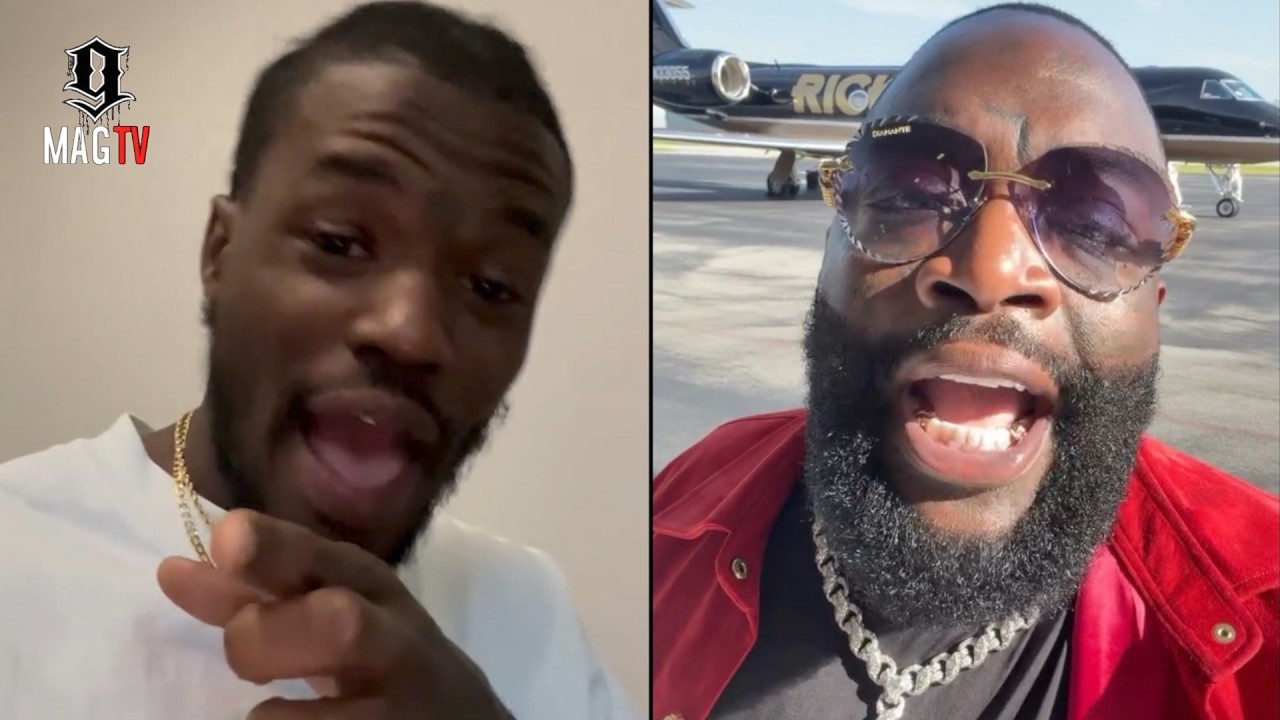
ATLANTA — A disturbing betrayal of trust has exploded across the hip-hop internet, with an Atlanta figure known as “Smitty P” publicly exiling a New York-based affiliate of rap heavyweights Jim Jones and Dave East from the city after hidden camera footage allegedly caught the man stealing and wearing a pair of worn underwear from the host’s bedroom. The footage, which has already amassed massive attention across social media platforms, shows the guest moving through the Atlanta home with suspicious intent while the homeowner was away for less than an hour. The host says this was not the first time he suspected the visitor of theft, but this time he came prepared with surveillance.
 What he captured left him beyond furious and immediately triggered a citywide ban that is now echoing through the streets of Atlanta.
The video opens with the host frantically calling for viewers to witness the scene, repeatedly shouting, “Look at this,” as the guest identified as “Lil Rei” or “Big Relly” is seen sneaking through the residence. The host explains that every time Rei comes into town from New York, he allows him to stay in his home.
However, after the previous visit, the host suspected something had gone missing. So this time, he discreetly installed a camera to monitor his house while he stepped out. The footage, he says, demonstrates that “you can’t trust everybody” and that letting people into your home is a risk when they lack basic respect.
The sequence of events captured on camera is alarming in its detail. The guest allegedly left the front door wide open during his time in the home, presenting a clear security risk. He also left the hallway light and the bathroom light burning, then turned on the living room light.
The host mocked the behavior, suggesting the guest must have grown up scared of the boogeyman and has no home training and no respect for anyone else’s utility bills. These early moments set a tone of recklessness and disregard that would soon escalate into something far more personal.
At one point, the footage shows the guest approaching a pair of old Air Force One sneakers that the host keeps in the living room.
According to the host, the guest started trying them on, testing whether they fit. The host says he is convinced that had the shoes fit, the guest would have stolen them too. This moment, while odd in isolation, foreshadows the far more invasive discovery that would come moments later.
The host can be heard expressing his frustration, telling the guest he cannot keep coming into his space and rummaging through his belongings.
The situation took its most 𝓈𝒽𝓸𝒸𝓀𝒾𝓃𝑔 turn when the guest headed back toward the master bedroom for a second time. The host initially did not realize what the guest was doing in there.
But then the camera captured something that stopped him cold. The guest was seen removing his own pants and preparing to change his clothes. The host notes that the house has three different bathrooms, all of which would have provided a private and appropriate space for changing clothes.
Yet the guest chose the host’s personal bedroom, and that choice raised immediate suspicion.
The horrifying truth became clear in the ensuing moments. The host realized that the guest had stolen a pair of his navy blue RFON brand underwear out of his bedroom.
In a deeply unsettling detail, the host claims the footage shows the guest holding the underwear up to his face and smelling them before putting them on, apparently to make sure they were clean. The host expressed total disbelief and disgust, declaring that he has worn another man’s hat or another man’s chain in his lifetime, but he has never and would never wear another man’s pre-worn underwear. He called the act a profound violation.

The host’s anger quickly shifted toward the guest’s social media behavior. He noted that the guest has been posting on Instagram with aggressive energy, suggesting he wants a confrontation. The host warned the guest that he apparently does not know who he is dealing with.
Declaring himself “big East Atlanta” and “the voice of Atlanta,” the host said his city protects him and plays no games when it comes to his safety and reputation. He then delivered the central message of the entire video: the guest is “not welcome in our city no more,” repeated multiple times for emphasis.
The incident has profound implications because of the figures involved.
Jim Jones is a founding member of the Diplomats, one of the most influential rap groups to emerge from Harlem, with a career spanning more than two decades. Dave East is a Harlem rapper closely associated with Jones and the late Nipsey Hussle, known for his gritty storytelling and credible street background. An affiliate of these two figures being accused of such an embarrassing theft places the entire circle under a spotlight that none of them asked for.
Neither Jones nor East has released a statement at the time of this report.
The video then transitions to a second narrator, a man identifying himself as “OG Product,” who breaks down the footage with the analytical energy of a sports commentator. He identifies the man in the video as a Jim Jones and Dave East affiliate who goes by the name “Big Relly.”
He describes how the host set up the hidden camera and watched his guest like “a paparazzi” or “a city camera,” tracking his movements through the home in real time. The narrator repeatedly emphasizes that the host was shocked, astonished, and appalled by what the camera revealed.
The narrator walks through the evidence step by step.
He describes the guest pacing back and forth in the establishment, trying on the Air Force Ones, and eventually slipping into the bedroom after checking the layout. He recounts how the guest removed his own garments and attire, a move that stunned everyone watching. Then came the confirmation: the guest stole “his boxes” and “his briefs.”
The narrator frames this as a formal breach of the ultimate trust, declaring that the host has issued a “no fly zone” against the guest, banning him from Atlanta, the ATL, and everything the city represents.
The commentary takes a pointed turn when the narrator addresses the labels being thrown around social media. He references “the crippy, the rippy,” slang that alludes to Crip-affiliated personas and street identities, and notes that people are labeling the guest a clown.
The narrator calls the situation “petty theft” but acknowledges the deeper cultural weight of the accusation. A trusted friend, someone the host considered family, was caught moving through his home like a stranger on hidden cameras. The narrator asks the audience to imagine what else might be on record if the host has more footage.

That warning is not hypothetical. The video itself is labeled “Caught on Camera Part One,” which strongly suggests the host has additional material in his possession. The narrator explicitly tells viewers to imagine what else the host probably has on film, given that he was watching the guest like a federal investigation.
This raises the stakes enormously. The guest, already publicly humiliated and banned from the city, could face further exposure if the host chooses to release subsequent installments. The pressure is now on both parties.
The reaction across social media has been immediate and merciless. Fans and commentators have flooded the comment sections with reactions ranging from outright laughter to genuine disgust. Some are calling the guest a “capper,” a slang term for a liar or fraud, while others are questioning how someone could violate a friendship in such an intimate and bizarre manner.
The host has directly called on his followers to make it known that the guest is not welcome, asking them to flood the comments and amplify the message throughout the city.
There are also legal and ethical questions surrounding the video itself. The host admitted to installing hidden cameras within his own home, which he is legally entitled to do in most jurisdictions, but the recording of a guest without consent raises privacy concerns.
The theft of the underwear, if proven, would constitute a misdemeanor property crime in Georgia, though it is unlikely law enforcement will pursue charges over a single pair of briefs. The greater consequence here is reputational and social rather than legal, and in the world of hip-hop, reputation is everything.
The fact that Atlanta is the city issuing the ban is itself significant.
Atlanta serves as the cultural and commercial epicenter of Southern hip-hop, home to some of the most powerful artists, producers, and executives in the industry. A public declaration that someone is unwelcome in Atlanta can have real consequences for that person’s career, limiting studio access, collaboration opportunities, and performance bookings. Even if the ban is unenforceable in any official capacity, the social pressure it creates can be overwhelming.
The guest, based in New York, now faces an uncertain reception should he attempt to return.
The absurdity of the subject matter has not escaped commentators. A grown man being banished from a major American city over a pair of stolen underwear is objectively surreal.
But the underlying themes are serious: betrayal, invasion of privacy, theft, and the fragile nature of trust between men who present themselves as brothers. The host’s moral framing is deliberate. He is not merely complaining about a missing garment; he is painting a portrait of a man with no home training, no respect, and no loyalty.
 Every detail, from the open door to the burning lights to the sniffed underwear, is ammunition in that narrative.
The guest has not publicly responded to the accusations at the time of writing. The host claims the guest and his supporters have been active on Instagram, saying the guest wants to do something to him, but no verified statement from the guest has surfaced.
That silence is notable. In an era when everyone posts everything, the absence of a rebuttal may itself be telling. The host, meanwhile, projects absolute confidence, leaning into his identity as a beloved Atlanta figure who knows his city will support him.
The commentary also includes repeated verbal precautions, with the narrator interjecting “pause” and “no homo” after describing the garment exchange. These linguistic tics reflect the extreme sensitivity of the imagery involved. A man putting on another man’s underwear is a loaded and easily mocked image.
The narrator is careful to frame the act as theft and violation rather than anything else, while simultaneously acknowledging the obvious comedic undertones of the situation. The result is a video that is simultaneously 𝓈𝒽𝓸𝒸𝓀𝒾𝓃𝑔, uncomfortable, and darkly funny.
Whether this story will have lasting consequences remains to be seen.
𝓿𝒾𝓇𝒶𝓁 scandals in the hip-hop world often burn bright and fade quickly, especially when no physical violence or criminal charges follow. However, the combination of celebrity affiliations, hidden cameras, and the promise of future installments gives this story unusual staying power. The audience has been promised “part one,” and they are waiting for part two.
Until that arrives, or until the accused breaks his silence, the internet will continue to feast on the absurdity and the betrayal captured on that hidden camera.
What is certain is that this incident has become a cautionary tale about hospitality and trust. The host extended his home to a man he considered a friend, and that trust was violated in the most invasive way imaginable.
The story serves as a reminder that kindness does not guarantee respect and that even those closest to us are capable of behavior that defies understanding. For the guest, the road back to Atlanta, and to a credible reputation in hip-hop, just became considerably more difficult.