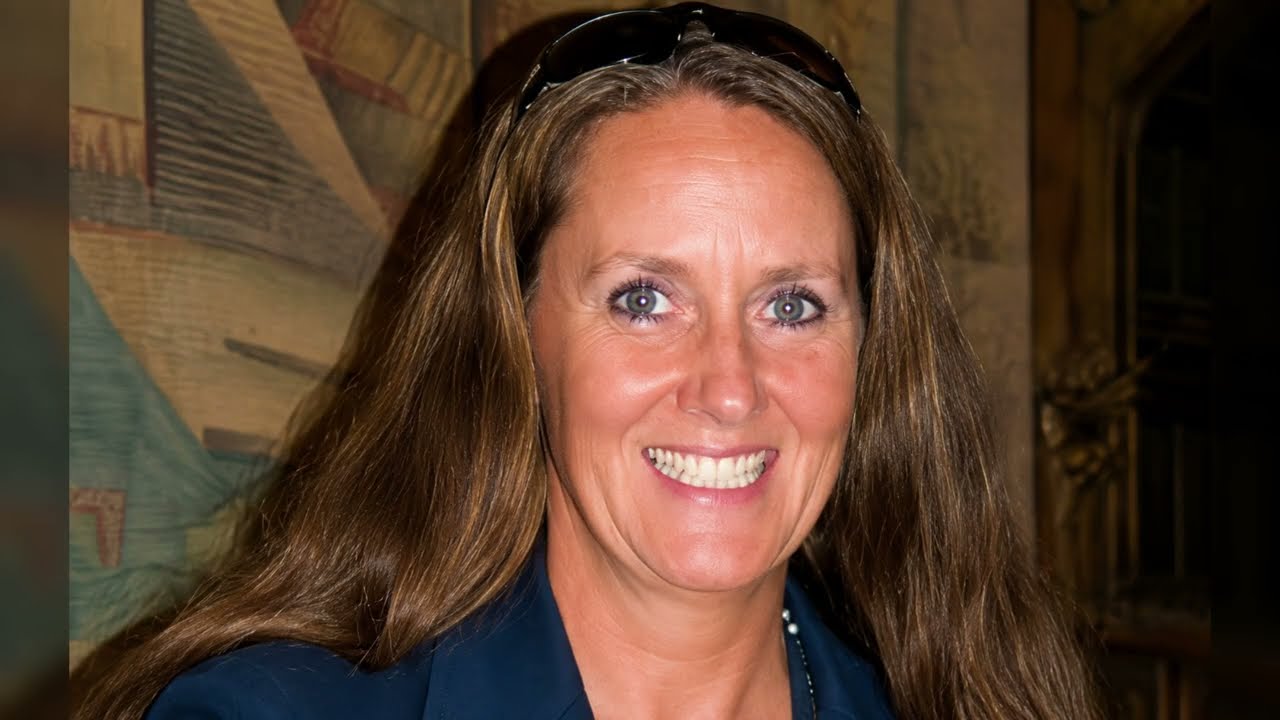
The body of a successful businesswoman lay hidden in a zipped holdall in the boot of a car for four months before police finally listened to her family’s desperate pleas. Carole Waugh, 49, was murdered in her luxury central London apartment in April 2012. Her killers then spent three months living a champagne lifestyle on her money.

Detectives eventually found Carole’s remains in a lockup garage in New Malden, South London, in August. The discovery came only after her family repeatedly insisted something was wrong. For months, authorities treated her disappearance as a grown woman enjoying time with friends. The case has now 𝓮𝔁𝓹𝓸𝓼𝓮𝓭 failings in how missing adults are handled.
Carole Waugh had built a comfortable life from years working in the oil industry in the Middle East. She owned a stunning flat in fashionable Marylebone, adored Cartier jewelry, and spoke fondly of glamorous expat parties. But behind the facade lay a secret life. She worked as a 𝒔𝒆𝒙 worker under the name “Post Totty Fun” to preserve her savings.
Through that work she met Rakkesh Bayani, a 41‑year‑old charmer known as “Tricky Ricky.” He told her he was a consultant cardiologist at St Mary’s Hospital. In truth, Bayani was a compulsive gambler with a long history of fraud. He had already twice mortgaged his parents’ home to feed his addiction.
Bayani persuaded Carole to lend him £54,000 in February 2011 using a fraudulent bank draft as security. He repaid some with gambling winnings, but she was still owed £40,000. Despite this, Carole supported him in court and visited him in prison. She believed they were friends. Bayani saw only a source of cash.

After his release, Carole realized the truth. She demanded the money back and threatened to expose him to his wife and family. That was a catastrophic turning point. Bayani’s relatives had no idea about his crimes or his prison stint. They thought he was in a residential center for gambling addiction.
On the night of 16 April 2012, Bayani was at Carole’s flat with an accomplice, 48‑year‑old Nicholas Kutner. Kutner had 97 fraud convictions and a love of high‑stakes gambling. Exactly what happened remains disputed, but Bayani stabbed Carole in the neck, killing her. Both men later blamed each other.
After the murder, the pair acted with chilling efficiency. Bayani paid a big‑issue seller £60 for the largest holdall available, zipped Carole’s body inside, and carried it to his Range Rover. They stored the car briefly in a central London car park behind John Lewis on Oxford Street.
 The original plan was to bury Carole in the Cotswolds, but they switched to a lockup garage in South London. There her body remained until police finally found it. Meanwhile, Bayani and Kutner wasted no time spending her fortune. They sold her furniture, her jewelry, and emptied an account Carole had saved for her niece.
They even obtained a £200,000 bridging loan on her flat. To use her credit cards, they hired women who resembled Carole. One look‑alike bought £5,000 handbags from Chanel and Selfridges. CCTV captured Bayani and Kutner at casinos and bookmakers, losing thousands with the same recklessness that defined their lives.
The men’s greed ultimately led to their capture. They tried to rent Carole’s flat to two sets of tenants simultaneously. When the parties arrived at the same time, they contacted police. That gave detectives the lead they needed. Cell‑phone evidence placed both men at Carole’s flat on the night she died.
Bayani was arrested on his way home from a Spanish holiday with his ex‑wife and daughter. He first claimed Carole was part of an insurance scam and had agreed to disappear. Then, after her body was found in his boot, he changed his story, blaming Kutner for the fatal blow. Kutner uttered only eight words throughout the entire investigation and trial.
In court, a mystery witness, Mr X, claimed Bayani had confessed in prison and re‑enacted the fatal stab. The jury convicted Bayani of murder. He received a minimum term of 27 years. Kutner was acquitted of murder but jailed for 13 years for perverting the course of justice and conspiracy to defraud.
Both men showed no emotion as they were led away. Carole’s brother Christopher said they will sleep easily in their beds because they have no remorse. He also voiced his fury at the police investigation, saying they did not take the family’s concerns seriously until July, after Carole had already been dead for months.
Lead detective Justin Davis described the killing as senseless. Carole Waugh put her trust in people she thought were friends. Bayani had no intention of friendship; his only motivation was her money. Her years of hard work were squandered in just three months by two men who used her cash for gold, 𝒔𝒆𝒙 workers, and a champagne lifestyle.
Tragically, Carole’s mother collapsed and died just five days after her daughter’s funeral, brokenhearted by the unimaginable events. The case leaves a legacy of grief for a family that fought for justice while police dismissed their fears. It also raises pressing questions about how missing adult reports are treated—questions that remain unanswered.