Juvenile shocks the hip hop world by revealing the raw truth behind the long-standing feud between Birdman and Master P, exposing the deep-rooted street beef that shattered any chance of a monumental Cash Money No Limit collaboration, leaving fans to wonder what explosive music combinations were tragically lost.
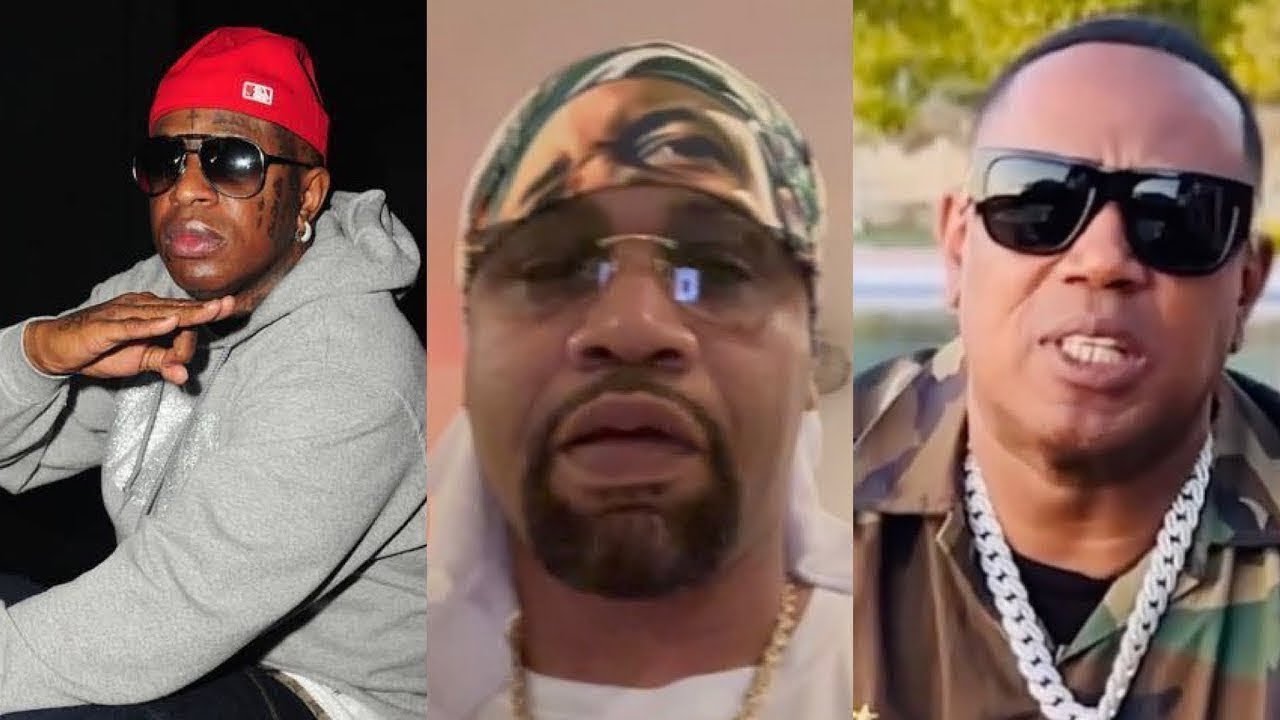 In a revealing interview on the Nation of Conversation daily podcast, Juvenile, famed Hot Boys member, pulled back the curtain on the historic rivalry that kept Cash Money and No Limit apart. He confirmed that the animosity between Birdman and Master P was fueled by real-life conflicts between their respective neighborhoods, the Magnolia and Calliope Projects.
Juvenile recounted how even artists like Soulja Slim were forced to change their identities, highlighting the extent of the division. Originally known as Magnolia Slim, he shifted to Soulja Slim to avoid association with the Magnolia side while working with No Limit, underscoring how street loyalties dictated career moves.
Despite the fierce divide, Juvenile stressed that personally he maintained respect for Master P, emphasizing that the quarrel was never really between the artists themselves but more a record label and street-level feud. He explained how, during times of crisis like Hurricane Katrina, they came together for common causes, putting rivalry aside.
Juvenile’s insight challenges long-held rumors that Birdman and Master P’s clash stemmed from personal animosity alone. Instead, he paints a picture of a complex socio-cultural rift shaping industry alliances, revealing why these two powerhouse camps, despite their geographic proximity, were unable to unite musically.
 Reflecting on the potential, Juvenile lamented what fans missed. Imagine Master P’s commanding style blended with the raw energy of the Hot Boys. Picture collaborations with Mannie Fresh, KLC, and an all-star lineup of Lil Wayne, Miss Kool, BG, C-Murder, and Soulja Slim during their peak Cash Money Millionaires and No Limit Soldiers days.
The revelation has reignited discussions among hip hop enthusiasts about what might have been. The dream of a joint Cash Money No Limit tour or collaborative albums now feels like a tantalizing “what if,” a lost chapter in hip hop history that could have redefined the genre’s landscape forever.
Juvenile’s comments arrive at a critical moment, as nostalgia for 90s and early 2000s hip hop surges. His honesty invites fans to reconsider the entrenched narratives around the two labels’ rivalry and to appreciate the broader social dynamics that influenced these legendary careers.
As the Nation of Conversation podcast host urged, the fanbase is buzzing with questions: How deep did the divide run? Could the artists themselves have bridged the gap if circumstances were different? And what silver linings can emerge from acknowledging this painful truth?
This new information demands a reexamination of hip hop’s history, spotlighting the intersection of music, street politics, and business battles. It exposes how external conflicts can stall groundbreaking artistic partnerships and keep two of the genre’s largest legacies separated.
Experts in the music industry are weighing in, noting Juvenile’s account underscores the importance of understanding the roots of rivalries beyond the headlines. It highlights how cultural identity and neighborhood affiliations can influence professional alliances in unexpected, lasting ways.
Fans are left dreaming of alternate realities—an era where Master P’s entrepreneurial genius met Birdman’s street savvy, where iconic producers fused sounds seamlessly, and where the combined forces of Cash Money and No Limit reigned supreme on charts and cultural influence.
 Juvenile’s respect for Master P despite the feud adds compelling complexity to the narrative, portraying the feud as less personal and more structural. It suggests that underlying tensions were more about preserving street credibility and less about outright hatred between hip hop icons.
The story also shines a spotlight on Soulja Slim’s name change, revealing how artist branding was directly impacted by these neighborhood rivalries, affecting careers and label dynamics. It’s a stark reminder that the business of hip hop is often intertwined with harsh realities offstage.
This expose promises to fuel further discussions, debates, and retrospectives about the nature of competition and collaboration in hip hop’s golden age. It prompts reconsideration of how external factors shape artistic output and the potential lost due to entrenched conflicts.
The revelation marks a pivotal moment in hip hop journalism, offering fresh perspectives on longstanding myths and encouraging a deeper dialogue about unity, rivalry, and evolution in the music industry’s past and future.
As the conversation unfolds, fans, critics, and insiders alike are invited to explore the complicated realities behind the labels’ histories, appreciate the artists’ efforts to rise above strife, and imagine the explosive musical possibilities that sadly never came to fruition.