The hip-hop community is buzzing with a new layer of debate after Wu-Tang Clan legend Method Man publicly weighed in on Nelly’s recent assertion that the rap era spanning 1999 to 2010 was the toughest in the genre’s history, offering a nuanced perspective that both agreed with the St. Louis icon while expanding the conversation to encompass the entire history of the art form. In a video transcript obtained exclusively by this outlet, Method Man did not dismiss Nelly’s claims but instead contextualized them within the brutal competitive landscape that defined that specific window of time, a period that saw the rise of superstars like Eminem, Jay-Z, and 50 Cent.
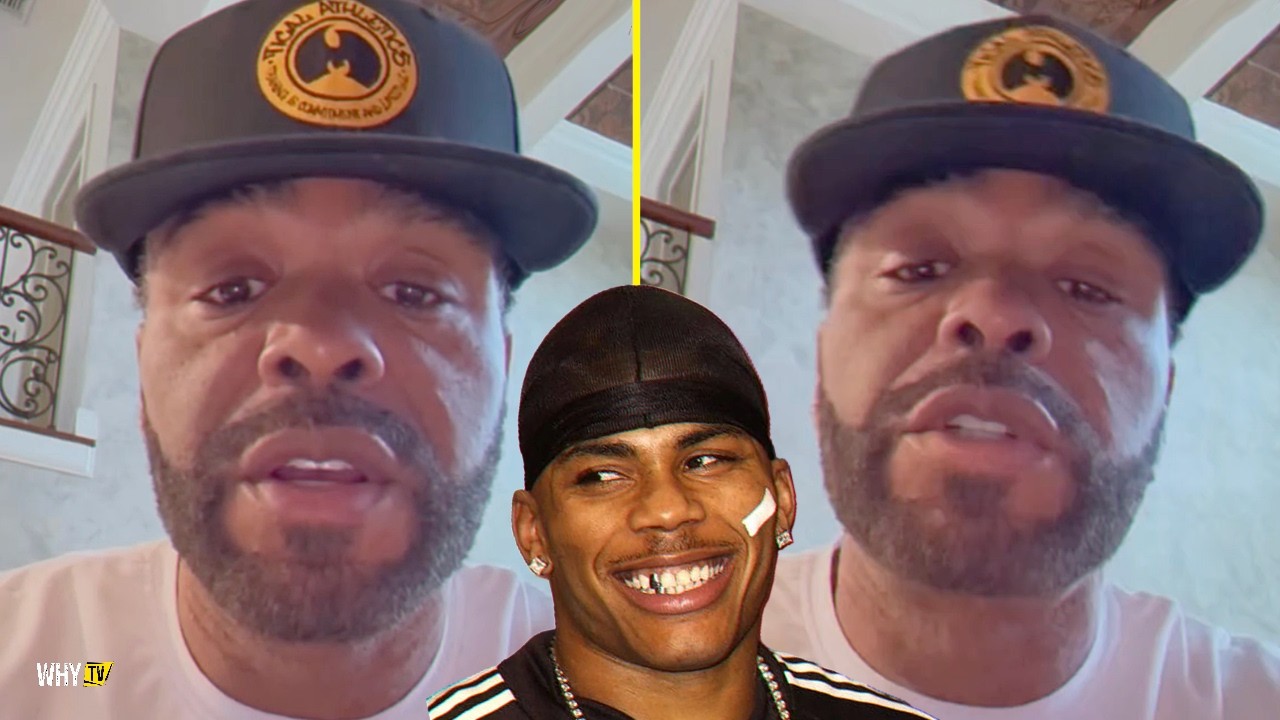 The exchange began when Nelly, in a past interview, described the years between 1999 and 2010 as a “battleground” where only the strongest artists could survive, citing the immense pressure to innovate and the fierce competition that characterized the turn of the millennium. Method Man, known for his sharp lyrical prowess and decades of experience, acknowledged the validity of Nelly’s perspective, stating, “I hate to hear him say that, but I get it because he had nothing else to refer to.” This admission immediately set the stage for a deeper analysis of what makes an era truly difficult in hip-hop.
Method Man elaborated, pointing out that Nelly’s viewpoint is inherently shaped by his own journey, coming from St. Louis, a region that had to fight for recognition against established powerhouses like New York and Los Angeles. “I see his point as far as that goes,” Method Man said, recognizing the unique challenges Nelly faced in breaking through from the Midwest. However, the Wu-Tang member quickly pivoted to a broader argument, asserting that every era of hip-hop has been a struggle, stating, “I think the toughest era in hip hop I’d say all of them, man, cuz we all still fighting for the same position.”
This remark cuts to the core of the ongoing debate about the evolution of rap music. Method Man’s contention that the fight for position is a constant, regardless of the decade, challenges the notion that any single period was uniquely difficult. He questioned Nelly’s framing, asking rhetorically, “What is he talking about? We all are still fighting position.” This suggests that the competitive nature of hip-hop is not confined to a specific timeline but is an enduring characteristic of the genre itself, where artists constantly vie for relevance, sales, and cultural impact.
 The conversation took an interesting turn when Method Man compared the state of hip-hop to other genres, particularly R&B and country. He made a provocative comment about female R&B artists, saying, “As far as R&B go, they need to just wrap that Beyonce. She got that.” This statement underscores the dominance of a single artist in that field, contrasting with the crowded and contentious landscape of male rap. Method Man’s observation highlights how hip-hop’s competitive nature is unique, with no single artist holding a monopoly on the top spot.
Method Man then returned his focus to Nelly’s specific contribution, praising the “Country Grammar” rapper for his ability to infiltrate the game from the Midwest. “He held it down for the Midwest and St. Louis and still going up against the names that he was saying, those were heavy hitters,” Method Man noted, acknowledging the formidable opponents Nelly faced, including Eminem and Lupe Fiasco. This recognition of Nelly’s struggle is significant, as it validates the difficulty of breaking into a scene dominated by coastal artists.
However, Method Man was quick to credit the pioneers who paved the way, specifically mentioning Bone Thugs-N-Harmony. “Bone did it first, though. Absolutely. Bone they opened up that door,” he said, emphasizing that the Cleveland group’s unique melodic flow and rapid-fire delivery created a blueprint that made it easier for artists like Nelly to follow. This historical perspective is crucial, as it situates Nelly’s success within a larger lineage of Midwest rap, acknowledging that innovation often builds on the shoulders of those who came before.

The dialogue between these two titans of rap reveals a deeper truth about the genre’s evolution. While Nelly’s era was undoubtedly marked by intense commercialism, the rise of the internet, and the fragmentation of regional sounds, Method Man’s argument that every period has its own battles is equally compelling. The 1980s saw the birth of the genre, the 1990s were defined by the East Coast-West Coast rivalry, and the 2000s witnessed the explosion of Southern rap. Each decade presented unique obstacles, from censorship to industry gatekeeping.
Method Man’s final remarks in the transcript, where he seemed to cut himself off, suggest there is more to be said. The incomplete sentence, “But go ahead, I’m sorry,” hints at a desire to continue the discussion, perhaps to delve deeper into the specific challenges of the 1999-2010 era versus earlier periods. This leaves the door open for further commentary from both artists, as the hip-hop community eagerly awaits more insights from those who lived through these transformative years.
 The implications of this exchange are significant for fans and historians alike. It challenges the narrative that any single era was the “toughest,” instead framing hip-hop as a perpetual struggle for survival and relevance. For Nelly, his claim is rooted in his personal experience of breaking through from St. Louis, a city not traditionally seen as a rap hub. For Method Man, a veteran of the Wu-Tang Clan who emerged in the early 1990s, the fight has been ongoing for over three decades.
As the debate continues to unfold on social media and in hip-hop circles, one thing is clear: the conversation about what constitutes the toughest era in rap is far from over. Method Man’s willingness to both agree and disagree with Nelly demonstrates the complexity of the genre’s history, where personal experience and broader historical trends often collide. This breaking story serves as a reminder that hip-hop’s competitive spirit is its lifeblood, driving artists to innovate and push boundaries regardless of the decade.
For now, both Nelly and Method Man have added their voices to a dialogue that will likely inspire other artists to share their own perspectives. The 1999-2010 period may have been a battleground, but as Method Man eloquently pointed out, so was every other era. The fight for position in hip-hop is eternal, and that is precisely what makes it the most dynamic and resilient genre in modern music.


