The mother accused of strangling her three young children to death in their Massachusetts home methodically choked each one individually, prosecutors now allege, as newly filed court documents reveal chilling new evidence that could dismantle the defense’s postpartum psychosis argument. Lindsay Clancy, the 34-year-old former nurse from Duxbury, faces three counts of first-degree murder in the January 2023 deaths of her five-year-old daughter Cora, three-year-old son Dawson, and eight-month-old son Callen. The case has gripped the nation, but the latest filings from the Plymouth County District Attorney’s Office paint a far more calculated picture than the mental health crisis her attorneys have described.
 The prosecution’s motion, filed just days ago, seeks to introduce Patrick Clancy’s 911 call as evidence, arguing it demonstrates deliberate premeditation and extreme atrocity. In the recording, Patrick is heard running into the home and calling out for his children before discovering their lifeless bodies in the basement. He can be heard yelling, “She killed the kids,” as police arrive. Prosecutors say the call’s spontaneous nature, made before any reflective thought, provides critical insight into the scene Patrick encountered.
The most disturbing new details center on the exercise bands used to strangle each child. According to the filing, each child was killed with a separate band, and the manner in which they were found suggests a prolonged, physical struggle. Patrick testified that the bands around Cora and Callen’s necks were tied with a knot resembling a shoelace loop, easy to remove. But Dawson’s band was tied far tighter, requiring Patrick to pull it over the boy’s head. Prosecutors argue this difference is key: if the bands were merely looped, Lindsay would have had to manually pull them for several minutes, strangling each child as they fought for air.
“The timing of when he found each child and the manner in which they were discovered is probative of how they were killed,” the filing states. First responders found the bands lying next to each child because Patrick had removed them as he desperately searched for signs of life. The prosecution contends this evidence negates any theory of a psychotic break, instead pointing to a methodical, deliberate act. They plan to argue that Lindsay choked her children one after another, in a prolonged and physical effort, showing extreme cruelty.
 The defense, led by attorney Kevin Reddington, maintains that Lindsay was suffering from severe postpartum psychosis, a rare condition that can cause hallucinations and delusions. In a civil lawsuit filed by Patrick against Lindsay’s doctors, her team described a harrowing scene: as soon as Patrick left to pick up takeout from a nearby restaurant, a loud, demanding voice told her, “This is your last chance. You have to 𝓀𝒾𝓁𝓁 the kids so you can 𝓀𝒾𝓁𝓁 yourself.” Lindsay claims she entered a dreamlike state, watching her body carry out the murders without control. She allegedly said, “I lost all control. My body started acting without any control on my part. I was just following commands.”
But prosecutors are pushing back hard, arguing that Lindsay’s actions before the murders show premeditation. On January 24, 2023, after a seemingly normal day of playing in the snow with her children, Lindsay Googled the driving distance from her home to a restaurant in Plymouth. She then sent Patrick to pick up dinner and run an errand at CVS, ensuring he would be gone long enough for her to complete the killings. The Commonwealth plans to use this as evidence that she planned the murders, not that she snapped in a moment of crisis.
The 911 call itself is expected to be a devastating piece of evidence. Patrick’s frantic pleas for help, his discovery of the bodies, and his immediate accusation against his wife all underscore the horror of the scene. Prosecutors argue the call has “significant probative evidentiary value” to prove Lindsay’s alleged premeditation and the extreme atrocity of her actions. The defense has not yet responded to the motion, but they are expected to argue that the call is prejudicial and could inflame the jury.

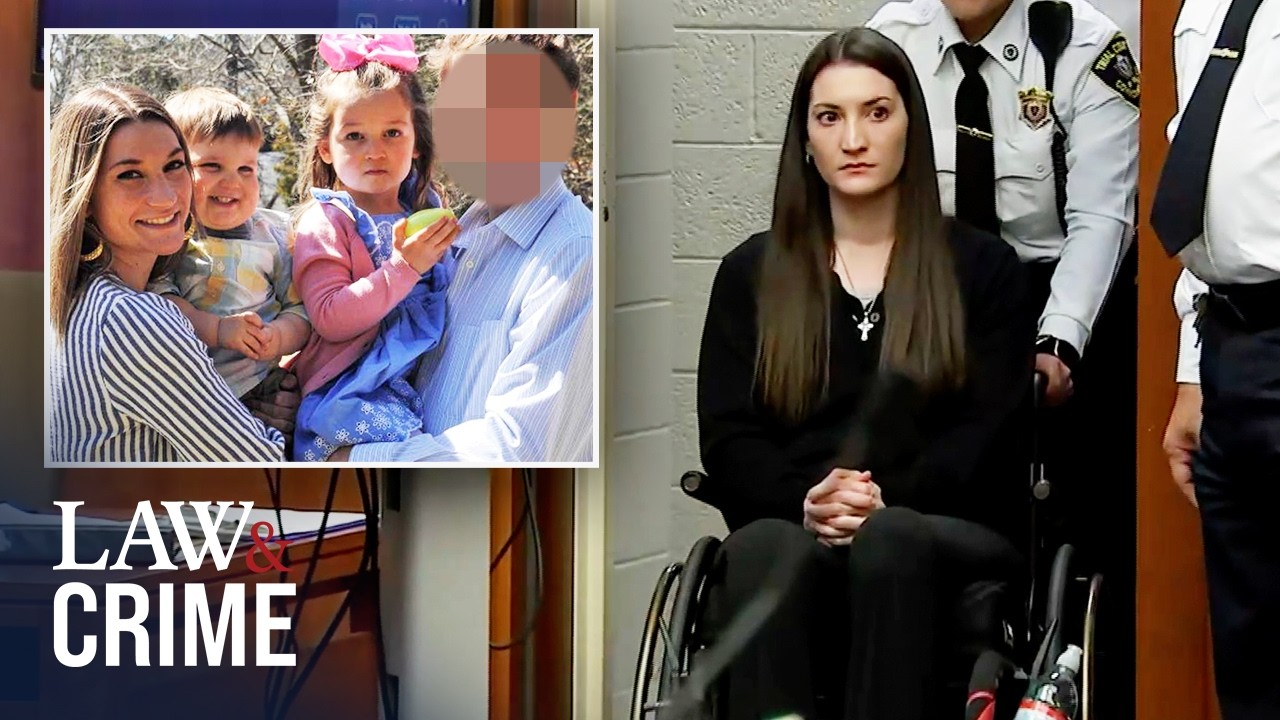
Adding to the complexity, Lindsay remains permanently paralyzed from the waist down after jumping from a second-story window in an apparent suicide attempt following the murders. She now uses a wheelchair, a constant visual reminder of the night’s events. Her attorneys have filed a motion to exclude blood spatter analysis testimony, arguing it could be misleading and prejudicial. They want to limit any expert testimony to objective observations, preventing reconstruction opinions about positions, movements, or intentions.
The trial, set for July 20, has been delayed multiple times due to the sheer volume of evidence. Both sides are preparing for a lengthy and emotionally charged battle. The defense will likely call expert witnesses to testify about postpartum psychosis, while the prosecution will rely on forensic evidence, the 911 call, and the timeline of events. Patrick Clancy, who has remained largely out of the public eye since the tragedy, is expected to testify. He has since moved out of state and filed a lawsuit against Lindsay’s doctors, alleging that a cocktail of 13 psychotropic medications contributed to her mental state.
 CBS Boston reporter Christina Rex, who covered the case from day one, described the crime scene as one of the worst she has ever encountered. “The police officers were crying,” she recalled. “That always stuck out to me because we knew something really serious had happened inside that house.” Rex noted that the case’s nuance will be central to the trial. “The Commonwealth is arguing that the time Lindsay sent her husband away was the perfect distance away, that she had made that choice and premeditated it,” she said. “Her team will say no, that was just a place they got takeout all the time, and she snapped once he left.”
The jury selection process will be critical, with both sides likely to scrutinize potential jurors’ views on mental health and motherhood. Rex predicted that mothers will be the most hotly debated jurors, as their personal experiences could shape their interpretation of the evidence. “The defense will be looking for mothers who can have sympathy for the postpartum experience,” she said. “The prosecution might want mothers who would be horrified that a mother could ever do this to her children.”
Lindsay has pleaded not guilty to three counts of murder and three counts of strangulation and suffocation. If convicted, she faces life in prison without the possibility of parole. The case continues to divide public opinion, with some viewing her as a victim of a broken mental health system and others as a cold-blooded killer. As the trial approaches, the new details from the prosecution’s filings have only deepened the tragedy, forcing a reckoning with the darkest corners of maternal mental health and the limits of legal culpability.