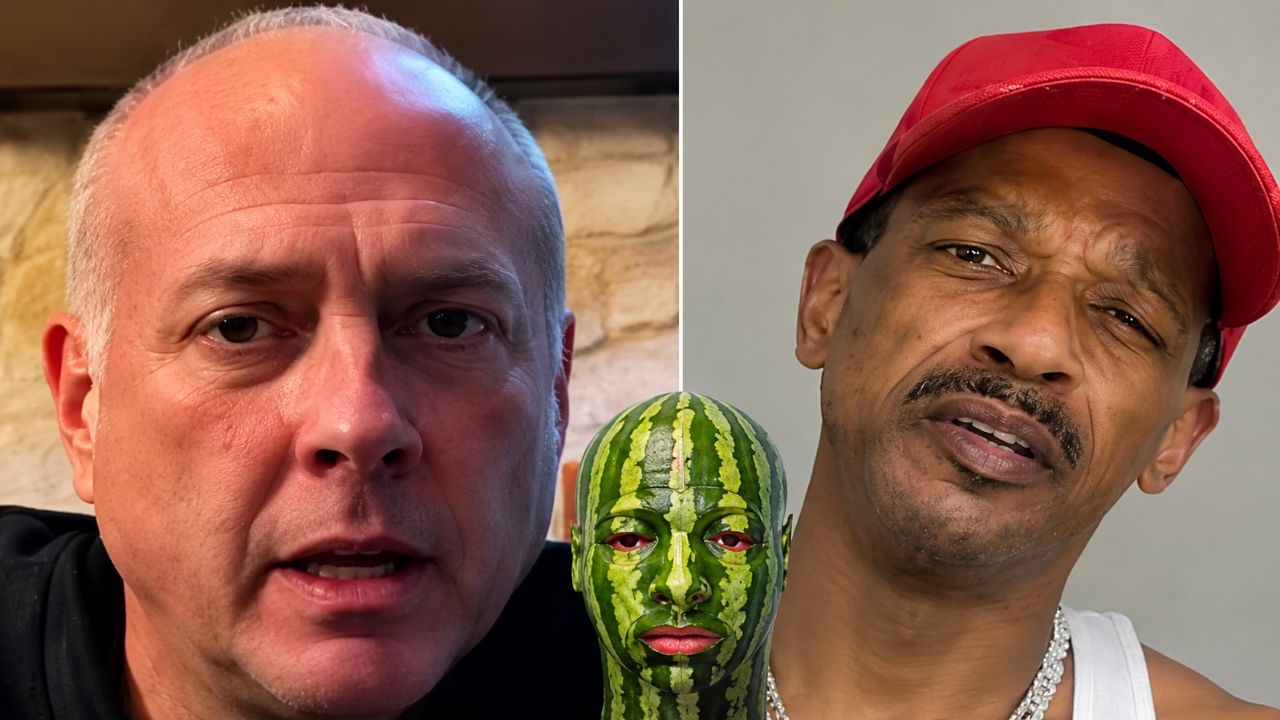
Charleston White is once again at the center of a heated public debate after speaking out about why he communicated with people connected to both sides of the Karmelo Anthony and Austin Metcalf case. The controversial online commentator also addressed Jeff Metcalf after Austin’s father publicly called him out, turning an already emotional case into another major social media conversation.
The case has remained one of the most divisive stories online because it involves tragedy, race, grief, justice, and two families whose lives were permanently changed. Karmelo Anthony was convicted in the fatal stabbing of Austin Metcalf during a high school track meet in Texas and later sentenced to 35 years in prison. Since then, the public debate has continued far beyond the courtroom.
Charleston White’s role in the conversation has been complicated from the beginning. Known for his blunt and often controversial commentary, he has spoken about the case multiple times, sometimes drawing praise and sometimes drawing strong criticism. His latest explanation focused on why he chose to communicate with both sides instead of only standing with one family.
According to the way the discussion has been framed online, Charleston appeared to argue that speaking to both families does not automatically mean betraying either side. In his view, the situation is bigger than one-sided internet outrage. It involves grief, accountability, racial tension, legal questions, and a community still trying to process what happened.
That message immediately created debate. Some viewers felt Charleston was trying to position himself as a bridge between two deeply hurt families. Others believed he was inserting himself into a painful situation for attention. Because Charleston already has a reputation for turning serious topics into viral commentary, many people were divided over whether his involvement was helpful or harmful.
The tension became even stronger after Jeff Metcalf, Austin’s father, publicly criticized Charleston White. Jeff has been outspoken since the verdict, speaking about his son, the Anthony family, and the public reaction to the case. His comments have drawn support from people who sympathize with his grief, but they have also sparked backlash from critics who believe some of his remarks went too far.
Charleston’s response to Jeff’s criticism seemed to reflect frustration with being attacked after trying to communicate across both sides. He appeared to suggest that people misunderstand his role and assume that any contact with one family means he has chosen a permanent side. But in a case as emotional as this one, even the appearance of neutrality can anger people who want clear loyalty.
That is one reason the story has continued to spread. The public is not only debating what happened in court. People are now debating who gets to speak, who should stay silent, who is exploiting the tragedy, and whether anyone outside the families should be involved at all.
Charleston White has built his platform on saying uncomfortable things in a direct way. His supporters argue that he is willing to address topics many people avoid. His critics say his style often adds more chaos than clarity. In this case, both reactions are showing up again.
Some people online believe Charleston was right to speak with both families because tragedy does not disappear when a verdict is reached. They argue that both sides are living with pain. Austin Metcalf’s family lost a son, brother, and loved one. Karmelo Anthony’s family is facing the reality of a young man spending decades in prison. From that viewpoint, communication with both sides could be seen as an attempt to understand the full human cost.
Others see the situation very differently. They believe the case has already been decided in court and that public figures should stop turning the families’ pain into online content. To them, Charleston’s involvement risks making a deeply serious case feel like another episode of internet drama.
Jeff Metcalf’s public comments have also made the debate more intense. As a grieving father, many people understand why he speaks with emotion. Losing a child is a pain most people cannot imagine. But some of his remarks have been criticized as inflammatory, especially when they touched on race and the Anthony family.
That racial element has been one of the biggest reasons the case continues to dominate social media. From the beginning, people argued over whether race affected public perception, fundraising, media coverage, and the tone of the trial. After the verdict, those arguments became even louder.
Charleston White’s commentary fits directly into that storm. He has often spoken about race, justice, youth violence, and accountability in ways that make people react strongly. When he says he worked with or communicated with both families, fans immediately try to figure out whether he is changing sides, chasing attention, or trying to make a larger point.
The truth may be more complicated than the internet wants it to be. In viral culture, people often demand simple answers. They want heroes and villains. They want one side to be completely right and the other side to be completely wrong. But cases involving death, grief, legal consequences, and racial tension rarely fit into clean categories.
Charleston’s latest remarks appear to highlight that complexity. He seemed to be saying that talking to both sides does not erase accountability. It also does not erase sympathy. A person can believe Austin’s death was a tragedy, acknowledge the pain of his family, and still question the way the case was discussed publicly. At the same time, a person can feel compassion for Karmelo’s family without denying the seriousness of the conviction.
That kind of middle ground is difficult to maintain online. Social media rewards strong positions, not nuance. If someone expresses sympathy for one side, they are often accused of attacking the other. If they criticize a grieving parent’s words, they may be accused of disrespecting the victim. If they question the legal process, they may be accused of ignoring the loss of life.
This is the difficult space Charleston White has stepped into. Whether people believe his motives are sincere or not, his comments have forced the public to talk about the emotional aftermath of the case, not just the verdict itself.
For Jeff Metcalf, the situation is deeply personal. He is not simply a public figure in a debate. He is a father who lost his son. That reality is why many people defend his anger, even when they do not agree with every word he says. Grief can be raw, messy, and unpredictable.
For Karmelo Anthony’s family, the pain is also real. Their son has been sentenced to decades in prison, and they have faced intense public criticism. They have also argued that the public narrative around the case has been unfair or racially charged. Whether people agree with them or not, their lives have also been permanently changed.
That is why Charleston’s claim that he communicated with both sides has become such a major talking point. In a divided public conversation, speaking to both families can be seen either as compassion or as opportunism. The interpretation depends largely on how people already feel about Charleston White.
His critics believe he has a pattern of entering viral tragedies and making himself part of the headline. They argue that the case should remain focused on Austin, Karmelo, and the legal outcome. In their view, Charleston’s presence distracts from the seriousness of the story.
His supporters argue that Charleston is one of the few public figures willing to say what many people are thinking. They believe he brings attention to uncomfortable questions about race, justice, media bias, and family responsibility. To them, his involvement may be messy, but it is not meaningless.
The clash with Jeff Metcalf adds another layer because it reflects how quickly public grief can turn into public conflict. Jeff’s criticism of Charleston gave Charleston a reason to respond, and that response gave social media another storyline to follow. The result is a cycle where each reaction creates another wave of commentary.
That cycle is common in high-profile cases. A court decision happens. Families speak out. Public figures react. Commentators respond to the families. Then the families respond to the commentators. Before long, the original tragedy is surrounded by layers of arguments, clips, and online outrage.
In this case, the danger is that the human loss can become buried under the noise. Austin Metcalf’s death should not be reduced to a content battle. Karmelo Anthony’s sentence should not be treated like a social media game. And the pain of both families should not be turned into entertainment without care.
Still, the public cannot seem to look away. The case touches too many sensitive issues at once: youth violence, race, self-defense claims, parental grief, courtroom punishment, online fundraising, and media influence. Charleston White’s involvement only intensifies those debates because he naturally attracts strong reactions.
As the discussion continues, the key question is whether anyone involved can help lower the temperature. Charleston says he spoke with both sides, but the public remains divided over what that means. Jeff Metcalf has made it clear that he does not appreciate everyone speaking on his family’s pain. Meanwhile, Karmelo Anthony’s supporters continue to argue that the case has been framed unfairly.
The situation shows how difficult healing can be when a tragedy becomes national content. Every statement is analyzed. Every reaction is clipped. Every emotional moment becomes a headline. Instead of giving families space to grieve, the internet often demands constant updates and dramatic responses.
Charleston White may see himself as someone trying to tell the truth from his perspective, but the backlash shows that many people are tired of the spectacle. They want accountability, but they also want respect. They want discussion, but not exploitation. They want justice, but not racial division.
In the end, Charleston White’s explanation about working with both families has opened a bigger conversation about what it means to engage with tragedy responsibly. Speaking to both sides may be seen as an attempt at understanding, but in a case this painful, every move will be judged.
For now, the drama between Charleston White and Jeff Metcalf is another chapter in a story that has already left a lasting mark on the public. The courtroom may have delivered a verdict, but the online debate is far from over.
What remains clear is that two families are still living with the consequences of one devastating day. No amount of commentary, criticism, or viral reaction can change that. And as Charleston White continues to speak out, the public will keep asking whether his role is helping the conversation move forward or simply keeping the controversy alive.