LAS VEGAS — A seismic breakthrough erupted Thursday in one of music’s most haunting cold cases as authorities finally arrested 60-year-old Dwayne Keith Davis, known as Keffe D, charging him with the 1996 murder of rap icon Tupac Shakur. The stunning arrest ends a 27-year quest for justice, igniting fresh fury over the investigation’s murky depths.
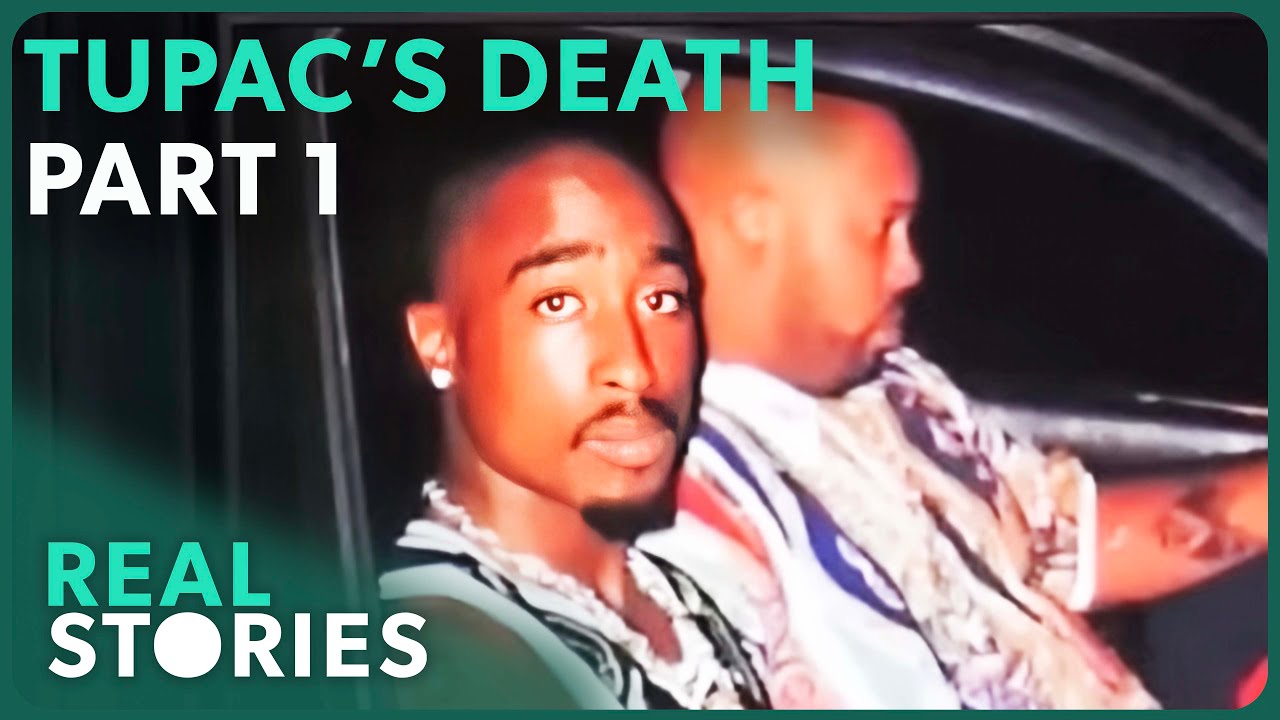 Sheriff Kevin McMahill stood before cameras, his voice heavy with history, announcing the indictment that fans worldwide thought might never come. “For 27 years, the family of Tupac Shakur has been waiting for justice,” he declared. “We are here today to announce the arrest of 60-year-old Dwayne Keith Davis, aka Keffe D, for the murder of Tupac Shakur.”
The news shattered the silence that has surrounded Shakur’s death since September 6, 1996, when the multi-platinum artist was gunned down at a red light near the Las Vegas strip. He was just 25 years old, riding in a BMW with Death Row Records mogul Suge Knight.
But this arrest is no clean victory. The case against Davis rests on shaky foundations: no gun, no witnesses willing to testify, no car. Critics inside and outside law enforcement are already questioning whether Vegas police finally got their man or simply manufactured a confession from a dying man’s fading memory.
In an explosive exclusive, newly surfaced audio recordings reveal a stunning twist: investigators allegedly coached Davis, feeding him the story they wanted to hear. “Once Detective Long leaves the room, they’re completely leading Keffe on what to say and to stick to the story,” one source disclosed. “They’re putting words in his mouth.”
The recorded transcript paints a disturbing portrait of coercion. Detectives allegedly told Davis, “If you stick to this story, you’ll sleep well. If you don’t stick to this story, you’re not going to sleep well and we’re going to potentially cause problems for you.” Critics call it police coercion, pure and simple.
Now a new team of investigators has been assigned, reopening wounds that never truly healed. With little physical evidence, legal experts question whether this case can survive courtroom scrutiny. What do Vegas police know that the public doesn’t? And why now, after nearly three decades?
To understand this moment, we must go back to the beginning. Tupac Amaru Shakur was more than a rapper; he was a poet, a prophet, a movie star in the making. The Guinness Book of World Records still recognizes him as the best-selling hip-hop artist ever, with over 75 million albums sold globally. His death remains the defining tragedy of rap’s golden age.
In the months before his murder, Shakur was suffocating inside Death Row Records, the empire ruled by Suge Knight. Artists spoke of chaos and confusion, of fear and control. “It was like being in a fortress,” one insider said. “It was almost like a prison.” Tupac, they say, was desperate to escape.
He had fulfilled his three-album obligation, or so he believed. Sources close to the rapper insist he was planning to launch his own label, Makaveli Records, and leave Death Row behind forever. “He was done. He was done. He had fulfilled his obligation with Death Row and no intentions of renewing any sort of paper agreement,” recalled one associate.
Every Friday, a runner from Death Row would deliver $5,000 in cash to Tupac’s bodyguard. Twenty years later, they learned the truth: “They were holding on to his money. They were putting things he was supposed to own in other people’s names and keeping it away from him.” Millions flowed, but Tupac saw pennies.
His frustration boiled over. Friends remember Tupac calling for an audit of Death Row’s finances, a move that would have 𝓮𝔁𝓹𝓸𝓼𝓮𝓭 deep corruption. “That’s the first time I had ever heard anything about an audit,” said Frank Alexander, his bodyguard. “Her main thing was that she wanted us to pay a little bit more closer attention to Pac, watch him a little bit closer.”
Then came the confrontation at the studio. Tupac stormed in, demanding his masters, the recordings that represented his artistic legacy and his ticket to freedom. Security called Alexander, urgently pleading: “You need to get down here. You need to talk to him. You need to calm him down. He’s cussing. He’s going off. He’s going crazy.”
The tension spilled over in Harlem, right after the MTV Music Awards. Snoop Dogg’s conciliatory radio comments about New York enraged Tupac, who demanded they confront Suge Knight face-to-face. Witnesses describe Tupac screaming, “I’m going to cut out Makaveli and when I cut out Makaveli, I’m the hell up out of here. You got your money. I don’t want nothing else to do with Death Row.”
Suge Knight, an imposing, dictatorial figure, wasn’t used to defiance. Security had to step between the two men. “Mr. Knight was very upset and they got to yelling at each other back and forth,” one witness recounted. “I did slide in between them and said, ‘Hey, you can’t do this while I’m here or I am going to have to step out of the room.’”
Days later, Tupac boarded a plane to Las Vegas. His bodyguard remembered the ominous silence during the five-hour flight. “Suge didn’t let none of my security ride with me. I had to ride on the plane with him, his homies, and Suge. It was the most uncomfortable ride I ever had in my life.”
Tupac’s intuition screamed danger. Before leaving New York, he hinted he wasn’t sure he’d survive Vegas. Now, a week before his death, he was in Sin City shooting a music video and preparing for a night of chaos. That night, the infamous brawl inside the MGM Grand involving Tupac and a known gang member set the stage for what came next.
On September 7, 1996, the day before the shooting, an inexplicable security meeting was held at a Las Vegas attorney’s office. The lawyer’s name wasn’t on any office directory. No one recognized him. “Never before had we had a meeting at an attorney’s office or with an attorney even present in any of our security meetings,” Alexander said.

The instruction was chillingly specific: “Do not carry your weapon.” Bodyguards who had protected Tupac across the country were ordered to disarm in the most volatile city in America. Alexander questioned the directive, but was told it was how things would be run. “That’s the first time we’d have been in Vegas where somebody said, ‘Don’t carry your weapon.’ And then they were really persistent about you not having one.”
Bodyguard Chris Herzog, owner of the Bodyguard Group of Beverly Hills, had repeatedly warned Tupac about his own protection. “I repeatedly begged Tupac,” he said. “I said, ‘Tupac, this is a B7 armored vehicle. It can stop armor-piercing AK-47 rounds on full auto, point blank. It’s the highest level you can get.’” Tupac brushed him off, infamously saying, “I ain’t grown old anyway.”
His girlfriend stood by his side, pleading with him to listen. “His girlfriend was standing next to him, was arguing with him. Listen to Chris. Listen to him,” Herzog recalled. Tupac had a premonition of his own death, a darkness that followed him like a shadow. Friends tried to lift his spirits, but the weight was too heavy.
Herzog’s frustration turned to despair. “They’re wrong and what they’re doing is going to get you killed,” he told Tupac. He remembers the rapper’s resigned response, a man who believed his fate was sealed. “He was bigger than life, but the process of the money rolling in had not been, it was being leveraged.”
The East Coast-West Coast rivalry added gasoline to an already raging fire. Tupac’s devastating diss track “Hit ‘Em Up” targeted Biggie Smalls and the entire East Coast scene. Friends worried the lyrics were a death sentence. “I was worried when I started hearing about the song,” one recalled. “Because once you put these words out there, you can’t take them back.”
Even Biggie, friends say, seemed alarmed by the escalating hostility. Strangely, when Tupac was shot in New York in 1994, Biggie had been at the hospital, reportedly staying through the night. But after “Hit ‘Em Up,” the narrative shifted. “Rappers say a lot of things in songs and it’s just a cut at you. You don’t know if it’s necessarily true or not,” one journalist reflected.
The rivalry was hyped by media, but those inside the industry knew it was more than lyrics. Street factions, gang alliances, and business rivalries were simmering. “The rap in the rap business or industry is more toxic than the streets and politics together,” one veteran noted. “The world is full of people who made millions and millions of dollars and went bankrupt.”
Now, all these years later, Dwayne Davis stands accused. But his confession, if it can be called that, is riddled with contradictions. The audio reveals a man being fed lines, pushed toward a narrative that conveniently implicates him. Where’s the physical proof? Where are the eyewitnesses? Where is the murder weapon?

Legal analysts are bracing for a courtroom battle. “If there’s no gun, no witnesses, no car, where’s the case?” one expert demanded. “I’ve been around a lot of mob guys in New York City and they walk away from stuff a lot less powerful than that. But you’ve got to have at least those three things and they had none of those.”
The secret recording of Davis’s interview may prove disastrous for prosecutors. One investigator admitted, “His decision to surreptitiously record that interview is everything. Honestly, I don’t think if he hadn’t secretly recorded that entire interview, we would be here where we are today.” Now, that recording could dismantle the entire case.
The transcript from police reveals officers coaching Davis, telling him what to say and 𝓉𝒽𝓇𝑒𝒶𝓉𝑒𝓃𝒾𝓃𝑔 consequences for deviation. “They’re completely leading Keffe on what to say and to stick to the story and not let Keffe speak freely,” the source stated. “It’s complete police coercion, which is crazy. It’s not acceptable, obviously.”
Tupac’s family, which has waited 27 years, now faces a cruel new uncertainty. They’ve been promised justice, but is this justice or an elaborate performance? The arrest raises more questions than answers. Who really pulled the trigger on September 6, 1996? Was it Davis, or is he simply the man the system chose?
Every shred of evidence, every interview, every secret recording is under a microscope. The Las Vegas Metropolitan Police Department has not released further details. Sheriff McMahill’s announcement was confident, but the foundation is cracking. “What happens when the only witness is dead and the confession was scripted?” one analyst whispered.
Secrets continue to surface. Thempact of Shakur’s music endures, but thechaoy of hisdeath refuses to die. In 2024, a fresh generation just wants answers. They need to know who is responsible for silencing one of the greatest voices ever to touch a microphone.
The audition continues, with haunting echoes of a star who was too big for the world that destroyed him. His bodyguards’ warnings, his own premonitions, the strange meeting at the 𝒻𝒶𝓀𝑒 attorney’s office, all of it screams of a conspiracy deeper than a random street shooting. Las Vegas police, however, insist they have their man.
Tonight, the streets mourn again. Tupac shakur, born June 16, 1971, died September 13, 1996, but his legend is eternal. This arrest, this fragile paper-thin case, cannot bring him back. It can only add another confusing chapter to his tragic legend.
Will justice finally be served, or will this case collapse under the weight of its own contradictions? The world watches, waits, and prays for an answer to the question that has haunted hip-hop for generations: Who really killed Tpac Shakur?