The escalating war of words between Chris Brown and a former United Kingdom cellmate took another explosive turn Tuesday as the Grammy-winning artist delivered a blistering rebuke to the man who claims Brown promised him a job on his personal security team. In a statement that has ignited fierce debate across social media platforms, Brown dismissed the allegations outright, branding the former inmate a “fucking liar” and accusing him of attempting to exploit the singer’s celebrity for undeserved clout. The confrontation, which has been building for days, erupted into full view after the unidentified former cellmate released a series of videos and audio recordings allegedly captured during their shared incarceration.
The recordings, which the man claims document the promises Brown made to him behind bars, have now been met with a defiant counter-narrative from the singer, who insists that no such employment offer was ever extended.
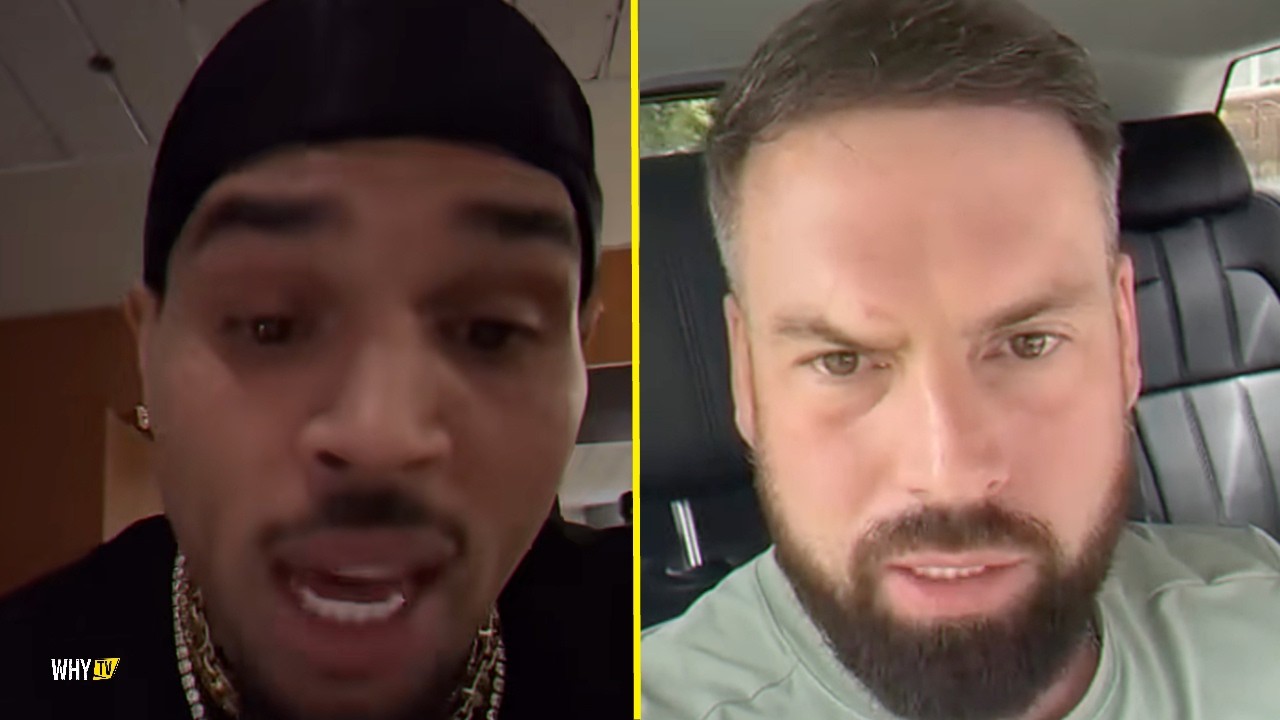 The controversy began when the former cellmate took to social media with a detailed and emotionally charged account of his time alongside Brown in a London detention facility. According to the man, he served as Brown’s protector during a perilous period of the singer’s imprisonment, shielding him from hostile inmates who sought to photograph him surreptitiously or worse, sabotage his meals. The ex-inmate claims he personally intervened to stop individuals from spitting in Brown’s food, an act he says was motivated by the singer’s past association with the Rihanna assault case.
He also alleged that he facilitated Brown’s access to contraband, including mobile phones and cannabis, all while maintaining a vigilant watch over the artist’s safety. In exchange for this loyalty, the man insists, Brown promised him a future position on his security detail upon his release, a promise that has never been fulfilled.
Chris Brown, however, has categorically rejected this version of events, offering a sharply different account of their time together in custody. In his response, Brown acknowledged that he appreciated the support he received during his imprisonment but adamantly denied ever making any commitment to hire the man. The singer characterized the former cellmate’s claims as a transparent attempt to leverage his name for personal gain and financial benefit, suggesting that the man’s sudden public revelations are motivated by opportunism rather than genuine grievance.
Brown’s response was succinct and cutting, directly addressing the man with the accusation of being a liar, a label that has since gone 𝓿𝒾𝓇𝒶𝓁 among his substantial fan base. He emphasized that loyalty, in his view, cannot be bought, demanded, or retroactively exchanged for employment opportunities, no matter how supportive a person may have been during a difficult period.
The former cellmate, undeterred by Brown’s dismissal, has continued to press his case, releasing additional materials that he claims substantiate his account of events. In a lengthy video statement, the man detailed the sacrifices he made during their shared incarceration, describing how he was moved to a padded cell next to Brown’s and engaged in daily conversations with the singer. He claimed that Brown recorded everything, including videos and photographs, and that the man eventually confiscated the phone after discovering the recordings, fearing they would be 𝓵𝓮𝓪𝓴𝓮𝓭 to the public.
The ex-inmate also shared what he described as a letter from Brown apologizing for getting him “banged up” and acknowledged the personal consequences he suffered, including closed visits with his own children and being moved off every wing in the facility, all in service of his loyalty to the singer.
This latest chapter in the saga has reignited questions about Brown’s conduct during his various legal entanglements and his treatment of those who claim to have supported him. The singer, who has a long and well-documented history of legal issues, including the infamous 2009 assault of then-girlfriend Rihanna and subsequent probation violations, has repeatedly faced scrutiny over his behavior both inside and outside of correctional facilities. His time in UK custody, which stemmed from his 2022 arrest in London on allegations related to a separate incident, was marked by significant media attention and speculation about his treatment while incarcerated.
The current dispute with his former cellmate adds another layer of complexity to his public persona, painting a picture of a celebrity navigating the treacherous waters of alliances formed in confinement.
Fans and observers have been quick to take sides, with social media platforms buzzing with commentary and speculation about the true nature of the relationship between Brown and his former cellmate. A significant portion of Brown’s fan base has rallied behind the singer, arguing that his success and status should not obligate him to provide employment to every person he encountered during his legal troubles. These supporters contend that the ex-inmate’s demands are unreasonable and that his decision to release private recordings and letters is itself a violation of the loyalty he claims to have shown Brown.
 They point to the man’s continuing media presence as evidence that his motivations are less about seeking help and more about capitalizing on his association with a famous figure, transforming a personal grievance into a public spectacle.
Conversely, a growing number of commentators have expressed sympathy for the former cellmate, suggesting that his account of protecting Brown in a hostile environment deserves greater consideration. These observers argue that if the man truly shielded Brown from physical harm, prevented the leaking of compromising photographs, and provided comfort during a vulnerable period, then some form of recognition or assistance might be warranted. The fact that the man explicitly stated he does not want money or gifts from Brown, but rather help with securing a position and advice for his future, has led some to view his request as reasonable and earnest.
The release of the recorded conversations, which reportedly capture Brown expressing gratitude and making assurances about future support, has further complicated the narrative, leaving many uncertain about where the truth lies.
The legal and ethical dimensions of this dispute are equally murky, raising questions about the nature of promises made in custody and whether they carry any enforceable weight outside prison walls. Legal experts weigh in on the situation, noting that verbal agreements made under the duress of incarceration are notoriously difficult to validate, particularly when they involve a celebrity who may have felt pressured to make assurances for his own safety. The fact that Brown denies the promise outright, while the cellmate provides recordings that allegedly show otherwise, creates a evidentiary standoff that may never be fully resolved.
The potential for the ex-inmate to pursue legal action against Brown, whether for breach of contract or emotional distress, remains a possibility, though experts suggest such a case would face significant hurdles given the informal nature of the alleged agreement.
Chris Brown’s team, meanwhile, has maintained a measured public response, with the singer standing by his statement and offering no further comment on the matter. According to sources close to the artist, Brown is eager to move past the controversy and focus on his music career and upcoming projects, viewing the former cellmate’s allegations as a distraction manufactured for social media attention. The singer’s decision to directly confront the man rather than ignore the claims is seen by some observers as a calculated move to control the narrative before it gains further traction.
By categorically denying the allegations and attacking the credibility of his accuser, Brown has signaled that he will not entertain what he perceives as opportunistic demands, even at the risk of drawing more attention to the situation.
The former cellmate, however, shows no signs of backing down, continuing to release bits of evidence and commentary that he hopes will sway public opinion in his favor. In his latest statements, the man has emphasized the hardships he endured as a result of his loyalty to Brown, describing how he was punished by prison authorities for his association with the singer. He alleges that he was denied employment opportunities within the facility and faced additional scrutiny because of his connection to Brown, sacrifices he says he made willingly at the time but now regrets.
 The man’s persistence suggests that he believes the court of public opinion may ultimately side with him, particularly if he can produce compelling evidence of Brown’s promises and the extent of his own sacrifices.
The broader implications of this dispute extend beyond the personal relationship between the two men, touching on issues of celebrity accountability, the ethics of prison alliances, and the sometimes-blurry line between genuine friendship and transactional assistance. Incarceration often forges intense bonds between individuals who share confined spaces and vulnerable moments, but those bonds can be complicated by power imbalances when one party is a wealthy celebrity and the other is an ordinary inmate. The expectation of reciprocity, whether spoken or unspoken, can create obligations that are difficult to navigate once the prison doors open and the realities of the outside world reassert themselves.
Brown’s case serves as a cautionary tale about the complexities of such relationships, particularly when they are formed under the extreme circumstances of confinement.
The media’s coverage of this story has been extensive, with entertainment news outlets and social media influencers dissecting every new development with fervent interest. The release of the cellmate’s video recordings, which he claims capture Brown in moments of vulnerability and gratitude, has generated substantial viewership and commentary. Some viewers have expressed shock at the casual manner in which Brown allegedly discussed contraband and the conditions of their confinement, while others have focused on the perceived betrayal inherent in the cellmate’s decision to record and later release these private moments.
The ethical questions surrounding the secret recordings remain unresolved, with some arguing that the cellmate’s actions constitute a violation of trust that undermines his credibility as a loyal supporter.
As the social media storm continues to develop, industry insiders note that Brown has weathered similar controversies throughout his career and possesses a demonstrated ability to survive public relations crises. His loyal fan base, which has supported him through numerous legal battles and public scandals, appears largely unmoved by the latest allegations, with many dismissing the cellmate’s claims as another attempt to profit from Brown’s fame. The singer’s business ventures, including his music releases and various entrepreneurial pursuits, are unlikely to suffer lasting damage from the dispute, though the ongoing attention could complicate his efforts to maintain a positive public image.
For now, Brown appears content to let his statement stand and allow the controversy to run its course, confident that his reputation and career will endure this latest challenge.
Yet the unresolved nature of this dispute leaves many questions hanging in the air. Will the former cellmate produce additional evidence that could shift public perception? Is there any possibility of a behind-the-scenes resolution, such as a private settlement or an offer of assistance that falls short of the promised security job?
 And what does this episode reveal about the conditions of Brown’s UK detention, including his apparent access to contraband and the purported threats he faced from other inmates? Law enforcement authorities in the UK may also take interest in the cellmate’s revelations about mobile phones and drugs inside the facility, potentially prompting investigations into the prison’s security protocols. The full implications of this story, both for Brown and for the broader conversation about celebrity incarceration, may not be known for some time, but the public appetite for information shows no signs of diminishing.
The reactions from within the music industry have been varied, with some artists expressing solidarity with Brown and others remaining conspicuously silent on the matter. The entertainment community, which has often rallied around its members during personal controversies, appears cautious about wading into this particular dispute, perhaps recognizing the murkiness of the situation and the difficulty of determining where the truth lies. Industry analysts note that Brown’s continued commercial success suggests that his audience has largely separated his musical output from his personal controversies, a pattern that has persisted throughout his career.
The current dispute, while generating significant online engagement, is unlikely to significantly impact his bottom line or his standing within the industry, barring any substantial new revelations that could emerge from the cellmate’s ongoing disclosures.
The former cellmate, for his part, has framed his campaign as a fight for recognition and respect, insisting that his loyalty should not be dismissed so easily by someone who benefited from his protection. In his most recent statements, he has challenged Brown directly, urging the singer to acknowledge the sacrifices made on his behalf and to honor the spirit of the promises made during their time together. Whether this challenge resonates with the public or falls on deaf ears remains to be seen, but the persistence of the cellmate’s efforts suggests that he is prepared to continue pressing his case indefinitely.
As with many celebrity controversies, the truth may ultimately lie somewhere between the two competing narratives, obscured by the fog of memory, self-interest, and the unique pressures of life behind bars.
Observers of Brown’s career note that he has consistently maintained a position of strength in the face of adversity, rarely backing down from confrontations and often emerging from controversies with his fan base more firmly entrenched. His decision to directly call out the former cellmate as a liar is consistent with this pattern, signaling that he will not be cowed by accusations or public pressure. The strategic calculation appears to be that denying the claims forcefully and moving on will ultimately serve him better than engaging in a protracted dispute or offering concessions that could be interpreted as an admission of guilt.
Whether this strategy proves successful this time will depend on the staying power of the story and the ability of the cellmate to produce evidence that captures sustained public attention.
As the story continues to evolve, one thing remains clear: the intersection of celebrity, incarceration, and loyalty is a deeply complicated space where promises made under duress can create lasting consequences. The case of Chris Brown and his former UK cellmate serves as a compelling illustration of these complexities, offering a glimpse into the often-hidden world of celebrity imprisonment and the relationships that form within it. For now, the ball remains in Brown’s court, with the singer having made his position unmistakably clear and shown no indication that he intends to revisit or revise his stance.
The former cellmate, however, continues to assert his narrative, and the public’s fascination with this unfolding 𝒹𝓇𝒶𝓂𝒶 shows no signs of abating. Only time will reveal the ultimate outcome, but the conversation surrounding loyalty, obligation, and the price of protection in the crucible of prison shows no signs of slowing down.