Cardi B has ignited a firestorm across social media and the music industry after declaring herself the Britney Spears of hip-hop, drawing a direct and provocative parallel between her own turbulent career and the iconic pop star’s legendary, often painful, journey in the spotlight. In a video that has already amassed millions of views, the Grammy-winning rapper did not hold back, proclaiming, “I am the mother fking Britney bch,” and framing her experiences with media scrutiny, personal battles, and industry pressure as a mirror to what Spears endured for decades. The statement lands at a moment when the conversation around celebrity, mental health, and media ethics is at an all-time high, and Cardi B’s claim has split the internet into fierce camps of agreement, outrage, and deep analysis.
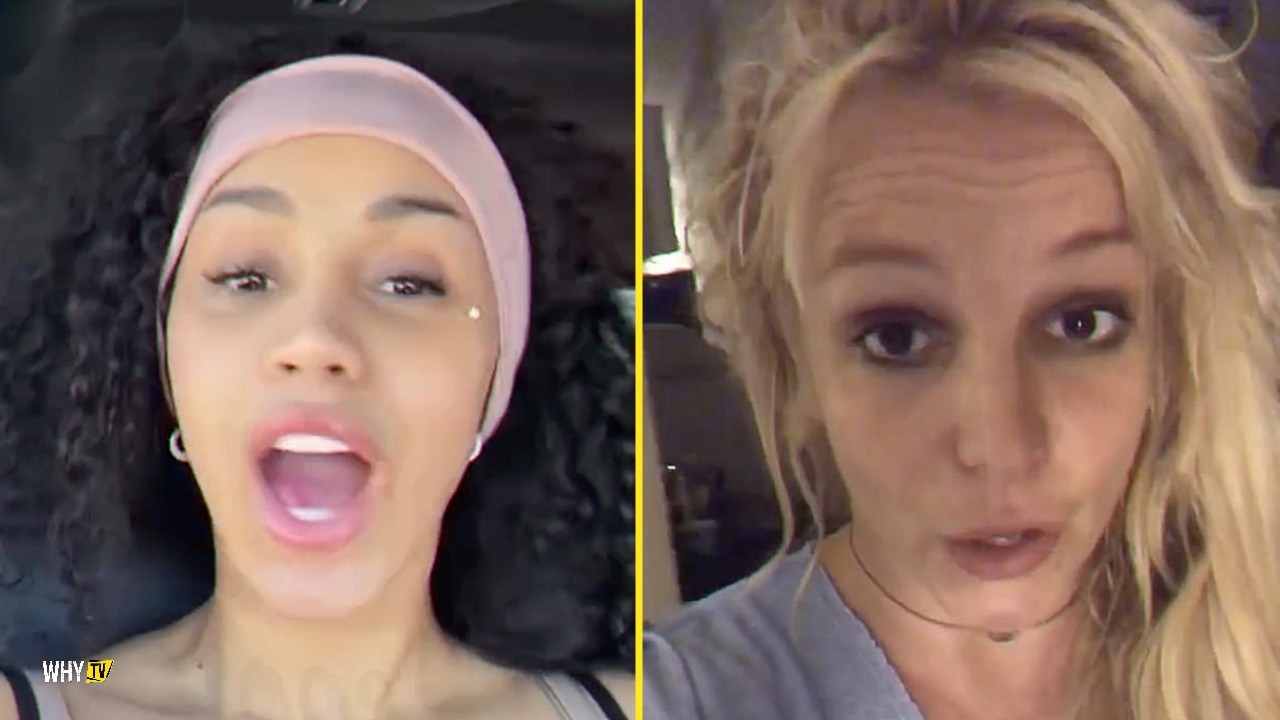
The Bronx-born artist, known for hits like “Bodak Yellow” and “Up,” made her case in a raw, unfiltered monologue that touched on a central grievance: she believes she is held to a vastly different standard than her peers. “No cap. I’m really hip-hop’s Britney Spears.
Like out here feeling like Britney cuz let me tell you something, right? A lot of these celebrities, like you know I got all the tea on these celebrities. Like I know who and what’s doing what and all that.
Guess what? Nobody reports about it. You want to know why?
Because nobody gives a fk,” she said, her voice a mix of frustration and defiance. She then pivoted to her own experience: “But when it comes to me, you pissed in a motherfking bottle. Like this crazy.”
This reference to a past incident—when Cardi B was involved in a controversial altercation at a strip club—underscores her point that her missteps are magnified while others’ are ignored.
In making the comparison, Cardi B is tapping into a potent cultural narrative. Britney Spears, the princess of pop, was subjected to a level of invasive media coverage and personal control that eventually led to the #FreeBritney movement, exposing the dark underbelly of fame.
Spears’ conservatorship, her public breakdown, and her fight for autonomy became a symbol of systemic exploitation. Cardi’s argument is that she, too, has been repeatedly victimized by a media ecosystem that profits from her chaos while protecting other powerful figures. “People pay for this type of talk.
People pay for this type of motherf*king talk,” she said, implying that her controversies are both a burden and a commodity.
The reaction has been instantaneous and divided. On social media platforms like X, formerly Twitter, and Instagram, fans have rallied behind Cardi, arguing that she has been a constant target of racist and sexist double standards.
Supporters point out that male rappers often commit far more egregious acts—from legal troubles to violent feuds—without facing the same level of personal demonization. “She’s right. They drag Cardi through the mud for every minor thing while men get free passes.
 She’s the Britney of hip-hop because she’s been overexposed, overanalyzed, and overcontrolled by the industry,” wrote one user. Another added, “Cardi has had to fight for every ounce of respect. She built her empire from the ground up while the media tried to tear her down at every turn.
That’s exactly what happened to Britney.”
However, critics have pushed back, noting significant differences between the two artists’ trajectories. Britney Spears rose to fame as a teenage pop idol under the strict management of her father, eventually losing control of her life to a conservatorship that lasted 13 years.
Cardi B, by contrast, built her career as an adult—first as a stripper and social media personality, then as a reality TV star on “Love & Hip Hop: New York,” before transitioning into a massively successful recording artist. While Spears was often portrayed as a victim of a system that infantilized her, Cardi B has been a vocal, combative figure who has wielded her platform to call out industry hypocrisy. Some argue that comparing the two diminishes the unique trauma of Spears’ situation.
“Cardi B is one of the most powerful women in music. She owns her masters, she controls her narrative, and she’s never been under a conservatorship. That’s the opposite of Britney’s experience,” commented a music industry analyst on a breaking news segment.
Others have pointed out that Spears’ career was marked by a loss of agency that Cardi, for all her reported struggles, has never experienced. Yet another camp argues that the comparison is less about the specifics of legal control and more about the psychological toll of constant, hostile scrutiny—something both women have undoubtedly endured.
The timing of Cardi’s statement is also significant.
It comes just days after she appeared at a high-profile event where she was visibly emotional, fueling speculation about her mental health and pressures. Fans recall that she took a hiatus from music in 2023, citing the need to focus on her family and her well-being. In a separate interview, she said, “Sometimes I feel like I’m in a cage.
Like everything I do is watched, judged, and critiqued. It’s exhausting.” That language echoes what Spears has described in her own memoir and social media posts, where she wrote about feeling trapped by the very fame she sought.

Music historians and pop culture experts have begun weighing in on the broader implications of Cardi B’s comparison. “She is drawing a line from the treatment of female pop stars in the 2000s to the treatment of female rappers today,” said Dr. Elena Torres, a professor of popular culture at NYU.
“Both Britney and Cardi have been subjected to a kind of tabloid feminism where they are simultaneously celebrated for their success and punished for their sexuality, their mistakes, and their defiance. It’s a powerful rhetorical move, even if the audience takes issue with the specifics.” The comparison also forces a reckoning with how the music industry polices women of color differently.
Britney Spears, a white woman, was often portrayed as a “crazy” trainwreck, whereas Cardi B, a Black and Latina woman, is frequently described using far more aggressive language—”ratchet,” “ghetto,” “dangerous.”
Within the hip-hop community, responses have been mixed. Some rappers have shown support, with Megan Thee Stallion reportedly liking a post that agreed with Cardi’s statement.
Others have been more critical, arguing that Cardi’s comparison is a grasp for relevance or an attempt to claim a victimhood narrative that doesn’t fully fit. “Britney was controlled by her father. Cardi controls her own label, her own money, her own career.
They’re not the same,” said one rival artist in a watered-down response. Yet Cardi’s defenders insist that the point is not about identical circumstances but about the emotional truth of being the most scrutinized woman in your genre. “Britney was the face of pop’s broken system.
Cardi is the face of hip-hop’s broken system. Both were sacrificed for ratings and clicks,” wrote a prominent music journalist.
The video itself is a masterclass in the kind of raw, confessional communication that has become Cardi B’s trademark.
She speaks directly to the camera, her tone shifting between anger, vulnerability, and a kind of weary acceptance. “You got to take the good with the bad. Like it is what it is,” she says, almost shrugging.
 The clip ends with her asking viewers to weigh in, which they have done in the hundreds of thousands. The hashtag #CardiIsBritney is now trending on multiple platforms, alongside a counter-hashtag #NotTheSame. It has become a litmus test for how people perceive celebrity, race, and the price of fame.
This is not the first time Cardi B has drawn parallels between herself and other iconic but troubled stars. She has previously compared herself to Whitney Houston and Amy Winehouse, referencing the pressures that ultimately consumed them. But the Britney Spears comparison feels particularly charged because Spears is still alive, still speaking, and still framing her own narrative.
In a recent social media post, Spears herself addressed the whirlwind of commentary, writing, “I hear people comparing themselves to me. I just hope they don’t have to go through what I went through to understand.” That post was seen by many as at least a partial acknowledgment of Cardi’s claim, if not an endorsement.
As the debate rages on, one thing is clear: Cardi B has succeeded in shifting the conversation from her music to her larger cultural significance. Whether or not she is the Britney Spears of hip-hop, she has forced the industry and its audience to look at the systemic ways women—especially women of color—are treated in the public eye. The comparison may be imperfect, but it is provocative, and it speaks to a deep frustration that Cardi B has held for years.
In an era where celebrity is both more accessible and more weaponized than ever, her words are a rallying cry for anyone who has felt the weight of being watched, judged, and commodified.
Now the question is whether this moment will lead to real change in how media covers female artists—or if it will simply become another 𝓿𝒾𝓇𝒶𝓁 chapter in the ongoing saga of fame’s high cost. Cardi B, for her part, seems ready for whatever comes next.
“People pay for this type of talk,” she said. And they do. The only question is whether they are paying to see her rise, fall, or something else entirely.
In the world of breaking news, this story is only just beginning. Stay tuned for further developments as the industry reacts, fans take sides, and the conversation around double standards in entertainment reaches yet another boiling point.