In a stunning and deeply candid moment that has sent shockwaves through the hip-hop community, Rick Ross has declared that he will always celebrate his past collaborations with Drake, despite the bitter public feud that has recently erupted between the two titans. “The past is the past, I respect our past,” Ross said during a raw and unfiltered appearance on the Joe Budden podcast, acknowledging that while their relationship has soured, the music they created together remains untouchable. This statement comes as a bombshell for fans who have watched the once unbreakable bond between Ross and Drake crumble under the weight of escalating conflicts and the seismic fallout from the Kendrick Lamar battle.
The rapper, known for his larger-than-life persona and unmatched influence in the game, made it clear that he will not allow personal grievances to erase the history they built. “Anything we created in the past, Rozay is going to celebrate,” he insisted, his voice carrying a gravity that left listeners hanging on every word. This is not just a personal reflection; it is a declaration of principle that could reshape the narrative of one of hip-hop’s most storied rivalries.
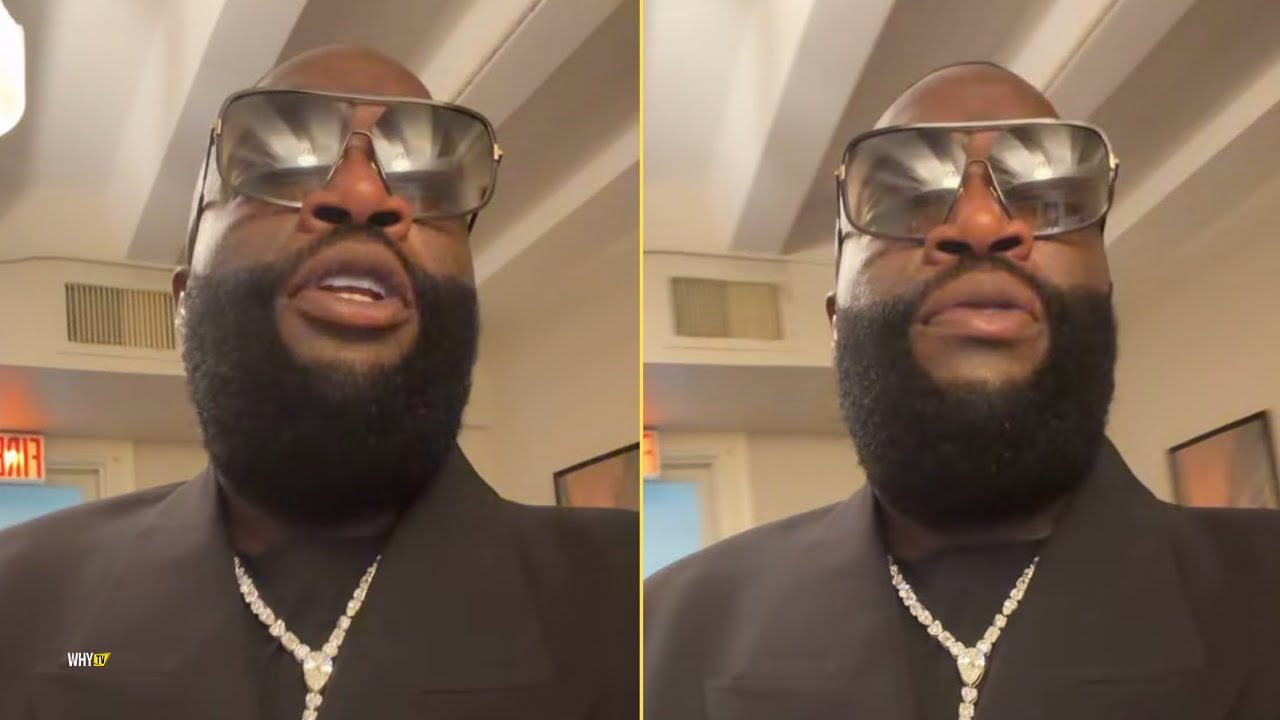 The revelation came during a tense exchange on the Joe Budden podcast, where Budden himself pressed Ross on the painful reality that fans may never hear new music from the duo. The question hung in the air like a loaded weapon: “What do you have to say to the people out there, such as myself, that are heartbroken that we won’t hear new fire from the two of you?” Budden asked, his disbelief palpable as he pointed out that many blame Ross for the rift.
Ross’s response was ice-cold and unequivocal. “You going to get over it. Trust me,” he said, brushing aside the sentiment with the stone-cold finality of a boss who has already moved on.
This answer has ignited a firestorm of debate across social media, with fans and critics alike dissecting every syllable. For Ross, the line between respect for the past and closure for the future is drawn sharp and deep.
To understand the magnitude of this moment, one must trace the trajectory of the Ross-Drake relationship, which was once the envy of the hip-hop world. They teamed up on classics like “Aston Martin Music,” “Stay Schemin’,” and “Diced Pineapples,” tracks that defined an era of opulence, vulnerability, and raw ambition. Their chemistry was undeniable, blending Ross’s growling, celebratory bars with Drake’s melodic introspection.
But the landscape shifted dramatically after Drake’s involvement in the Kendrick Lamar battle, a conflict that reshaped alliances and 𝓮𝔁𝓹𝓸𝓼𝓮𝓭 fractures in the rap hierarchy. Ross, who has long had a complex relationship with both Drake and Kendrick, found himself at a crossroads. The beef escalated quickly, with Ross firing shots at Drake in his track “Champagne Moments,” accusing him of disloyalty and appropriating culture.
Drake retaliated on his own songs, and the war of words has since consumed the industry. Yet, despite the heat, Ross refuses to let the fire consume their shared legacy.
“You can’t change your past. You control the future. You dictate all that,” Ross said on the podcast, his philosophy clear and unwavering.
This is not just about music; it is about the very essence of how an artist navigates the treacherous waters of legacy and reputation. For Ross, every collaboration that exists in the vault of history is a monument to a moment in time, and no amount of personal animosity can knock those pillars down. “We bosses.
We don’t even care. Play all of them n—,” he said, a defiant challenge to anyone who might try to erase those records from the collective memory of hip-hop. The room on the podcast fell into a strange silence, as though the weight of his words forced a collective pause.
Joe Budden, a veteran of the industry himself and no stranger to public feuds, appeared visibly disappointed by Ross’s position. His body language spoke volumes, and his follow-up questions betrayed a yearning for a reconciliation that now seems impossibly distant. “I don’t want to get into none of the messy bull— just on some making records,” Budden said, trying to steer the conversation toward the art rather than the 𝒹𝓇𝒶𝓂𝒶.
But Ross’s response left no room for ambiguity. The ship has sailed. The door is closed.
 And while the two men may share a stage someday only if the circumstances demand it, the creative partnership that produced some of the most iconic songs of the 2010s is dead. This finality has sent fans into a spiral of nostalgia and grief, flooding social media with clips of their best performances and anguished pleas for a truce.
But why is Rick Ross taking this stance now, and what does it mean for the broader hip-hop landscape? According to industry insiders, Ross’s position is rooted in a deep understanding of his own legacy. He is not merely a rapper; he is a mogul, a tastemaker, and a survivor of countless feuds.
His empire—built on Maybach Music Group, real estate, and a relentless work ethic—thrives on control. By publicly committing to celebrate the past while drawing a line under the future, Ross is asserting his dominance over his own narrative. He will not be defined by a feud, nor will he let the media or fans dictate how he remembers his own history.
This is a power move, and one that could set a precedent for other artists caught in similar conflicts.
The beef itself, which erupted earlier this year, has roots that extend far beyond a single insult. It began in the shadow of the Kendrick Lamar battle, where Drake’s attacks on Kendrick included references to Ross’s ex-partner and mother of his child, Tia Kemp. This personal dig incensed Ross, who responded with a scathing diss track that questioned Drake’s authenticity and called his entire persona into question.
The war has since become a saga of 𝓵𝓮𝓪𝓴𝓮𝓭 texts, social media jabs, and even accusations of 𝒻𝒶𝓀𝑒 relationships. But beneath the superficial 𝒹𝓇𝒶𝓂𝒶 lies a deeper question about loyalty in rap’s ever-shifting alliances. Ross’s insistence on respecting the past suggests that he sees the music as sacred, separate from the messy human interactions that birthed it.
This is a rare and admirable position in a genre often defined by vendettas.
Meanwhile, Drake has remained relatively quiet on the subject in recent weeks, after initially firing back with a vengeance. His silence has led some to speculate that he, too, may be grappling with the weight of their history. After all, Drake has publicly admitted that Ross was one of his early inspirations and a crucial figure in his rise to superstardom.
The emotional complexity of their rift cannot be overstated. They were not just collaborators; they were confidants, with Ross often acting as a mentor figure to the younger rapper. To see that relationship fractured so publicly is a reminder of how fragile ties in the music industry can be.
In the aftermath of the podcast interview, reactions have poured in from all corners of the hip-hop world. Some fans have praised Ross for his maturity and grounded perspective. “This is how real bosses handle themselves—respect the past, own the present,” one fan tweeted, garnering thousands of likes.
 Others, however, are heartbroken, lamenting the loss of a duo that could have continued to dominate the charts. The internet is awash with nostalgic playlists and tributes, as listeners mourn the death of a dream that once seemed so alive. Yet, Ross’s words have also sparked a broader conversation about the nature of feuds in hip-hop.
Are they temporary storms, or do they leave permanent scars? For Ross, the answer is clear: the scars will not touch the songs.
The Joe Budden podcast itself has become a must-listen for anyone trying to make sense of this saga. Budden, known for his incisive questioning and willingness to push back on his guests, tried to extract a shred of hope that the two might collaborate again. But Ross was immovable.
“We don’t even care. Play all of them n—,” he repeated, almost as a mantra. The raw authenticity of the moment has been dissected by journalists, bloggers, and podcasters around the world.
It has become a flashpoint for discussions about ego, pride, and the price of success. For Ross, the price may be the loss of a once-in-a-lifetime partnership, but he seems more than willing to pay it.
From a journalistic perspective, this story is far from over. The hip-hop landscape is in a constant state of flux, and alliances that seem dead can sometimes resurrect in the most unexpected ways. But for now, the message from Rick Ross is definitive.
He will continue to perform those old hits, he will celebrate the magic they created, and he will not apologize for it. “You got to realize anything that we created in the past, Rozay going to celebrate. You understand?”
he said, his tone shifting from defensive to instructional, as if teaching the world a lesson in honor. That lesson is resonating: in an industry that often feeds on conflict and erasure, Ross has chosen memory and respect.
As this breaking news continues to develop, we are reaching out to representatives for both Rick Ross and Drake for further comment. Fans are left to speculate whether Drake will respond to this latest twist, or if silence will be his ultimate answer. One thing is certain: the music of Rick Ross and Drake, from “Aston Martin Music” to “Stay Schemin’,” will live on in the playlists of millions, untouched by the bitterness of the present.
And in a genre that can sometimes feel like a battlefield, maybe that is the most powerful statement of all.
 This story has also reignited conversations about the role of loyalty in hip-hop. Some critics argue that Ross’s refusal to shut the door completely on the past is a sign of weakness, a reluctance to fully commit to the beef. But his supporters counter that it is a sign of strength, an ability to hold two opposing truths in mind at once: that a person can be both an adversary and a collaborator.
This duality is central to the hip-hop experience, a culture that thrives on competition but also cherishes collaboration. Ross’s stance may pave the way for a new model of conflict resolution, one where the art is protected even when the relationships are not.
Industry analysts have also pointed out that Ross’s comments come at a critical time for his career. He is preparing to release new music and has been expanding his business ventures, including a major partnership with a global beverage brand. By addressing the Drake feud head-on, he is controlling the narrative and ensuring that he remains in the driver’s seat.
This is a classic move from a seasoned veteran who has weathered many storms. Ross understands that in the world of breaking news, silence can be deafening, but the right words can shape reality.
The interview on the Joe Budden podcast also touched on broader themes of respect and legacy. Ross emphasized that he does not want to engage in the “messy bull—” that characterizes many public feuds. He is focused on the larger picture, the long arc of his career.
“We bosses,” he said, a phrase that captures his entire philosophy. Bosses do not get dragged into petty arguments; they acknowledge the past, set boundaries, and move forward. This mindset is what has allowed Ross to maintain relevance and influence for over a decade, even as peers have faded.
Meanwhile, the backlash from fans continues to simmer. Some have taken to social media to express their anger at Ross for not trying harder to mend the relationship. But a growing number are respecting his honesty and clarity.
This is a rare moment in hip-hop where an artist has openly admitted that a significant relationship is over, but without malice or regret. It is a nuanced position that defies the usual binary of friend or foe. Ross has essentially said that Drake is part of his history, and that history is worth celebrating, even if the future holds no more chapters.
As the sun sets on this latest chapter of the Rick Ross and Drake saga, one thing is clear: the hip-hop world will never be quite the same. The two artists have given fans a masterclass in how to handle a public breakup, with Ross leading the way by choosing respect over recrimination. Whether this stance ultimately leads to a thaw in relations or cements the divide remains to be seen.
But for tonight, the music of their past shines brighter than the noise of the present. And Rick Ross, true to his word, is celebrating it all.
We will continue to monitor this story as it evolves, and we will bring you the latest developments as soon as they break. In the meantime, fans are left with the songs—the perfect, enduring legacy of a partnership that once lit up the hip-hop world. And perhaps, for now, that is enough.