A woman walked into a police station in the northeast of England on a summer evening in 2018 and confessed to a murder that had haunted investigators for nearly 15 years, finally bringing closure to a case that had wrongly seen an innocent man charged with killing his own son.
 Karen Tunmore, then 36, approached detectives at the station in Woolsend, just north of Sunderland, on July 31, 2018, and calmly announced she was there to admit to a killing. Experienced officers are trained to be skeptical of such confessions, which often prove false, but this one quickly proved different. As detectives began questioning her, Tunmore provided details that only the real killer could have known, solving one of the longest-running unsolved murders in the northeast of England.
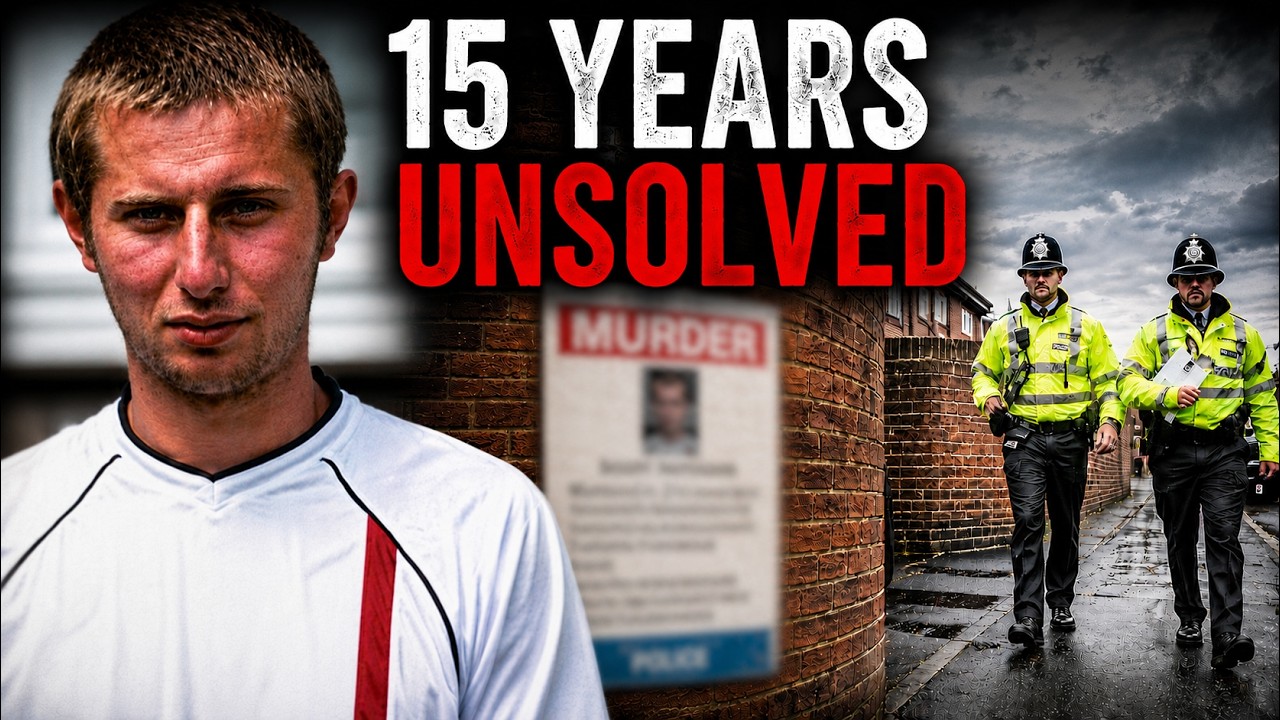
The victim was Scott Pritchard, a 19-year-old Sunderland football fan who was attacked and beaten to death on January 7, 2004, as he made his way home on crutches after breaking his foot. He was struck repeatedly over the head with a blunt object, likely a baseball bat, and collapsed outside his home in Lindsay Close, Henden. A neighbor found him just after 7 p.m., his crutches still beneath his arms, but his injuries were too severe and he died before reaching the hospital. The postmortem revealed catastrophic head injuries and multiple skull fractures.
The attack appeared motiveless. Scott was not robbed, and there was no evidence of a prolonged fight. Family and friends described him as a popular, easygoing young man with no known enemies. Northumbria Police launched a major investigation led by Detective Sergeant Ian Sharp, but despite hundreds of house inquiries and forensic examinations, the case stalled. Anonymous callers contacted police within 24 hours of the murder, leaving intriguing messages before hanging up, but no one came forward with solid information.
CCTV footage from a nearby shop showed several people near the scene around the time of the attack, but none of them proved to be suspects. Police divers searched a local lake for the murder weapon, recovering nothing. The investigation hit a wall of silence that would last for years.
 Then, in January 2005, the case took a dramatic and controversial turn. Police arrested Scott’s father, Robert Stacy, on suspicion of murder. The decision stunned those who knew the family. Robert had been devastated by his son’s death and had publicly appealed for information, fully cooperating with detectives. But officers believed they had enough circumstantial evidence to charge him. He spent 16 weeks in custody awaiting trial.
When the case reached Newcastle Crown Court in October 2005, it collapsed almost immediately. Prosecutors announced there was no realistic prospect of securing a conviction and offered no evidence. The judge directed a verdict of not guilty. Legally cleared, Robert’s life was nonetheless destroyed. Rumors spread, and he faced 𝓪𝓫𝓾𝓼𝓮 and threats, unable to return to his home. The investigation lost momentum, and for 14 years, Scott’s murder remained unsolved.
That changed on the night of July 31, 2018, when Tunmore walked into the police station. She introduced herself and said she wanted to confess to the murder of Scott Pritchard. Detective Chief Inspector John Bence was one of the officers who spoke to her. He quickly realized this was not a false confession. Tunmore was arrested and charged. When asked why she had come forward, she said she could no longer live with what she had done and asked detectives to tell Scott’s family she was sorry.
At her first appearance at the Crown Court, Tunmore admitted murder. The sentencing hearing revealed the full, horrifying details of the attack. Tunmore was 21 at the time of the murder. She told police she had been drinking that day and went to Sunderland with a man she knew only as Steve. According to her account, Scott owed Steve money, while Steve owed money to Tunmore. She agreed to accompany him to collect the debt, though Scott was not personally known to her.

When they found him, he was sitting down, exhausted from walking on his crutches. Tunmore said they demanded money, but Scott told them he did not have any. She threatened to break his other leg if he failed to pay. Scott laughed, and that single moment caused her to lose control. She picked up a short baseball bat and began striking him repeatedly over the head. Even as Scott slid down against the wall, she continued the attack. The man she was with told her to stop, but she carried on. She later told detectives she had simply seen red.
Tunmore admitted that after leaving the scene, she disposed of the baseball bat by throwing it into the River Tyne and later sold the car they had used because there was blood inside it. When she heard on the news that Scott had died, she said her first reaction was to laugh. It was only afterward, as the reality of what she had done sank in, that guilt began to consume her. For the next 14 years, she tried to carry on with her life, becoming a youth football coach, but privately, she later claimed she thought about Scott every day until she could no longer live with herself.
One question remains unanswered: who is Steve? Police never identified the man Tunmore claimed was with her that evening. Detectives believe she knows his identity but has deliberately refused to reveal it. Whether she was protecting someone, scared of someone, genuinely could not identify him, or whether he even existed at all, remains one of the unanswered questions in this case.
 When Tunmore appeared for sentencing, Scott’s family finally watched justice being done. The judge sentenced her to life in prison with a minimum term of 17 and a half years before she could be considered for parole. For Robert Stacy, the conviction was deeply emotional. In a victim impact statement, he described the agony of not only losing his son but then being accused of murdering him. Being falsely imprisoned, he said, had broken him, and even after he was cleared, the rumors never disappeared. He had been threatened, abused, and forced from his home by people who assumed that because he had been arrested, he must somehow have been guilty.
Scott’s mother, Kathleen, also spoke movingly about the son she had lost. She described Scott as a kind, confident, and well-liked young man whose best years had been taken from him. Nothing the court could do, she said, would ever bring him back. But after 14 years, the family finally had the answers they had spent so long searching for.
Sadly, there was one final tragedy still to come. Just three days after Tunmore was sentenced, Robert Stacy suffered a heart attack and died at the age of 66. No one can say whether the years of grief, public suspicion, and false accusation contributed to his death. What we do know is that after spending almost 15 years fighting to clear his name and see justice for his son, he died only days after finally witnessing the conclusion of the case.
The murder of Scott Pritchard remains one of the northeast’s most extraordinary criminal cases. Yet, behind all the headlines, this story was always about a young man whose life ended far too soon. He was just 19 years old. His family eventually got the answers they had fought so long to find, but no confession, no sentence, and no amount of passing time could ever give them back the son, the brother, and the friend that they had lost.