It is a truth almost universally acknowledged by those who think about such things that nobody can naturally just vanish. People do not simply evaporate into thin air, leaving behind nothing but questions and an absence that aches in the hearts of those who knew them. Yet, the case of Ruth Wilson seems to defy this logic, presenting a puzzle that has stubbornly refused to be solved for over two decades.
It is a story that begins in the bucolic, picture-perfect landscape of the Surrey Hills, a place of serene beauty where the idea of something terrible happening feels almost impossible, and it is precisely that contrast which makes the mystery so haunting.
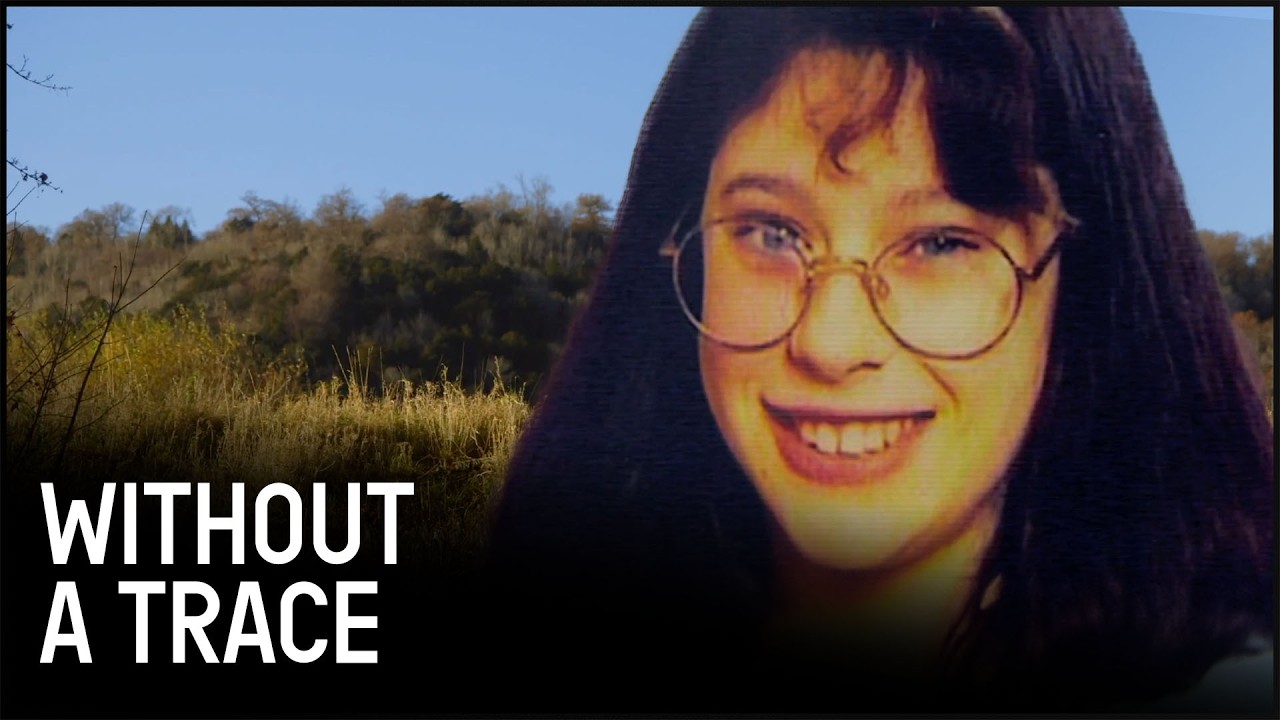 During the summer months, I sometimes come out for a walk and maybe take the dog with me. We normally come along here, following the winding paths that offer stunning vistas of the rolling countryside. As you can see in front of us, that is Box Hill.
It is a majestic landmark, a steeply sloping chalk escarpment that draws visitors from all over the south of England. That was the last place that she was seen. Standing there, looking at the serene and timeless beauty of the hill, it is difficult to reconcile the peaceful scenery with the profound sense of loss that lingers in the air.
I don’t think she planned to disappear at all, and I think something terrible has happened to her. And she’s more than likely still up there, hidden somewhere in the dense undergrowth or the deep woodland that covers the hillside. Somebody knows where she is.
That is a certainty that has driven this investigation forward, even when all other leads have gone cold.
One of the important roles of a journalist is asking questions on behalf of the public that are uncomfortable to ask. It is a responsibility that involves digging beneath the surface of official narratives and probing into the darker corners of human experience. Every now and again, there’s a story that just niggles away at you.
It gets under your skin and refuses to let go, occupying your thoughts long after the initial research is done. You can’t quite forget it. The disappearance of Ruth Wilson is one of those stories.
In 2002, I wrote an article about missing people, a broad survey of cases that had captured the public imagination. The case of Ruth Wilson really affected me. It was so unusual, such a peculiar and mysterious case, that it stood out from all the others.
It involved a 16-year-old who went missing in the Surrey Hills in 1995, a girl from a seemingly stable and happy home who simply walked out of her life and was never seen again.
There were multiple appeals for Ruth to come home. Her photograph was plastered across newspapers and television screens, and the public was urged to look out for her. It was her family’s belief that she was out there somewhere, perhaps living a new life under a new identity, and that one day she would return to them.
The official version suggests this is a missing person’s case. This is unresolved. There is no evidence of any crime, and that is absolutely correct.
The police have maintained this position for years, and from a purely procedural standpoint, they are right. But I still, all these years later, am haunted by the belief that that wasn’t the whole story. There was something more to Ruth’s disappearance, something that didn’t fit with the simple narrative of a runaway teenager, and that nagging doubt has never left me.
Did she take her passport with her? Did she even have a passport? We know she took a bank card, and she didn’t use it.
That is a crucial detail. If she had run away to start a new life, she would have needed money, yet she never accessed her account. She must, after 22 years, have had some dental treatment, some sort of medical treatment, national insurance, tax.
The practicalities of disappearing in the modern world are immense. Somebody that’s 16 years of age to run away, as they’re saying, and be able to give herself a brand new identity, coming from a rural village, I would say is impossible. It is not like in the movies, where one can simply assume a new persona with a flick of a switch.
It requires resources, documentation, and a support network. A teenager from a small Surrey village would have had none of these things. And so, no.
I can’t see her ever coming home at all. No. The more I thought about it, the more I became convinced that Ruth did not simply run away, and that the truth of what happened to her was far more complex and potentially far more sinister.
About a year ago, the phone rang. A gentleman on the other end of the line asked me whether I remembered the case of Ruth Wilson. It was an unexpected call, but it immediately reignited my interest.
Had Liam not brought the story to me, then I would never have gone back to it. He was a former police officer with a long and distinguished career, and he had been haunted by the case for years. I don’t know what it’s like to have lost a child, but she is a child of Dorking.
The town and the surrounding villages have never forgotten her. People of Dorking have a right to know what happened to this child, even if Mr. and Mrs.
Wilson want to put it behind them. I believe everybody else has a right to know. The case is not just a private family tragedy; it is a public mystery that has implications for the entire community.
Liam has a long history at the very, very toughest end of policing, which includes arresting terrorism suspects. This is a brave individual with a long police career, a man who has seen the worst that humanity has to offer. I’ve been associated with Dorking since 1994.
This happened in 1995. Now, I’m just seeing it. I’m thinking, she hasn’t run away.
She couldn’t have run away. His police instincts told him that something was deeply wrong with the official narrative. In retirement, Liam is the man who wouldn’t let this story go.
You can’t just disappear. I can’t accept that. For him, the case became an obsession, a loose thread that he felt compelled to pull, even if it meant unraveling the carefully constructed story that had been presented to the public.
She set out for school on a November morning in 1995. It was a crisp, ordinary day, the kind of day that blends into all the others. She decided that she didn’t really want to go that day.
Instead, she was going to go and work in the library. It was a small deviation from her routine, a choice that would set in motion a chain of events that no one could have predicted. She had sent a bunch of flowers to her stepmother to arrive 2 days later.
And we don’t know why she did that. It was a gesture that seemed both thoughtful and deeply unsettling, as if she were saying goodbye. She ordered a taxi to take her up to her local beauty spot, Box Hill in the Surrey Hills.
The taxi driver dropped her off at a bridleway, and she simply stood by the side of the road. And that was the last time that Ruth Wilson was seen alive. She was dressed in a way that suggested she might be meeting someone, and she stood there, waiting, as the taxi drove away.
Everything was sort of like hunky-dory, certainly on the night before. And that’s the real mystery for me. There were no arguments, no signs of distress, no indication that she was planning to leave.
Her parents lived in a picture-perfect Surrey village, the kind of place where everyone knows everyone and the pace of life is slow and gentle. Daughter of a parish counselor, church-going, bell-ringing, choir-singing, organ-playing girl. She was the epitome of a well-brought-up country girl, involved in all the traditional activities of village life.
And then, something else. That’s the real hole, isn’t it? She seemed happy.
Was she happy? This is the central question that has never been satisfactorily answered. The public face she presented to the world was one of contentment, but what was going on behind closed doors?
She’s dropped off at a bridleway. The taxi driver says he drove off, and he watched her standing there. So, she either didn’t want the taxi driver to see where she was going to go, or she was waiting to meet somebody who was going to pick her up in the car.
This is a critical piece of information. The fact that she chose to be dropped off at a remote spot, rather than at a destination, suggests that she was either being deliberately secretive or that she had arranged to meet someone. This should have been treated as suspicious from the very beginning.
In hindsight, it seems obvious that this was not a simple case of a teenager running away from home. There were too many strange elements, too many unanswered questions.
Once it became clear that there were things to be uncovered about this story, and that in my role as journalist, I could maybe help with that, then yeah, it didn’t take long for me to decide that that’s what I was going to do. The challenge was daunting, but the potential to shed light on a case that had been cold for over two decades was too compelling to ignore. It is getting a bit chilly out here on the hill.
I was going to say it’s a bit chilly, yeah. The wind has a bite to it, even in the summer months. I’ve always felt that this is a beautiful part of the south of England.
I think that Surrey is an extraordinary county. And people laugh about the home counties and suburbia, but who wouldn’t live here if they were given half a chance? Absolutely, yeah.
There is a certain charm to the rolling hills, the quaint villages, and the sense of order and tranquility.
This is part of the story, isn’t it? This is why murder mysteries and detective stories are set in these beautiful parts of the countryside, because you can’t imagine something terrible happening here. And when something terrible does happen, it makes it all the more 𝓈𝒽𝓸𝒸𝓀𝒾𝓃𝑔.
 The contrast between the serene beauty of the landscape and the dark events that occurred here is jarring. When you spend 30 years looking at cases like this, it’s something that doesn’t go away. It’s quite frustrating because you know there’s not really much you can do about it.
You’re not part of a team anymore. It’s not your job anymore. You haven’t got access to resources.
As a retired police officer, Liam found himself on the outside looking in, unable to access the investigative tools he had once taken for granted.
This was a case that came to talking police. Put in a freedom of information request saying that I would like to have a look at the file and some of the statements. The reply I got was, “No, we’re investigating it as a crime.”
They just said, “Missing people are classified as a crime.” So, you know, and they couldn’t share any information with me beyond the appeal because they didn’t want to expose any police methodology. The police were closed off, unwilling to share any details of their investigation.
My next step was trying to get in touch with Mr. and Mrs. Wilson.
I sat down, wrote a letter to the family, explaining who I was and would they mind if I came along and spoke to them about it. I got no response to that either. The family, it seemed, had closed ranks and did not want to revisit the past.
So, what’s really difficult is moving beyond what you already know to have happened onto what you think might have happened. The known facts are few, but the possibilities are endless. So, I’d like to speak to local residents of the village that she lived in, her family, her friends.
We know that she spent a lot of time with her ex-boyfriend over that weekend. We knew that he was called William. Along with the name of the school, I’ve managed again on Facebook to find him.
I mean, it’s not the most sophisticated of investigative techniques, but it was a start. I would very much like to talk to you about a story I’m researching into a missing person’s case from 1995. I believe you knew Ruth Wilson, and I would very much like to talk to you if that’s something you could face.
The message was sent, and we waited, hoping for a response.
I’m trying to find out what happened to Ruth. Without the support of the police, without the support of the family, and going on newspaper clippings, anything else that’s written on the internet, that’s just too frustrating because I can’t get any further forward with it. The investigation was stalling, and we were running out of avenues to explore.
And I would not, when I am seven years down the road, and I still haven’t got any further forward with it, be able to live with myself. The thought of giving up was not an option. Why are you still living there?
What did you say? He used to phone me at night time and say he couldn’t sleep because it was going over in his brain. Yes.
Yes. And he couldn’t sleep. And he’d open up a bottle of whiskey or something because you knew that there was nothing you could do about it.
It has kept him up at night. It has kept him up at night. He’s extremely focused on it, and I don’t blame him as well.
You know, she must have been, how much older or younger than Emily? But you’ve got a daughter yourself. You know, I’ve got a 16-year-old daughter, and it is something relatable, really.
Very relatable if your daughter just went missing, and there was no reason for her. She wasn’t the kind of girl that would run away. If that was my daughter, I don’t think I could ever rest.
The personal connection to the case was undeniable.
Anybody that offered any genuine form of assistance, I would accept it. I wouldn’t ignore it. I’m leaving a message for Ian Wilson.
It’s Martin Bright calling here. I’ve got to this stage where I’m thinking, “Hold on. Am I the only one that is interested in what happened to Ruth?”
I’m just calling you out of courtesy, really, to say that the story has developed further. They’ve accepted she’s gone missing, and that’s it. I find that hard to believe.
I really do. I’m in the process of now working to tell the story. Obviously, it’s important that you should know that this is happening.
I mean, looking at the circumstances of the case, I now don’t believe that Ruth Wilson is alive. I will tell you what my theory is. There is somebody from the community responsible for how we got Ruth missing.
It looks to me that she met someone and something happened. The end game is, if nothing else, to make this fellow sweat. Don’t go to sleep with a clear conscience because there’ll be more people like me out there that will take an interest in this case.
It’s as simple as that.
William was Ruth’s ex-boyfriend. It appears they used to hang out quite a lot. He should know quite a lot about Ruth.
She was a very studious girl, well-mannered, rather traditional. She was not cool. She was not cool.
Her dress sense was unconventional as well. I think you know, perhaps she didn’t really have that maternal relationship to know how to bring herself out of her shell as a young woman as opposed to a young girl. I’d picked up over the years that Ruth’s real mother had died in rather tragic circumstances.
She had fallen down the stairs. What do you think when you think about Ruth? And what do you think happened?
I had that suspicion that there was someone else involved. I feel somewhat lost and a little bit numb about it, really. And I think my mind has shut off any of the emotional attachment to it.
It didn’t really have a desperately sad effect on him. He didn’t feel that he’d been hugely affected by it. It did make me think at that point, well, so who was looking out for Ruth then?
Are you sitting comfortably? I’m pacing around, but there you go. Crack on.
Ah. So, I’ve just received an email this morning from a detective chief superintendent. He is the person who led the review into Ruth’s disappearance a couple of years ago.
He’s our man. He’s happy to talk. That’s Marcus.
Yep. Great. Nobody here is trying to undermine what the police have actually done.
We’ve got a theory. We need some insight from the police, from that investigation, to see if that theory holds water. There really do have to be people out there that remember Ruth, care about Ruth, are thinking about her.
I’d like to talk to some people in the village. Martin’s in a brilliant position as a reporter to open doors and speak to witnesses. Something I could have done years ago when I was in the police force.
But, of course, I’ve retired. I can’t do that now.
 Hello Martin, it’s Ian Wilson. I’ve made the final decision that I don’t wish to participate in this particular project. I know that you will do a good job, and your part is going to be very professional, like you’ve always been in the past, but it’s a complicated one, and I’ve made this final decision, and you can probably tell from my voice that it’s quite an emotional one.
The family had made their choice. They did not want to be involved. We’ve been talking to some people in the village.
They’re loath to talk without the say-so of Ian Wilson. I did call the tower master. He wasn’t surprised that people weren’t talking because people were suspicious of journalists in Bookham, apparently.
Ruth has vanished in more ways than one. She vanished on Box Hill that day, and this has been largely a forgotten story. I’ve spoken to the Surrey police.
They’ve pulled back. They are worried that what we are doing is going to be critical of them. They’re worried that we’re looking back at the original investigation and we’re going to say that there are flaws in it.
It’s a little bit disappointing. We’re simply going to have to go down a different route.
In 1968, a schoolboy went missing. Yes. And his body three days later was found between Leatherhead and Dorking, and I used to run quite a few features about it in the paper, and every time someone would come forward.
Yeah. Someone would read it who perhaps hadn’t been inclined to give information before. Your local newspaper is the most useful tool for getting information out there.
So, I felt that it was important for us to make our own appeal. I think it encouraged the police to reopen the case, and it led to the conviction after 33 years of Brian Lund Field. Do you think there might be a chance of that in this case?
It could be that there is someone there that just needs that little push, and that the publicity could lead to some vital information which ultimately, of course, could lead to the solving of the case.
It was just kind of filtered through at school the next day that, you know, Ruth disappeared or Ruth run away. It had always been my view really that the friends provided the key to Ruth. I’ve been communicating for a while with Roxy.
Roxy is the person who had gone public in 2010 making an appeal. And it was kind of not a joke, but kind of the reaction was very much oh, she’ll turn up at the dinner dance that was in a couple of weeks, you know, she’ll appear and she’ll have just run off away for the day. She was very happy to raise further awareness of what had happened to her friend.
It’s the first positive account we’re going to get of what Ruth was like. It’s going to open it right up for us, I believe.
We’re a nice group of girls. We certainly weren’t the cool girls. No, Ruth’s interests were reading, music.
I went out on a whole day bike ride with her around the village of Petworth and Brockham. You used to get kind of bullied and pushed about a bit by the cool kids and, you know, excluded from some things, I suppose, maybe because of that. Yeah.
We just, I suppose, migrated towards each other, didn’t we? At 16 you think you know it all, but you look back in hindsight, she couldn’t drive. As far as I’m aware, she didn’t have a passport.
She didn’t have a massive wage that she could have stockpiled money and disappeared on. So, you have to ask yourself the question that where could she have disappeared to for 22 years? And I’d also like to think that if she was still alive, there’s been numerous appeals over the years that have said at the bottom of them, you know, just get in contact with the Missing Persons Charity and we can pass a message on.
Just let us know in some way that you’re safe. I would like to think that she would have done that. If someone could come forward with new information that we’ve been looking for for the past 22 years, even if it didn’t seem like anything at the time.
Yeah, just get talking about it. Yeah. Yeah.
Thinking about the day she left, do you think this was a spur of the moment thing? Was this something she’d been planning? What’s your thinking now?
My belief is that she had planned to do something. Quite what, I don’t know, but I believe that she had intended to be away from home. I don’t know whether that was to be permanent, temporary.
I’d also like to believe that someone knows what’s happened. Yes. Because obviously the last confirmed sighting was up here.
And beyond that, we don’t know. No. We don’t know, but I do believe that she did intend to go missing.
Now what we have is this picture of her as someone who’s been planning this disappearance. Why would she do this? The hope is that by seeing an article in the local newspaper, people will talk to each other, remember the case, remember the disappearance.
This is the chance to bring Ruth back to life before she’s forgotten forever. There were a lot of comments. It’s a local case that clearly people remember.
I mean, you wouldn’t you? It seems to me that this is something that has puzzled people over the years. It’s just maybe they just haven’t had the means to express their concern.
I did receive an email from someone who remembered her. Yeah. She’s a new witness, I think, and I don’t think she’s ever told the police.
So.
Hi Liam, it’s Martin here. How you doing? I had a very long conversation with Catherine, who’s another friend of Ruth’s.
Okay, yes. One of the things that brought them together is they were going through similar troubles. Oh, all right.
And in fact, Catherine ran away from home at the same time. Oh, really? Okay.
They just confirmed that this wasn’t some sort of mysterious disappearance of a girl who was otherwise happy. As far as we’re concerned, she’s got this very happy middle-class life. This was a deeply unhappy girl who was talking to her friends about leaving.
What was really going on behind closed doors? What was really going through her head during those days?
Ruth and I, I guess we bonded because there was quite a lot going on for both of us at that time. Yeah, and we got on really well. We were really, really close.
She got me some earrings and a ring. But I still have the ring, which I’m wearing now. Ruth was really troubled.
Some of the reason that she was maybe, you know, unpopular as well, is that she had so much going on in her head that she was just desperately trying to find out who she was. She knew that I was going to be moving. So she asked me, she said, “If it all works out for you in Sheffield, can I come and join you?”
I was trying to get myself sorted, so didn’t really have enough time to help her as well. Once you’d gone, did you hear from Ruth again? No, it was obviously time without mobile phones, so yeah.
So I was ringing my parents two or three times a week. They told me that Ruth had gone missing shortly after I’d gone.
And what did your mom think about it? Put it down. Ruth working meant missing 4:30 p.
 m. February the 27th. You had your sleepover, I remember on the 11th of November.
It was just after that when Ruth came to stay with us again, and she didn’t want to go home, and I was very, very unhappy and uncomfortable about it. Can you remember why she said she didn’t want to go home? No, she didn’t say why.
She just really didn’t. As a mother at that time, it disturbed me greatly. Why do you think she was so desperate?
I think her whole childhood was based on a foundation of secrecy and lies. She knew that her real mother was dead. Mhm.
She told me yeah. how her mom had died. Right.
She knew her mom had fallen down the stairs. Yeah. But something obviously didn’t add up for her.
Yes. So she pursued it and looked for the truth. Right.
And found it. Yeah. Bit of a shocker, eh?
I can’t imagine anything more 𝓈𝒽𝓸𝒸𝓀𝒾𝓃𝑔. Yeah. So we found the death certificate.
What did you find in it? What did it say in it? I’ll show you.
You see? And there you go. Mhm.
She told me that she found out her real mom had committed suicide. Yeah.
I’m still trying to kind of work all this out. We know the circumstances of the day up until the point that she went missing. What’s your reading of what happened?
I think she had every intention of killing herself. Why do you think that? Why do you think she did that?
Because one other way you could look at it is that she was planning to meet someone up on Box Hill. Why do you think it was? Had she talked about suicide?
She hadn’t. Mhm. Up to that, you know, she hadn’t spoken about it.
She’d spoken about running away and, well, not running away, but you know, going somewhere else. But I don’t think there was anywhere for her to go. I think she was really distressed that day.
That was the day it all kind of unraveled and fell apart. But as we know, you know, the police have been looking, everybody was looking, nobody was found.
When I read about her disappearance and that she’d been to the florist and ordered these flowers, I just know that is Ruth. Almost like a dark practical joke that she was playing on her stepmother. Yeah.
Stick two fingers up kind of thing. Yeah. Right.
You know, this is what I’m planning and I’m doing it, and there’s a stubbornness about her. Well, do you remember her discovering that her mother had actually committed suicide? That didn’t get disclosed to me.
The words that were used to me were that she’d fallen down the stairs and broke her neck. It was only a matter of time before she found out the truth.
Ian Wilson has issued a statement. Until this point, the Wilson family was not cooperating in any way. But they clearly felt they needed to respond to what we had discovered.
Reacting to the idea that her whole childhood was built on secrecy and lies, Ian Wilson says this, “Her family are extremely hurt by this statement and do not recognize this view of Ruth’s childhood. Ruth always knew about her biological mother’s death, but not the exact cause. Sadly, we now know that before her disappearance, Ruth had discovered the tragic circumstances of her mother’s death.
But equally sadly, she chose not to discuss or question this with any family members.”
I mean, she is lost, and she was lost. We know the intention was there to disappear or go somewhere. But the mystery is what happened next.
Perhaps one of the reasons that I’ve been drawn to the case of Ruth is that it reminds me of my own sister, what she went through. When she was 16, she ran away from home. She in fact came and lived with me at the time when I was at university.
It does strike me that Ruth didn’t have that equivalent figure in her life. She had no one obvious to run to. I was under the impression that Ruth was happy at home and more or less liked her life.
That she had no reason to run away. Everything’s the opposite to what I thought. And we’ve only found out from speaking to her friends.
There’s absolutely no doubt we’d never have revisited this case had it not been for Liam’s interest. Liam not wanting to let this lie. I know he’s found it difficult at times and frustrating.
Till we know whether she went up to Box Hill to commit suicide, whether she went up to Box Hill to meet someone, whether she was abducted, whether she was murdered, whether she went off to find a new life with a new identity. Until we know, it’s very difficult to rest. What made her go up on that hill on that day?
What was going through her mind at that time? What strikes me is this lack of curiosity. Some elements of this is to do with professional pride.
This was a particular portrait that I was helping create of an essentially happy family that had lost their daughter inexplicably. So, I was implicated in the process of furthering that particular narrative, which was inaccurate. And that does annoy me.
I mean, that’s something that I feel shouldn’t have happened.
Liam’s had a long career as a police officer, and something has really irritated him about the way that he believes this young girl who went missing has not been taken seriously. I have been struck by Liam’s commitment and believe also that he deserves some sort of closure, I think, too. I think it’s likely she was meeting someone.
Yeah, I think she was dressed to jump into another car. Disappeared, but still alive. New identity.
Very difficult. Very difficult.
It’s my belief that secrecy can cause real damage. People keep secrets for all sorts of reasons, from shame to protecting loved ones. But very often they have a corrosive effect, eating away at trust, whether it’s in a family, a community, or society itself.
Discovering the secret of her mother’s suicide appears to have had a devastating effect on Ruth Wilson. The police are being very tight-lipped, and the village continues to keep its secrets. Liam and I have tried after all this time to shed more light on Ruth’s short life.
We’ve been helped above all by the friends who have refused to accept that a Surrey schoolgirl can simply vanish off the face of the earth. Someone out there knows what happened to Ruth. And the thing about secrets is that they have a tendency to come out in the end.