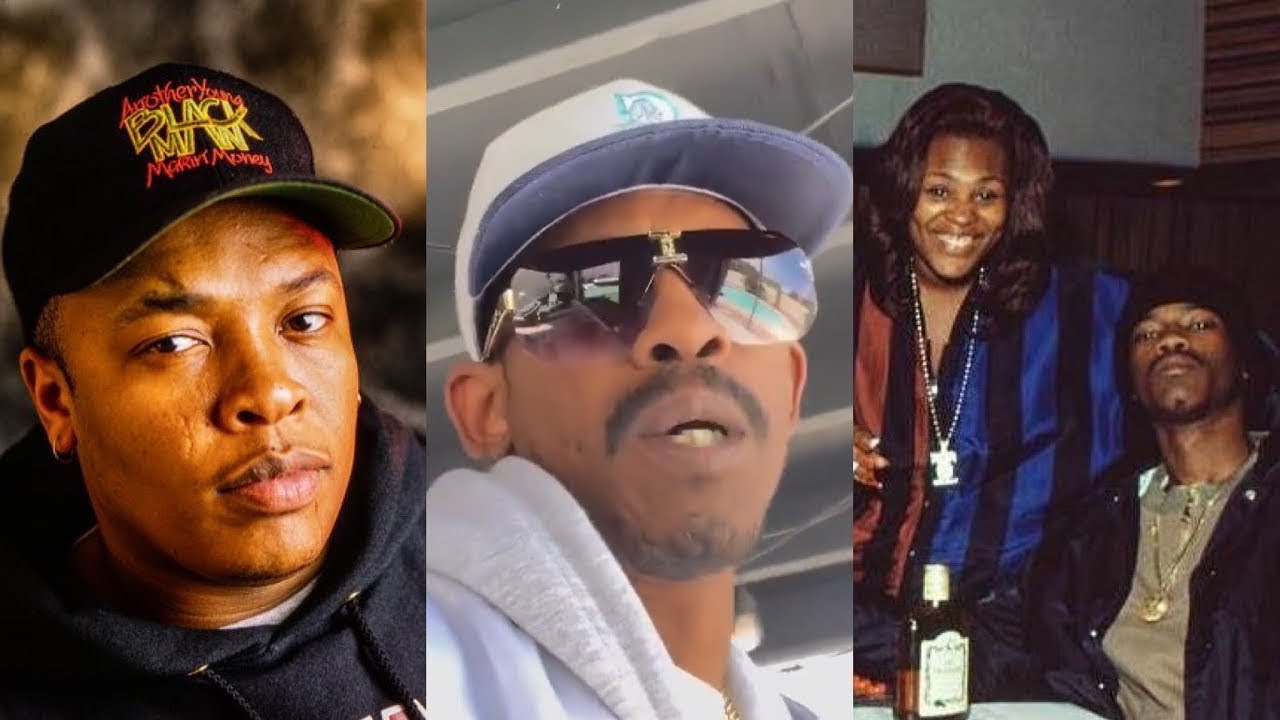
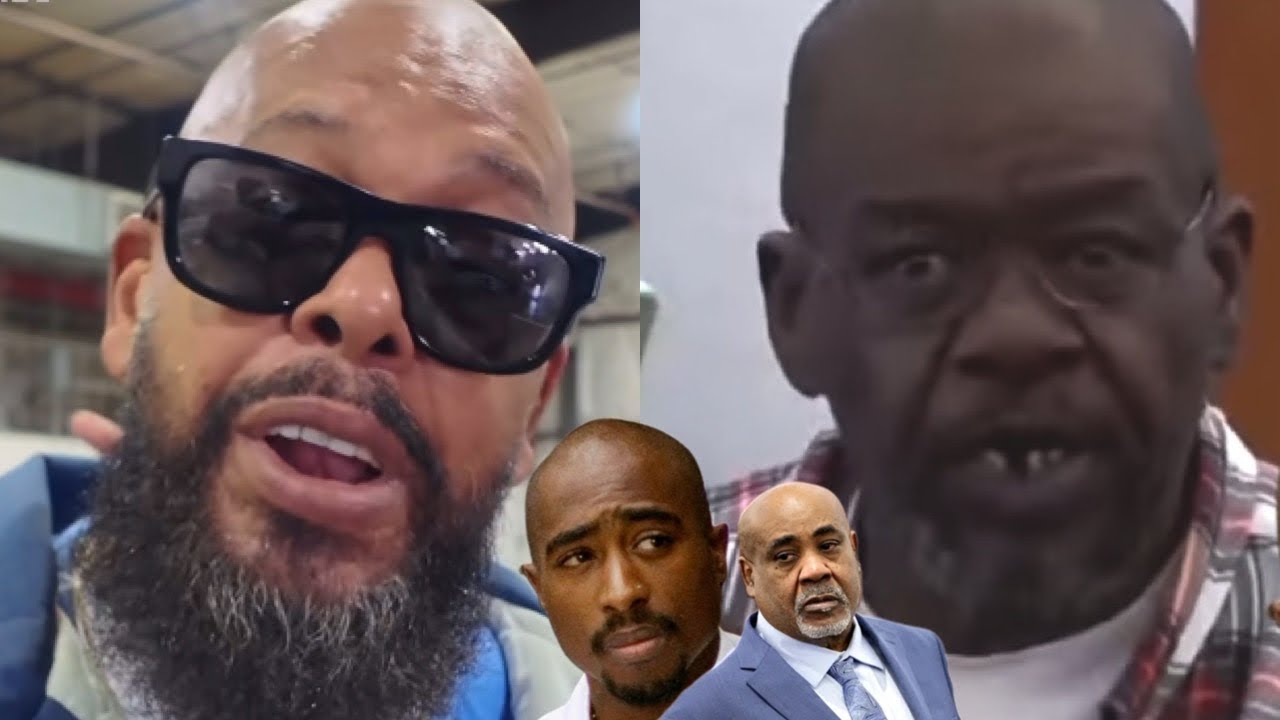
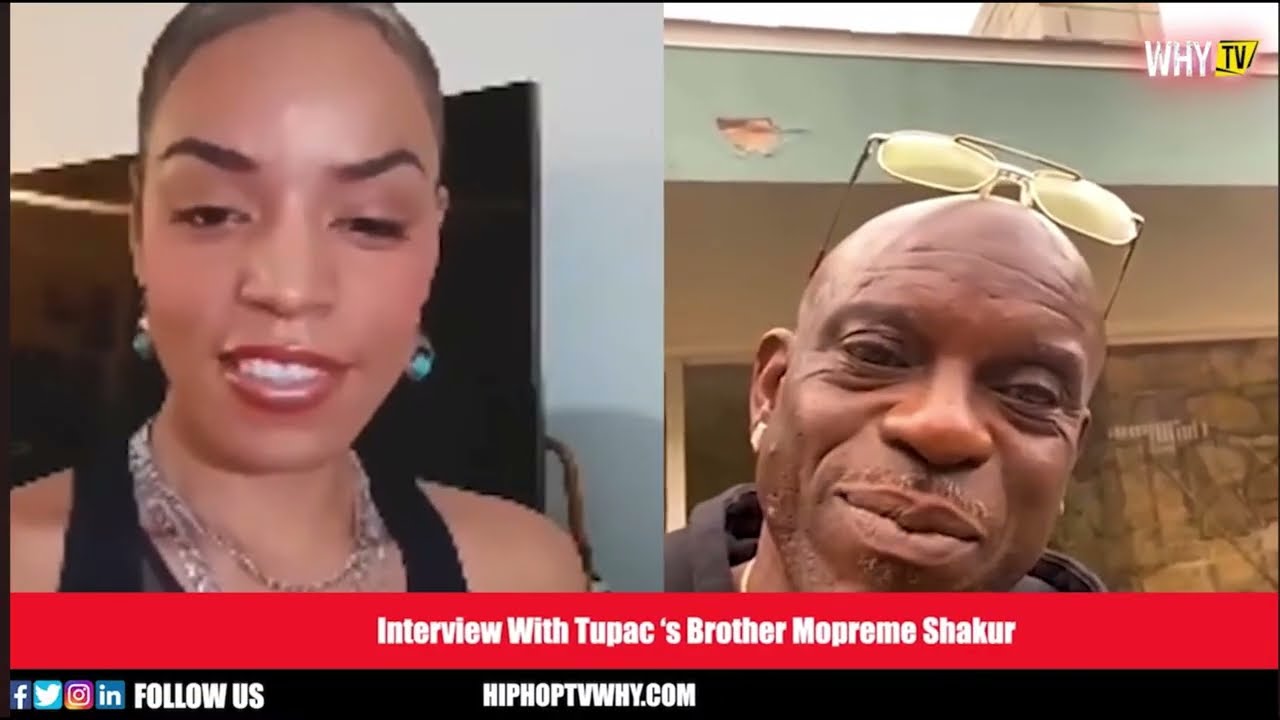
The emotional weight of legacy filled the room as Mopreme Shakur, the older brother of the legendary Tupac Shakur, broke down in tears while performing a heartfelt rendition of his late sibling’s iconic track, “Ain’t Mad At Cha.” The moment, captured on video and rapidly circulating across social media platforms, offered a rare and visceral glimpse into the enduring grief and profound pride that continues to define the Shakur family’s relationship with one of hip-hop’s most immortal figures. Witnesses described the scene as both cathartic and devastating, as Mopreme’s voice cracked under the weight of memory, transforming the studio session into a sacred space of remembrance.
The raw footage, which has already amassed millions of views, shows Mopreme struggling to maintain composure as the familiar, soulful beat of the 1996 classic swells around him, proving that even after nearly three decades, the pain of losing Tupac Amaru Shakur remains a fresh, open wound for those who loved him most.
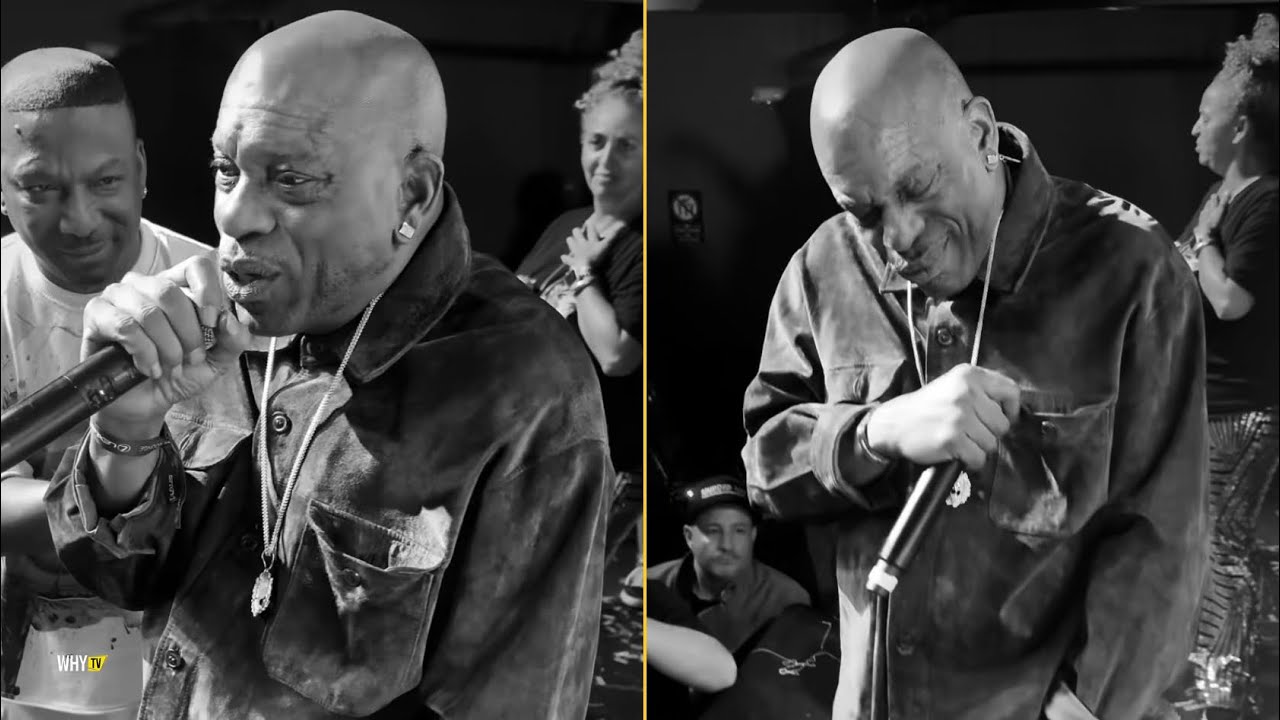 The video, which appears to have been recorded during a private listening or tribute session, captures Mopreme in a state of profound vulnerability, his eyes glistening with unshed tears as he navigates the song’s poignant lyrics about mortality, redemption, and the inevitability of change. As he sang the lines that Pac himself delivered with such haunting prescience just months before his death, Mopreme’s emotional delivery underscored the tragic irony of the track’s message—a meditation on how life alters relationships and how death alters everything else. The performance was not merely a cover; it was an act of communion, a brother reaching across the void to touch the spirit of a man who was gunned down in Las Vegas on September 7, 1996, and died six days later.
For fans who have long debated the circumstances surrounding Tupac’s murder, this raw display of familial sorrow serves as a stark reminder that behind the conspiracy theories and the mythos lies a family still grappling with an unspeakable loss.
In the hours following the video’s release, Mopreme took to various platforms to contextualize his emotional outburst, engaging with fans and interviewers in a series of candid discussions about his brother’s unfinished business and the what-ifs that continue to haunt the hip-hop community. During one particularly revealing exchange, Mopreme speculated on the artistic collaborations that Tupac would have pursued had he lived, painting a vivid picture of a creative force that was still evolving at the time of his death. “I think Pac would be working with like I think Kendrick duh, you know what I mean?”
Mopreme stated, referencing the Pulitzer Prize-winning rapper Kendrick Lamar, whose own work is steeped in the same socio-political urgency that defined Tupac’s catalog. “I think he’d be working with Anderson Paak. Okay.
Cuz Anderson know how to get them rhythms going.” The mention of the multi-instrumentalist and soul singer Paak highlights Mopreme’s belief that Tupac’s musical curiosity would have led him into new sonic territories, blending the raw energy of the West Coast with the sophisticated funk and R&B that Paak has mastered.
Mopreme’s reflections did not stop at musical pairings; he delved into the broader scope of what his brother would have achieved as a mogul and cultural architect. “Pac would have been all over the place by now. Oh man.
I know it. He would have had his own record company,” Mopreme asserted, his voice thick with conviction. This vision of Tupac as a business titan is not mere brotherly hyperbole; it aligns with the trajectory Tupac was on in the mid-1990s, having already founded the label Makaveli Records and spoken extensively in interviews about his desire to control his own artistic destiny.
Mopreme also revealed a specific, long-held dream of his brother’s that never came to fruition: a collaboration with the Police frontman Sting. “I think he always wanted to do a song with Sting,” Mopreme shared, offering a tantalizing glimpse into the eclectic tastes of a man who could seamlessly move from the gutter poetry of “Brenda’s Got a Baby” to the theatrical grandeur of “California Love.” The idea of Tupac and Sting sharing a studio booth is a dizzying thought, a fusion of rock’s intellectualism and hip-hop’s raw street narrative that would have undoubtedly produced something transcendent.
The emotional core of Mopreme’s interview, however, emerged when he was asked a deeply personal question posed by his own fifteen-year-old daughter, a young woman who, despite being born years after her uncle’s death, has come to revere him as a cultural saint. Her question was simple yet profound: What did Tupac learn from Mopreme, and what did Mopreme learn from Tupac? The query visibly moved Mopreme, forcing him to distill years of brotherhood, rivalry, and mutual respect into a few honest sentences.
“Well, I was trying to get him to acknowledge his success at the time, you know,” Mopreme began, his tone shifting from speculative to reflective. He recalled a period in the early 1990s when both brothers were riding high on the charts, a moment of shared glory that is often overlooked in the shadow of Tupac’s solo superstardom. “When we were coming up, we were both at the top of our game.
I had a number one record, ‘I Get Around’ feels good, and then Pac came right behind me in number one click, shout out to Digital.”
This reference to Digital Underground is crucial, as it anchors Mopreme’s own legacy within the group that first introduced Tupac to the world. While Tupac was a backup dancer and roadie for the eccentric collective, Mopreme was a more established figure, and the two brothers shared a bond forged in the crucible of the Oakland, California hip-hop scene. Mopreme’s recollection of having a number-one record with “I Get Around” is a testament to his own contributions to the genre, yet he humbly notes that Tupac’s ascent was meteoric, culminating in a number-one movie alongside his chart-topping music.
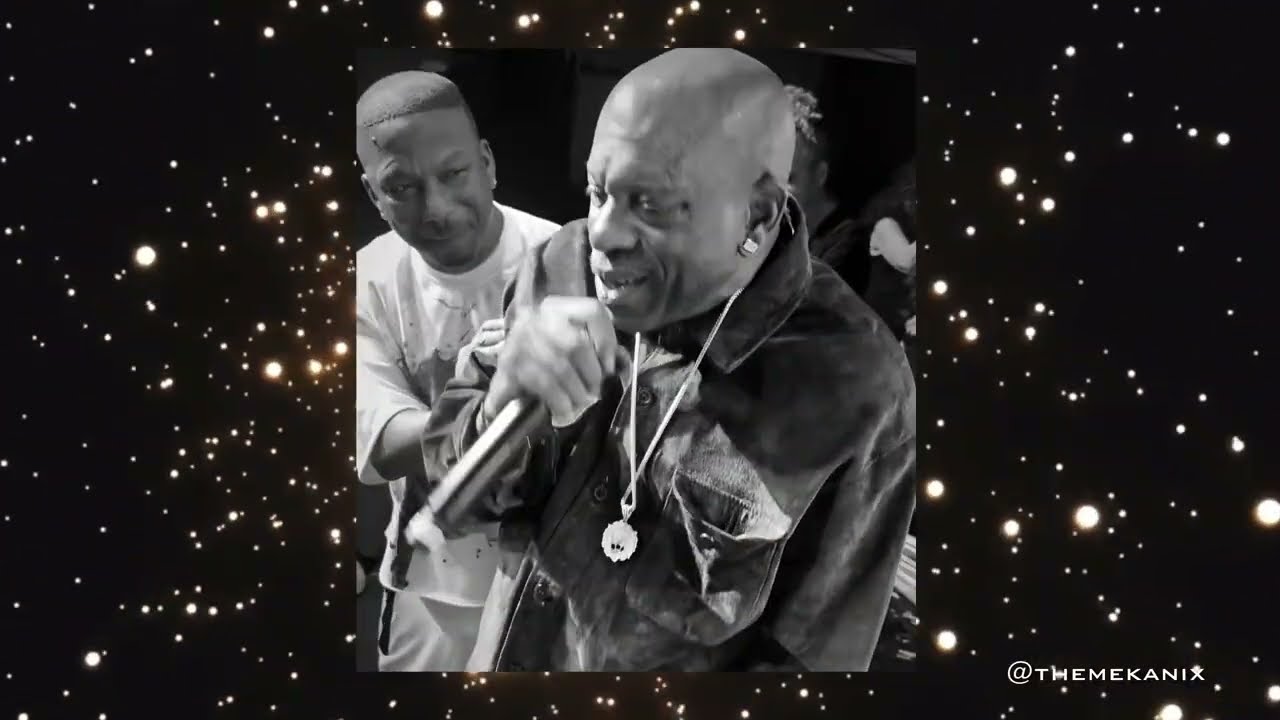 “So, you know, he was getting a lot and a number one movie. So, I was aware that not many in our community was having that. You know, having all them wins,” Mopreme said, acknowledging the extraordinary rarity of Tupac’s crossover appeal.
He was not just a rapper; he was a film star, a poet, and a political lightning rod, a polymath of the streets whose influence transcended the confines of any single medium.
The lesson Mopreme tried to impart to his younger brother was one of perspective and responsibility, a conversation that now carries a haunting weight given the brevity of Tupac’s life. “I was like, ‘Look, this is why people are bugging out like this because you’re a big deal, you know? You’re a big deal guy, you know?
Yeah. And you had to be responsible for that cuz it’s a heavy weight. The lights is bright.
You dig?’” Mopreme’s words echo the very real dangers that Tupac faced, dangers that were exacerbated by his own larger-than-life persona and his penchant for courting controversy. The “heavy weight” Mopreme speaks of is the burden of fame, the constant scrutiny, and the envy of those who cannot comprehend the sacrifices required to achieve such heights.
In hindsight, Mopreme’s advice reads as tragically prescient, a brother’s desperate attempt to shield his sibling from the very forces that would ultimately consume him on that fateful night in Las Vegas.
But the exchange was not one-sided, and Mopreme was quick to acknowledge the profound ways in which Tupac shaped his own worldview and artistic approach. While the video transcript captures only a portion of the conversation, Mopreme’s earlier comments about Tupac’s creativity and artistic vision suggest a deep admiration for his brother’s unbridled imagination. “He was a creative dude and people just left him alone,” Mopreme noted, a statement that speaks to Tupac’s unique ability to operate outside the constraints of industry expectations.
Tupac was a man who could write a screenplay in a single night, compose a poem about his mother’s addiction, and then turn around and craft a club anthem that would define a generation. This creative restlessness was something Mopreme clearly revered, and it is evident that his own artistic journey has been profoundly influenced by his brother’s fearless approach to self-expression.
The video of Mopreme crying while singing “Ain’t Mad At Cha” is more than just a 𝓿𝒾𝓇𝒶𝓁 moment; it is a cultural artifact that encapsulates the enduring power of Tupac’s music to evoke deep emotional responses. The song itself, released as a single from the album “All Eyez on Me,” was a contemplative track that found Tupac reflecting on his life and the changes that success had wrought. The lyrics, which describe a man who has found peace and turned away from a life of violence, are often interpreted as Tupac’s own meditation on his mortality, a theme that became tragically prophetic.
For Mopreme to sing this particular song, with its themes of redemption and farewell, is an act of profound symbolism. He is not just remembering his brother; he is embodying him, channeling the spirit of a man who was taken far too soon.
The reaction from the hip-hop community and beyond has been swift and overwhelmingly supportive. Fans have flooded social media with messages of love and solidarity for Mopreme, praising him for his vulnerability and for keeping Tupac’s memory alive. Many have noted that seeing Mopreme’s raw emotion humanizes the legend of Tupac, reminding us that behind the iconic imagery and the endless conspiracy theories, there was a real person who was loved deeply by his family.
 The video has also reignited conversations about Tupac’s legacy, with many fans echoing Mopreme’s sentiments about the collaborations that could have been. The idea of Tupac working with Kendrick Lamar, an artist who has openly cited Tupac as a primary influence, is a tantalizing prospect that has fueled countless fan-made mashups and hypothetical discussions. Similarly, the notion of Tupac and Anderson Paak creating music together, blending Paak’s buttery vocals with Tupac’s incendiary delivery, is enough to make any music lover mourn the loss of what might have been.
Mopreme’s comments about Tupac’s entrepreneurial ambitions also serve as a reminder that Tupac was not just an artist but a visionary who understood the importance of ownership and autonomy. In an era when many artists were being exploited by record labels, Tupac was vocal about his desire to build his own empire, a goal that was tragically cut short. Mopreme’s assertion that Tupac would have had his own record company by now is a poignant reminder of the unfinished business that his brother left behind.
It also speaks to the broader narrative of Black excellence and self-determination that Tupac championed throughout his career, a message that continues to resonate with artists and entrepreneurs today.
As the video continues to circulate, it has also prompted a deeper examination of the relationship between the Shakur brothers. While Tupac’s relationship with his stepbrother has been documented in various biographies and interviews, Mopreme’s emotional tribute offers a more intimate perspective. The two men shared not only blood but also a passion for music and a commitment to uplifting their community.
Mopreme’s own career, which included work with the group Thug Life, was inextricably linked to Tupac’s, and the loss of his brother undoubtedly altered the course of his own artistic journey. In his tearful performance, Mopreme is not just mourning a legend; he is mourning a brother, a confidant, and a partner in a shared dream that was violently interrupted.
The setting of the video, which appears to be a professional studio, adds another layer of poignancy to the performance. Studios are places of creation, where artists bring their visions to life, and for Mopreme to be in such a space while singing his brother’s song suggests a desire to keep that creative spirit alive. It is an act of continuity, a way of bridging the gap between past and present, ensuring that Tupac’s voice is never silenced.
The tears that Mopreme sheds are not just tears of sorrow but also tears of gratitude for having shared a life with such an extraordinary individual. They are tears of pride for the legacy that Tupac built and tears of hope that the music will continue to inspire future generations.
In the broader context of hip-hop history, Mopreme’s tribute serves as a powerful reminder of the genre’s deep emotional roots. Hip-hop is often dismissed as mere entertainment, but at its core, it is a form of storytelling that gives voice to the voiceless and provides catharsis for the wounded. Tupac was a master of this art, using his music to explore the complexities of Black life in America, from the joys of success to the sorrows of systemic oppression.
Mopreme’s tearful rendition of “Ain’t Mad At Cha” is a testament to the enduring power of that art, a demonstration that even decades later, the words and melodies of Tupac Shakur can still move a grown man to tears.
The interview segment in which Mopreme discusses his daughter’s question is particularly touching, as it highlights the generational impact of Tupac’s legacy. The fact that a fifteen-year-old girl, born long after her uncle’s death, would ask such a thoughtful question about his life and influence speaks to the timelessness of Tupac’s message. It also speaks to the importance of family storytelling, the passing down of memories and lessons from one generation to the next.
Mopreme’s willingness to engage with his daughter’s curiosity and to answer her question with such honesty and vulnerability is a beautiful example of how the Shakur family continues to honor Tupac’s memory. It is a reminder that legacy is not just about what one leaves behind but also about how one is remembered and discussed by those who come after.
 As the world continues to grapple with the loss of so many iconic figures in recent years, Mopreme’s tribute serves as a poignant reminder of the importance of preserving the memories of those we have lost. It is a call to action for fans to not only consume the music but to understand the human beings behind it, to appreciate the struggles and triumphs that shaped their art. Tupac Shakur was a complex figure, a man of contradictions who could be both fiercely confrontational and deeply introspective.
Mopreme’s tears capture that complexity, reminding us that behind the tough exterior was a soul that yearned for peace and understanding.
The video has also sparked a renewed interest in Tupac’s discography, with streaming numbers for “Ain’t Mad At Cha” and other classic tracks seeing a significant uptick in the wake of Mopreme’s performance. This is a testament to the enduring appeal of Tupac’s music, which continues to find new audiences with each passing generation. The song’s themes of change, mortality, and spiritual awakening are universal, and Mopreme’s emotional delivery has given the track a new layer of meaning for listeners who may have previously overlooked its depth.
In this way, Mopreme is not just honoring his brother’s memory; he is actively contributing to the ongoing evolution of Tupac’s legacy, ensuring that the music remains relevant and resonant.
Looking ahead, it is clear that Mopreme’s tribute will become a defining moment in the ongoing commemoration of Tupac Shakur’s life and work. It joins a long list of tributes, from the annual celebrations of Tupac’s birthday to the countless documentaries and biopics that have attempted to capture his essence. But what sets this tribute apart is its raw, unfiltered authenticity.
There is no script, no production team, no carefully crafted narrative. It is simply a brother, alone with his thoughts and his memories, singing a song that means more to him than any words can express. In an age of manufactured content and curated personas, that authenticity is a precious commodity, and it is precisely what has made the video go 𝓿𝒾𝓇𝒶𝓁.
For those who were fortunate enough to witness Tupac Shakur in his prime, Mopreme’s performance is a bittersweet reminder of what was lost. For younger fans who only know Tupac through recordings and documentaries, it is an emotional gateway into understanding the profound impact he had on those closest to him. And for Mopreme himself, it is a moment of catharsis, a chance to release some of the pain that he has carried for nearly three decades.
The tears he sheds are not a sign of weakness but of strength, a testament to the depth of his love for his brother and the enduring power of their bond.
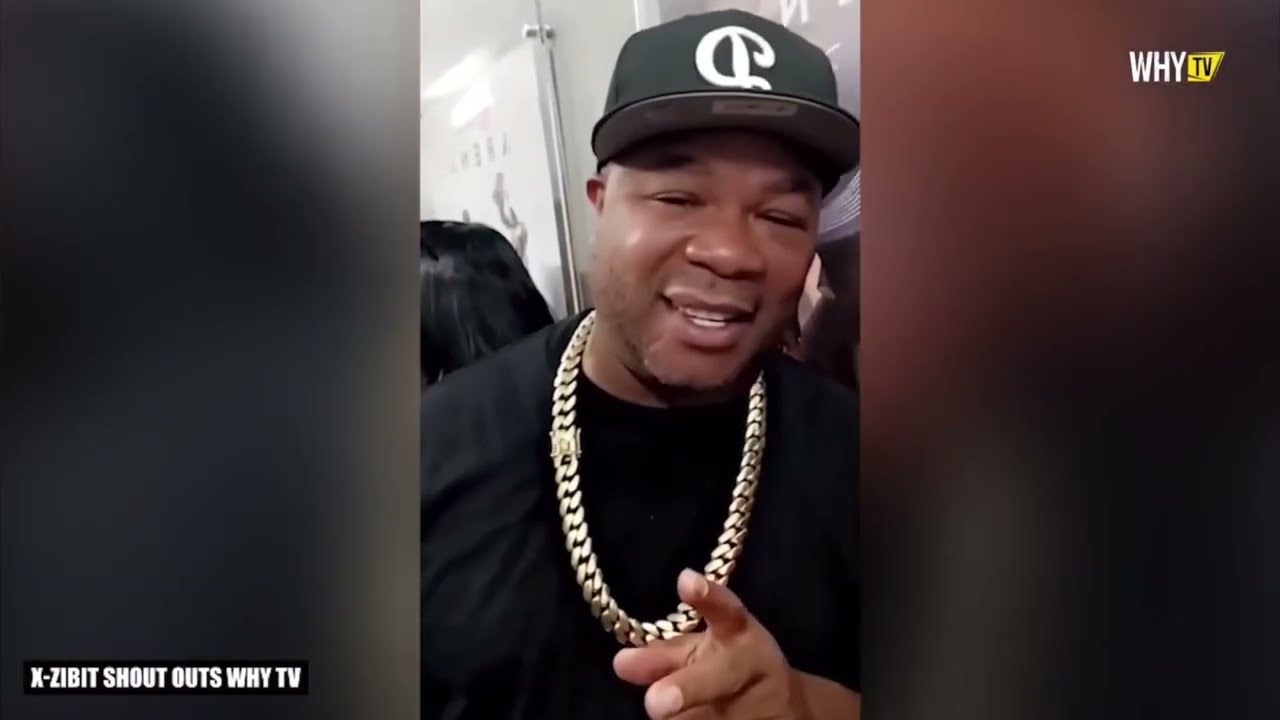
As the interview segment concludes, Mopreme offers a final, cryptic message that seems to encapsulate his current state of mind: “Yo, what up? It’s Mr. X to the Z, Exhibit Y, 2B.
Just keep it going.” This phrase, which appears to be a reference to his own artistic identity and the need to persevere, serves as a fitting coda to an emotional journey. It is a declaration that despite the pain, despite the loss, the Shakur legacy will continue to move forward.
Mopreme is not just keeping his brother’s memory alive; he is actively building upon it, ensuring that the flame that Tupac ignited will never be extinguished. In a world that often seems devoid of genuine emotion, Mopreme’s tearful tribute is a powerful reminder of the enduring power of love, family, and music to transcend even the deepest sorrow.